
Living in Cibolo
Texas Real Estate Sales Agent #454749, AXEN Realty LLC · Senior Loan Officer, NMLS ID #877741, NEXA Mortgage, LLC
Local Guide & Real Estate
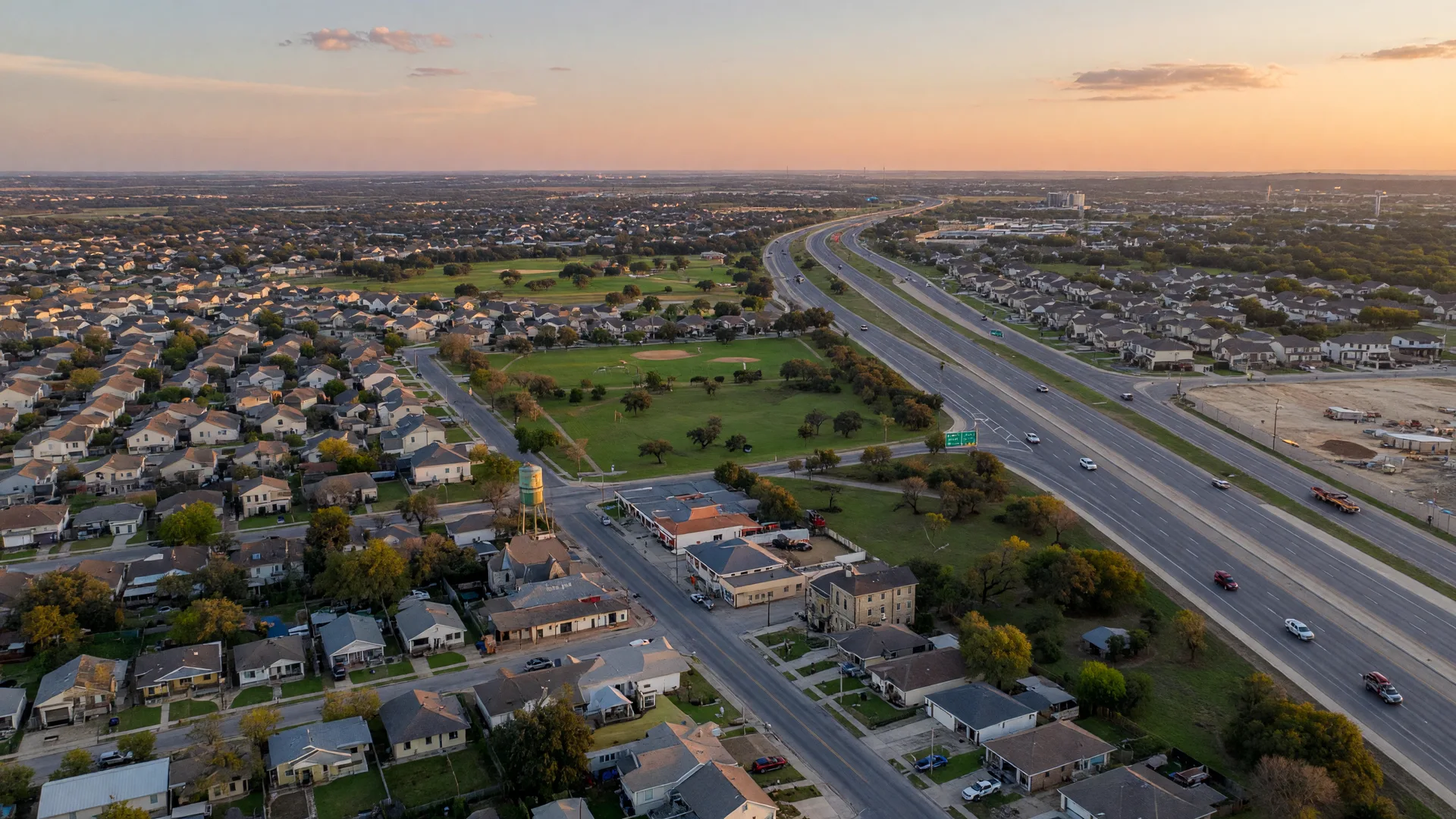
Cibolo is an incorporated city in the northeast San Antonio growth corridor, built around FM 78 and FM 1103 between I-35 to the north and I-10 to the south, sitting right next to JBSA-Randolph. It is not a US-281 Hill Country community and it is not one uniform suburb. An older historic core along Main Street, large areas of newer suburban housing, continuing new construction, address-specific school and utility jurisdictions, and strong connections to the I-35/I-10 employment corridor mean two Cibolo homes can be very different purchases. This guide explains what buyers actually need to verify here: city limits, county, school district, taxes, utilities, flood and drainage, aircraft noise, and the real difference between Old Town Cibolo and the newer subdivisions.
Comparing builder incentives? Builders around Cibolo are advertising rates from about 3.4% to 4.99% in a 7% market, and the offers are not the same deal.
Compare builder incentivesPatrick's Quick Answer
Cibolo in one paragraph
Cibolo is a fast-growing northeast-San-Antonio city with an older historic core, large areas of newer suburban housing, continuing new construction, and strong connections to the I-35/I-10 employment corridor and JBSA-Randolph. It is primarily a Guadalupe County city, with a small part of the municipal boundary reaching into Bexar County, and it is not one uniform market. A Cibolo address can be an older home near the Old Town Main Street core, a 1990s or 2000s subdivision house, a recent master-planned home, or part of the active new-construction pipeline along FM 78 and FM 1103, and the school district, county, appraisal district, HOA, utility provider, and flood and drainage picture can change with the exact property. The honest way to buy here is address by address: verify city limits, county, school district and campus, tax jurisdictions, HOA, utilities, flood and drainage, and the actual commute route before you write an offer.
County: mostly Guadalupe County, with a small portion of the city boundary crossing into Bexar County.
Main roads: FM 78, FM 1103, I-35 to the north, I-10 to the south, plus FM 1518 as the connection toward JBSA-Randolph and the corridor roads.
Schools: SCUCISD serves most of the city, while portions near Marion fall in Marion ISD, so the district and campus are set by exact address.
Market note: August 2026 public-tracker data put Cibolo median sale prices around $334,778 (Redfin) and median list prices near $358,500 (Realtor.com); the figure varies by source, by list versus sold, and by area, so the full market section keeps them labeled separately.
Location + Access
Where is Cibolo, and is it part of San Antonio?
Cibolo is its own incorporated city in the northeast San Antonio metro, not a San Antonio neighborhood. It sits in the Guadalupe County growth corridor east of Schertz, roughly between San Antonio and New Braunfels, and it has a genuinely close relationship with JBSA-Randolph, whose flight operations and employment base sit immediately to the southwest. The most recent U.S. Census Bureau estimate put the city's population near 39,019 as of July 1, 2025, up about 20.9% from the 2020 census.
The roads that define Cibolo are FM 78 and FM 1103, with I-35 to the north, I-10 to the south, and FM 1518 connecting toward JBSA-Randolph and the corridor highways. FM 78 is the historic spine that runs through Old Town and continues east as a commercial and growth corridor; FM 1103 crosses the city and is where major schools and newer development concentrate; I-35 carries the regional commute north and south, and I-10 anchors the south side of the growth area.
On commute claims: I will not publish fixed drive times, because FM 78 and I-35 behave differently at rush hour than mid-morning, and the exact address changes the route. The honest instruction for a Cibolo buyer is to drive the actual route during the time you would normally commute, to JBSA-Randolph, downtown San Antonio, New Braunfels or wherever the job is, and time it yourself.
City Limits vs ZIP
Cibolo city limits versus ZIP 78108
ZIP 78108 is the mailing address for much of Cibolo, but the ZIP and the city are not the same thing. A 78108 address can sit outside Cibolo city limits, and the items that actually matter, city taxes, utilities, zoning, permits, police and fire jurisdiction, and school district, follow the municipal boundary and the exact property, not the mailing ZIP.
Before making any claim about city services or taxes for a home labeled 78108, confirm the property against the City of Cibolo's official area-of-jurisdiction map. The City publishes its city limits and extraterritorial jurisdiction as GIS layers, and checking the exact address there settles the question faster than any listing description.
"Mailing addresses and municipal boundaries are not always the same thing"
Verify that the property is actually inside Cibolo city limits before you rely on city taxes, utilities, zoning, permits, police or fire jurisdiction, or school district. The city boundary, not the ZIP, is what those jurisdictions follow.
Guadalupe + Bexar Counties
Guadalupe County, with a Bexar County nuance
Cibolo is primarily a Guadalupe County city and is strongly associated with Guadalupe County. But I will not write that every Cibolo home is in Guadalupe County, because the municipal boundary also extends into Bexar County: a section south of West Schaefer Road, where Cibolo Creek serves as the county line, crosses into Bexar County, and Census place data lists the city across both counties.
This matters at tax time and at the closing table. If the property is in Bexar County, it appraises through the Bexar Appraisal District instead of Guadalupe CAD, carries Bexar County taxing entities instead of Guadalupe County's, and is recorded in Bexar County, and other local governmental entities can differ too. The county can even interact with school and utility details. Use exact-address verification, because the county line does not follow the city sign.
The exact-address rule
Two homes both marketed as "in Cibolo" can have different counties, appraisal districts, county tax rates, recording jurisdictions and school outcomes. Do not estimate taxes, schools or utilities from the city name alone. Verify the exact property address, every time.
Old Town vs Newer Cibolo
Cibolo is not one uniform development
This is one of the most useful distinctions a Cibolo buyer can learn, because almost no generic guide gets it right. Cibolo is a fast-growing city with three different kinds of places to buy in, and they behave like three different markets.
Old Town / established Cibolo
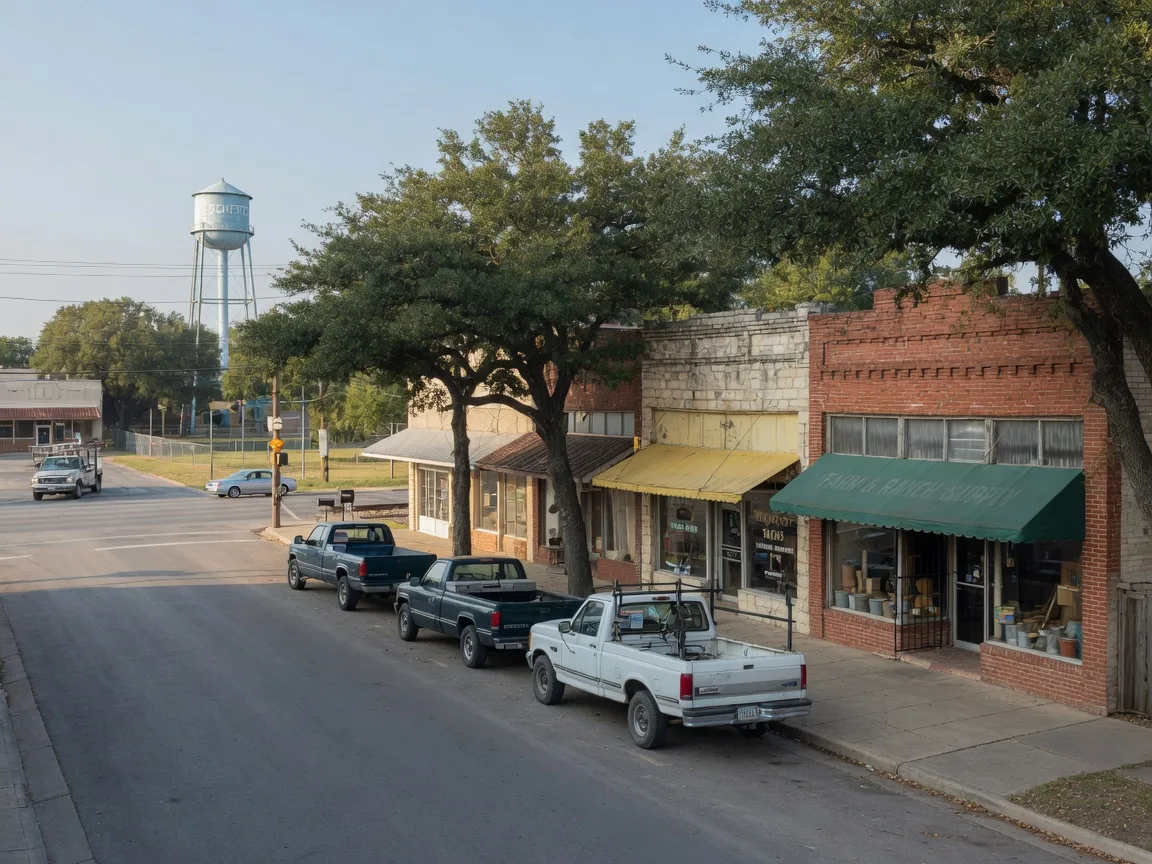
The historic core along Main Street and the FM 78 frontage: older residential fabric, railroad proximity, a working small-town center, and active redevelopment and planning activity. Homes here are generally older, lots and settings vary more, and the Old Town area carries its own planning and zoning conversation.
Newer suburban Cibolo
1990s and 2000s subdivision homes, larger 2010s master-planned communities, production-built homes, and, in some subdivisions, community pools and amenity centers. This is the "suburban Cibolo" most searches picture: orderly streets, HOAs, parks and newer floor plans.
Future-growth areas
FM 78 East, I-10-oriented development, ongoing residential and commercial expansion, and undeveloped tracts that can change over time. Buying here is a bet on what the corridor becomes, so the future-development section of this page applies directly.
The real-estate takeaway
Buying near Old Town Cibolo is a different real-estate decision from buying in a newer HOA subdivision or a future-growth area. The home's age, the HOA, the lot, the school picture, the taxes and the competition from new construction all change with which Cibolo you are actually buying in.
Old Town Master Plan
An active planning effort that affects Old Town property
The City has been working on an Old Town Master Plan, an update to the Cibolo Downtown Revitalization Plan originally adopted in 2014. In February 2025, City Council approved the update effort, and the work has moved through a roughly 12-18 month public process with community input.
The plan addresses the Old Town district's boundaries, land use, redevelopment, the local business environment, community character, and future planning and zoning decisions. Old Town is generally described as the Main Street corridor from FM 78 north to FM 1103, and proposed Old Town overlay amendments to the Unified Development Code (July 2025) aim to ease parking, platting and drainage rules on small pre-1975 lots to encourage revitalization. The draft plan has gone through public review before the adoption process, with a city recommendation step scheduled around the middle of 2026, and the exact status can change as the process moves.
For buyers and sellers near Old Town, this matters as real-estate context: nearby redevelopment, mixed-use and commercial proximity, traffic, future land use and eventually resale context can all shift as the plan is adopted and implemented. If Old Town is on your shortlist, ask about the current status of the plan and the overlay before you write an offer.
Housing Types
Cibolo housing spans multiple eras
Cibolo is primarily a suburban single-family market, but it is not one giant new-build subdivision. Buyers can encounter older homes near the historic core, 1990s subdivision homes, 2000s subdivision housing, 2010s master-planned communities, brand-new active construction, and some remaining larger tracts or development land, and newer communities may carry HOAs with pools and amenities while older areas may have none.
Each era prices differently: an older home on a more established lot near Old Town is a different product from a 1990s subdivision house, a 2000s floor plan, or a 2026 build at Venado Crossing or another active community. That variety is exactly why a citywide median is the wrong tool here, and why the era, builder and neighborhood need to be part of any comparison.
HOA / POA
There is no single Cibolo HOA
There is no one citywide HOA or POA in Cibolo. Associations are subdivision-specific, and current potential examples include Buffalo Crossing, Cibolo Valley Heights, Cibolo Vista, Fairway Ridge, Braewood, Gatewood, Mesa Western and Enclave at Willow Pointe, with others depending on the neighborhood. I will not publish a "Cibolo HOA dues" figure, because no such figure exists.
HOA status, dues, amenities, transfer fees and restrictions depend on the exact subdivision. Before you make an offer, verify the association's dues, transfer or resale fees, rental restrictions, fencing rules, pool access, shed and outbuilding rules, RV and boat parking, solar panel policy, and the architectural approval process, because two Cibolo subdivisions can enforce very different standards.
New Construction
New-construction competition is a major part of the Cibolo market
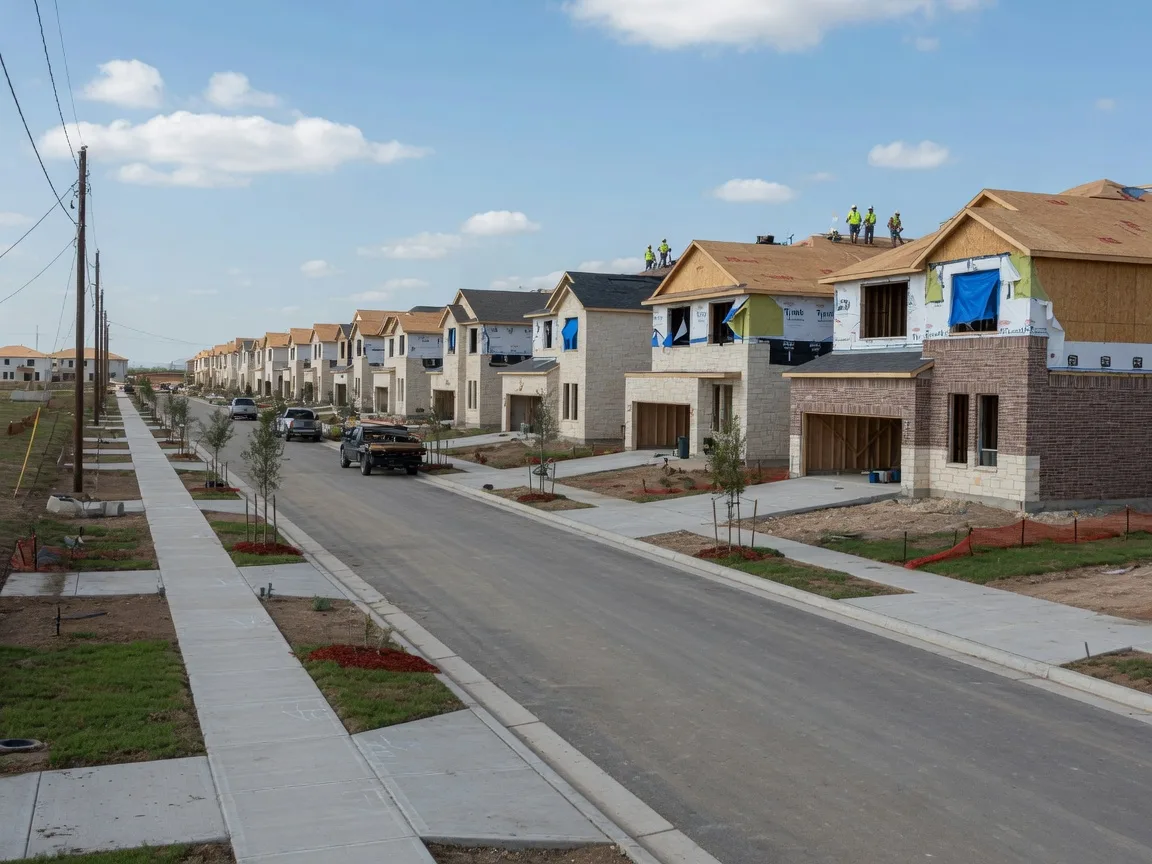
Cibolo continues to add new housing, and the City's growth plans identify continuing development, including the FM 78 East corridor and newer projects such as Venado Crossing. Project status changes, so verify the current phase of any specific community before you compare it.
Venado Crossing: an active example of the new pipeline. Multiple builders have worked the community; Highland Homes is pre-selling a newer section with homes running from roughly the low-to-mid $400s up to the $600s, and it sits about 8 miles from JBSA-Randolph in the SCUCISD zone. The builder lineup and pricing change with each phase, so what is true this quarter may not be next quarter.
FM 78 East and the corridor: TxDOT's FM 1518 expansion program, which ties I-10 through FM 78 toward JBSA-Randolph, was roughly at its midway point in late 2025, with new lanes, intersection upgrades and bridge work over Cibolo Creek continuing into 2026, and the I-35 NEX South Segment at Loop 410 and FM 78 started construction in mid-2025. Road investment and new rooftops tend to travel together in this corridor, which is part of why resale sellers now price against active builder competition.
The effect on resale: resale sellers in many price bands compete with builders offering rate buydowns, closing-cost credits, warranties, newer finishes, inventory-home discounts and energy-efficient systems. That directly affects pricing, and it changes the honest way to compare a used home and a new one.
What a new build often includes
Builder incentives, a new-home warranty, newer systems and current design, and sometimes a different tax and HOA profile depending on the community. Builder financing terms vary, and comparing them against outside financing is part of the diligence. How builder incentives work in the San Antonio area breaks down the fine print.
What a resale home often includes
Established landscaping, existing improvements, potentially negotiable seller concessions, an established neighborhood, and sometimes a larger lot or a different location. Resale condition varies, so budget for the home inspection and read what it finds before negotiating.
The honest comparison: let's compare the builder incentive against the resale seller concession and actual monthly payment instead of just comparing sticker prices. As your loan officer and agent, I can run both sides with the same assumptions so the decision rests on the real number. New construction versus resale across the San Antonio market and builder incentives explained use the same framework in more detail.
Current Market
The Cibolo market, clearly labeled
A warning before the numbers: do not call Cibolo one market. A citywide median hides real differences between Old Town, older subdivisions, newer master-planned communities, active new construction, the Guadalupe County majority and the Bexar County portion, and different school districts. The datasets below measure different things, so they are labeled and kept separate, never combined into one fake "average Cibolo price."
The one-sentence market read: Cibolo is a high-volume, fast-growing market where value varies significantly by neighborhood era, school district, county, builder and new-construction competition.
Redfin, city of Cibolo, August 2026
- Median sale price around $334,778, roughly 2.2% higher than a year earlier.
- About 132 homes sold in the measured window.
- Approximately 56 median days on market.
- About 97.7% sale-to-list ratio.
- Around 49.7% of listings carried price reductions.
Realtor.com, Cibolo, August 2026
- Median list price around $358,500.
- Median sold price around $331,250.
- Approximately $147 per square foot.
- About 549 active listings and 48 median days on market.
- Classified Cibolo as a buyer's market in its August 2026 dataset.
Zillow, separately: the August 2026 typical home value reading was around $331,849, about 1.4% lower than a year earlier. Zillow's "typical value" is a modeled figure, not a sale median, which is another reason the sources are listed apart.
"Realtor.com classified Cibolo as a buyer's market in its August 2026 dataset"
That label describes the conditions in that dataset: meaningful inventory, a large share of listings with price reductions, new-construction competition, and real negotiation opportunity. It is not an evergreen fact, and market conditions change. I will not write "Cibolo is a buyer's market" as a permanent claim, because the balance can shift as inventory, rates and builder activity move.
How to read these numbers: the figures are dated to August 2026 and come from public market trackers, which use different boundaries, windows and methodologies, so they are direction, not precision. List prices are not sold prices, medians move month to month, and the right price for your purchase is property-specific: neighborhood, era, county, school district, condition and builder competition all change the comps. When we work together I pull current listing and sales data for the exact area and price band you are shopping, so ask for the freshest number.
Schools
Cibolo schools: SCUCISD is important, but it is not the only district
SCUCISD (Schertz-Cibolo-Universal City ISD) serves most of Cibolo and is the district people usually mean when they search Cibolo schools. But not every Cibolo property is in SCUCISD, and the exact district and campus are set by the property address, not by the city name, neighborhood or ZIP.
The Marion ISD overlap: Cibolo's own financial reporting identifies Marion ISD as an overlapping governmental jurisdiction affecting a portion of the city, and the eastern and southeastern edge of Cibolo near the town of Marion falls within Marion ISD territory. A handful of newer subdivisions on that edge can route to Marion ISD instead of SCUCISD, and the boundary is not published in a single simple line, so the school-locator maps for both districts decide the answer for an exact address.
Steele versus Clemens: Byron P. Steele II High School is physically in Cibolo at 1300 FM 1103; Samuel Clemens High School is in Schertz at 1001 Elbel Road. Most Cibolo addresses in SCUCISD feed to Steele, typically through J. Frank Dobie Junior High in Cibolo at 395 W Borgfeld Road (grades 7-8). But do not assume Cibolo always means Steele and Schertz always means Clemens; attendance boundaries change as the corridor grows, and the current official attendance-zone map decides the assignment for a specific address.
Boundaries change: districts in this growth corridor adjust attendance boundaries as they grow. Verify the current district and campus assignment using the exact property address and the districts' address-based finders before relying on a listing or a guide. How school boundaries work for buyers is answered in plain language in the Ask Patrick library.
"Verify school district and campus assignment using the exact property address"
A note on ratings: in the most recent Texas Education Agency accountability ratings, SCUCISD earned a B rating with a score of 81 (2024-25 results, published August 2025), and Marion ISD also earned a B in the same release. State ratings change year to year and are published per campus, so check the TEA's current-year result for the specific campus rather than relying on a district-wide label, and I will not describe any district as A-rated unless current official ratings actually say so.
Property Taxes
There is no single total Cibolo tax rate
The full Cibolo tax bill is assembled parcel by parcel from the city, the county, the school district and any special taxing entities, plus the buyer's applicable exemptions. Never estimate a payment from a citywide rate sheet.
The city's own rate, dated: the City of Cibolo adopted a property tax rate of $0.5226 per $100 of taxable value for tax year 2025 (approved by City Council on September 18, 2025). That is one line of the bill, and it applies only to properties inside city limits.
What the different combinations look like: most Guadalupe County Cibolo properties carry City of Cibolo plus Guadalupe County plus SCUCISD plus the county's lateral road component and applicable special jurisdictions; a property on the eastern edge may carry Marion ISD instead of SCUCISD; and a Bexar County portion carries Bexar County taxing entities and appraises through the Bexar Appraisal District. Because school districts and counties mix, the same-value home can produce materially different bills across the city.
Adopted 2025 rates, for reference: City of Cibolo $0.5226, Guadalupe County $0.2784, SCUCISD $1.0769 (the district's November 2025 VATRE election failed, so the adopted rate held), Marion ISD $1.1199 where applicable, and a Guadalupe County lateral road component of $0.0520, all per $100 of taxable value. Combined, a typical City plus County plus SCUCISD plus lateral road total lands around $1.93 before exemptions, and I am showing that as an illustration, not as a quote for any specific home. Rates are re-adopted each year, so verify the current adopted numbers before relying on them.
Exemptions: homestead exemptions, over-65 and disability exemptions and other property-tax exemptions apply to the exact parcel and owner situation, and they change the effective bill. How the Texas homestead exemption works covers the basics.
The honest rule for estimating a payment
Property taxes should be calculated using the exact parcel, school district, county and special districts, and the buyer's applicable exemptions. Send me the address and I can help you identify the correct county, school district and tax jurisdictions before we estimate the payment. It is one of the highest-value checks a Cibolo buyer can do before making an offer.
Appraisal district: if the property is in Guadalupe County, it appraises through the Guadalupe Central Appraisal District. If the exact property falls within Bexar County, verify it with the Bexar Appraisal District instead. Each sets its own assessed values and handles its own protests and exemptions, so do not direct every Cibolo buyer to one appraisal district without checking the address first.
Utilities
Water, sewer, electric and gas all vary by exact address
This is another property-specific issue generic pages get wrong. I will not write that all Cibolo homes have City of Cibolo water and sewer, because the provider can change with the neighborhood.
Water: the City of Cibolo and Green Valley Special Utility District are the two water providers in town. The City's own resident guidance says that any area that does not receive water from the City of Cibolo receives water from Green Valley SUD, and northern portions of the city limits and parts of the extraterritorial jurisdiction sit in GVSUD's certified service area. GVSUD customers inside city limits may also pay a small city franchise fee, so the arrangement depends on the certified service-area map for the exact address.
Wastewater: wastewater treatment is handled regionally through the Cibolo Creek Municipal Authority, and under the 2023 Comprehensive Settlement Agreement the City of Cibolo assumed the retail wastewater service role across a large area south of FM 78 down toward I-10. Again, the retail sewer provider for the specific lot is what matters.
Electric: GVEC (Guadalupe Valley Electric Cooperative) is the electricity provider for most of Cibolo, and the city is largely outside the retail-electric-choice market, so residents typically do not shop among retail providers the way some other Texas cities allow. Verify the serving utility for the exact property.
Gas: CenterPoint is the primary natural gas provider where service is available, and some homes rely on propane. I will not promise natural gas at every address; confirm the gas situation for the exact property and budget accordingly.
Before closing, verify the water provider, sewer provider, account and meter setup, utility easements and current rates by neighborhood, because a provider difference can change the monthly operating cost of the home.
Flood + Drainage
Floodplain and drainage conditions vary by property
I will not tell you "Cibolo is in a flood zone," and I will not tell you Cibolo never floods. Both are false as blanket statements. Flood risk here is parcel-specific.
The mapped flood hazards concentrate along Cibolo Creek, Lower Cibolo Creek, Salatrillo Creek and Town Creek, plus their tributary drainage systems, and FEMA flood insurance rate maps place special flood hazard areas along those corridors. Independent flood-risk data puts a modest share of Cibolo properties, roughly 5.9% per First Street, in flood-risk areas, and FEMA mapping is being updated through the Bexar Regional Watershed Management Cibolo Creek Risk MAP study, so current maps matter more than old assumptions.
The honest checklist: review the current FEMA and city mapping, the lot's grading, drainage paths, any prior water intrusion for the exact property, and nearby development changes that could alter drainage. Flood insurance requirements follow the mapped zone and the lender's guidelines, so a property in or near a mapped zone triggers a different review than one on high ground. How flood zones work for Texas buyers explains the basics in plain language, and I can help flag when a property needs that extra review before you make an offer.
JBSA-Randolph Due Diligence
Will I hear military aircraft at this Cibolo house?
This is genuine real-estate due diligence, not lifestyle fluff. Cibolo sits close to JBSA-Randolph, an active pilot-training base, and official Air Installation Compatible Use Zone (AICUZ) studies for Randolph, including the 2008 study, include surrounding communities such as Cibolo and plot aircraft noise contours that extend north of the base.
The honest answer to the question is simple: it depends on the property and flight activity. Some Cibolo homes sit where trainer aircraft and jet traffic are a regular part of daily life; others rarely hear them. I will never promise quiet, and neither should any source that has not checked the exact address.
For noise-sensitive buyers
- Check the current JBSA AICUZ and noise mapping for the exact address.
- Visit the property at different times of day, including weekdays, because flight training follows schedules, not the listing photos.
- Evaluate the actual neighborhood and its position relative to the base's flight patterns.
What I can do is help you get the mapping, the timing and the honest neighborhood picture before you commit.
Military + VA Relocation
Relocating to the Randolph area
JBSA-Randolph is a major employment anchor minutes southwest of Cibolo, and military relocation is a natural reason people look here. As a Marine veteran who works both sides of the deal, the loan and the home, I understand the relocation timeline firsthand. This stays a Cibolo real-estate page, not a VA or PCS manual, but the practical crossover is worth covering.
The topics that come up most in a Randolph-area relocation: comparing Cibolo neighborhoods by their actual route to the base, PCS timing and whether to buy before or after orders, VA financing and how it interacts with the property, coordinating the sale of a current home with a new purchase here, and monthly-payment planning that fits a military pay structure.
I will not assume any individual Cibolo resident is military, and I will not build this guide around resident demographics. But if a PCS to Randolph is your reason for looking, the financing and the neighborhood search should be solved together, and that is exactly the kind of coordination I do. The VA home loan guide, VA loans in the JBSA market and selling and buying at the same time cover the mechanics.
Moving toward the Randolph area?
I can help you compare Cibolo neighborhoods, commute considerations and VA financing together, so the move and the mortgage work as one plan.
Financing
Financing options, stated accurately
Conventional, FHA, VA, Texas down payment assistance and first-time-buyer programs can all fit a Cibolo purchase, depending on the borrower and the property. I will not say any program works easily just because a price fits a limit; borrower qualifications and property eligibility always matter.
VA, stated accurately: a veteran with full entitlement generally does not face the county loan-limit cap that conventional lending uses. Per current VA guidance, since January 1, 2020, there are no county loan limits for veterans with full entitlement, and the VA does not cap how much a qualified borrower can finance, as long as the borrower can afford the loan and the appraisal supports the value. Lender qualification, entitlement status, and the property meeting VA requirements still matter, and I will not publish outdated guarantee math or imply a full-entitlement veteran is limited to the local conforming limit.
USDA: I will not call Cibolo universally eligible or universally ineligible for USDA financing, because USDA eligibility is address-specific and income-limited. If a particular outer Cibolo property is on your list, I can check it against the official USDA eligibility map and tell you what the address actually shows.
The rest of the toolkit applies normally: conventional and FHA for most standard purchases, Texas down payment assistance programs for qualified first-time buyers, and builder-incentive comparisons when new construction is in the mix. The first-time homebuyer roadmap, the mortgage financing guide and the down payment assistance page cover the program details, and how much house you can afford is the right starting point for the monthly budget.
Zoning + Improvements
Cibolo uses a Unified Development Code, so plan your improvements carefully
If you plan a pool, workshop, detached garage, shed, accessory building or major addition, verify zoning, setbacks, easements, HOA restrictions, drainage and utility placement before closing. Do not assume an improvement is allowed because a neighbor has one; the neighbor's lot, HOA and permits may all be different from yours.
Cibolo's Unified Development Code sets the zoning and development standards, and subdivision HOAs layer their own rules on top. For a heavily remodeled older home, also verify permit history: additions, garage conversions, electrical upgrades, structural work, pools and accessory buildings should all have records with the City. Feasibility questions like "can I build a workshop here?" are answerable before you buy, and they are a lot cheaper to answer before you commit than after.
Future Development
Do not expect an empty field to stay that way
This matters in a fast-growing city. Before buying near undeveloped land, check the current zoning, the comprehensive plan, active development applications, planned roads, commercial projects and subdivision expansion for the property around you. FM 78 East and the I-10-oriented side of the city are active growth directions, and the honest answer to "what will that empty tract become?" is to check the City's planning pipeline and assume change.
An empty field is not a permanent view, and a quiet street is not a promise. Buyers who want predictable surroundings should choose a built-out neighborhood or account for the possibility of future construction; buyers who want in early should go in knowing what is already on the books nearby.
Commute + Employment
Test the actual route at the time you will drive it
The corridors that matter in Cibolo are FM 78, FM 1103, I-35, I-10 and the routes toward JBSA-Randolph via FM 1518 and the nearby connections. They serve commutes to JBSA-Randolph, downtown San Antonio, New Braunfels, Seguin and the I-35/I-10 employment corridors. Distance alone does not capture FM 78 and I-35 traffic, so I will not publish fixed commute times as evergreen facts.
Traffic patterns differ significantly by neighborhood, and by the hour. Drive your actual route during your real commute window and time it yourself, because rush hour on FM 78 or I-35 behaves nothing like mid-morning, and the exact subdivision changes which road you leave from. The San Antonio commuter guide digs into the route planning side.
Metrocom context: the City of Cibolo itself describes the region as "the Metrocom," the northeast corner of Bexar County and the southwest corner of Guadalupe County, with sister cities that include Universal City, Schertz, Selma, Live Oak, Garden Ridge, Converse and Kirby. When you hear Metrocom in local discussions, that is the region being described, and it is the natural frame for comparing Cibolo against its neighbors rather than against Hill Country communities farther north.
Buyer Due Diligence
The Cibolo buyer's 21-point pre-offer checklist
Before buying in Cibolo, work this list for the exact property. It is longer than the checklist most communities need, because Cibolo genuinely has more moving parts: city limits, county, school districts, utilities and new construction can all change within a few streets. This list should dwarf any lifestyle content on this page, because it is the part that protects your money.
- Is the property actually inside Cibolo city limits?
- Guadalupe or Bexar County?
- Correct appraisal district (Guadalupe CAD or Bexar CAD)
- SCUCISD or another district such as Marion ISD?
- Exact campus assignment from the current attendance-zone map
- HOA / deed restrictions for the subdivision
- Current survey and property lines
- Floodplain and drainage for the parcel
- Water provider by address
- Sewer provider by address
- Electric and gas provider by address
- JBSA-Randolph aircraft and noise considerations
- Permit history for the home and any additions
- Easements and setbacks
- Zoning under the Unified Development Code
- Future pool, garage or workshop feasibility
- Property-tax jurisdictions and exemptions
- New-construction competition in the price band
- Builder incentives if comparing new homes
- Surrounding undeveloped land and planned future development
- The actual commute route, driven at the time you commute
That is a lot to verify, which is exactly the point: the word "Cibolo" on a listing tells you far less here than it does in most cities. Send me the address and I will help you work the list before you make an offer.
For Sellers
Selling in Cibolo: price the submarket, not the citywide estimate
Cibolo sellers should not rely on a citywide automated estimate without further filtering, because the city genuinely contains multiple submarkets. The comp filters that matter here: Old Town versus newer subdivision, neighborhood, builder, year built, school district, lot size, condition, upgrades, HOA amenities, pool, garage, new construction nearby, and active builder incentives in the price band.
Current seller competition: recent August 2026 datasets showed meaningful active inventory, nearly half of listings carrying price reductions in some datasets, new-construction competition, and buyers negotiating below original list prices in many situations. I will not guarantee concessions, and I will not tell you that you must offer a rate buydown. Current competition can make pricing and strategic concessions more important than in a tighter seller's market, and knowing what a buyer can get from the builder today is part of that strategy.
Seller prep documentation: gather the survey, HOA documents, improvement receipts, roof and HVAC information, permits, pool records, utility information and builder warranty documents where applicable. A documented story beats a vague reassurance every time, especially when a buyer is comparing you against a builder with a one-year warranty and a clean file.
The seller process: identify the correct submarket, confirm the county, school district and tax jurisdictions, compare current resale competition, compare active new construction, document improvements, prepare the HOA and resale information, understand what builders are offering, and price against genuinely comparable homes. The pricing-your-home guide and the complete seller guide walk through the mechanics.
Own a Cibolo home?
I can compare it against the right subdivision and current builder and resale competition instead of relying on a citywide automated estimate, so you get honest positioning and a real pricing strategy.
Food + Family
A short note on everyday life in Cibolo
A few practical, low-key examples of everyday life here, not a tourism guide. Businesses, hours, park rules and event dates change, so treat these as starting points and confirm current details before you rely on them.
Cibolo feels like a fast-growing suburban city layered around an older small-town core. Daily life is largely car-oriented and connected to regional employment corridors, while the exact subdivision can change the home's age, HOA, school assignment, utility provider and competition from new construction.
Coffee
Frenchie Coffee Roasters
200 Pfeil Road. One locally owned Cibolo coffee example: the roastery's first brick-and-mortar shop, opened in 2025 and operating with regular weekly hours. A practical neighborhood stop rather than a ranking of the city's coffee spots.
Everyday dining
The Rooted Fork
201 N Main Street. One Old Town dining example that helps illustrate the historic Main Street area, currently operating as a breakfast and lunch spot in the historic core. Confirm current hours before you go.
Outdoors
Schlather Park
The single outdoor example. Current city parks information lists a walking trail, an 18-hole disc golf course, a play area, picnic space, grills, a pavilion and outdoor fitness equipment at this park off Wiedner Road. Confirm current park hours and rules before you go.
Family
Niemietz Park
The single kid and family example. Current city parks information lists an accessible playground, swings and climbers, athletic fields and facilities, and walking trails along FM 78, with pavilions and picnic tables. Confirm current features and hours.
Local tradition
Cibolofest
One short recurring tradition mention: Cibolofest, the city's annual celebration held each October at the Multi Event Center on Main Street, with carnival rides, a petting zoo, pony rides, food and craft vendors and live entertainment. The 2026 edition is scheduled for Saturday, October 17; confirm future dates before planning around it.
A note
Seasons and schedules change
Hours, menus, park rules and event dates change, and the real estate side of this page matters more than the lifestyle side. These are practical examples of everyday life, not promises, so confirm the current details with the business or city before you rely on them.
FAQ
Cibolo, Texas: common questions, straight answers
Cibolo is an incorporated city in the northeast San Antonio metro, in the Guadalupe County growth corridor east of Schertz. It is built around FM 78 and FM 1103, with I-35 to the north, I-10 to the south, and JBSA-Randolph right to the southwest. It is not a US-281 Hill Country community, and the most recent U.S. Census Bureau estimate put its population near 39,019 as of July 1, 2025.
No. Cibolo is its own incorporated city in the northeast San Antonio metro, not a San Antonio neighborhood. It sits inside the San Antonio to New Braunfels growth corridor and has a close working relationship with JBSA-Randolph, but its government, taxes, zoning, permits and police and fire jurisdiction are Cibolo's own.
Cibolo is primarily a Guadalupe County city. The municipal boundary is not entirely in Guadalupe County, though: a section south of West Schaefer Road, where Cibolo Creek serves as the county line, extends into Bexar County, and Census place data lists the city across both counties. The county determines the appraisal district, part of the tax bill, recording jurisdiction and some utility and school details, so verify the exact address.
No. ZIP 78108 is the mailing ZIP for much of Cibolo, but the ZIP and the city are not the same thing. A 78108 address can sit outside city limits. City taxes, utilities, zoning, permits, police and fire jurisdiction and school district all follow municipal boundaries and the exact property, never the ZIP alone.
No. Schertz-Cibolo-Universal City ISD serves most of the city and is strongly associated with it, but a portion of Cibolo near the town of Marion falls in Marion ISD, and Cibolo's own financial reporting has identified Marion ISD as an overlapping governmental jurisdiction affecting part of the city. Verify the district and the exact campus using the property address.
Byron P. Steele II High School is physically in Cibolo at 1300 FM 1103, while Samuel Clemens High School is in Schertz at 1001 Elbel Road. Most Cibolo addresses in SCUCISD feed to Steele, typically through J. Frank Dobie Junior High in Cibolo at 395 W Borgfeld Road. But do not assume Cibolo always means Steele and Schertz always means Clemens; attendance boundaries change, so the current official attendance-zone map decides the exact assignment.
There is no single Cibolo price, and a citywide median hides real differences by neighborhood era, school district, county and new-construction competition. August 2026 public-tracker data put Redfin's median sale price around $334,778, Realtor.com's median list near $358,500 with median sold near $331,250, and Zillow's typical value near $331,849. Those are labeled separately on this page because they measure different things.
Realtor.com classified Cibolo as a buyer's market in its August 2026 dataset, based on meaningful inventory, a large share of listings carrying price reductions, new-construction competition and negotiation opportunity. That describes conditions in that dataset, not a permanent label, and market conditions change month to month.
No. There is no single Cibolo HOA or POA. Associations are subdivision-specific, with current examples including Buffalo Crossing, Cibolo Valley Heights, Cibolo Vista, Fairway Ridge, Braewood, Gatewood, Mesa Western and Enclave at Willow Pointe, and some older areas have none. HOA status, dues, amenities, transfer fees and restrictions depend on the exact subdivision.
It depends on the address. The City of Cibolo and Green Valley Special Utility District are the two water providers in town; the city's own guidance says any area that does not receive water from the City of Cibolo receives water from Green Valley SUD, and northern portions of the city limits and parts of the ETJ sit in GVSUD's service area. Wastewater is treated regionally through the Cibolo Creek Municipal Authority. Confirm the providers for the exact property.
Floodplain and drainage conditions are parcel-specific. Mapped flood hazard concentrates along Cibolo Creek, Lower Cibolo Creek, Salatrillo Creek and Town Creek and tributary drainage corridors, and only a modest share of Cibolo properties sit in FEMA special flood hazard areas. Review the current FEMA and city mapping for the exact property, never the city as a whole.
It depends on the property and flight activity. Cibolo sits close to JBSA-Randolph, an active pilot-training base, and official AICUZ studies for Randolph include surrounding communities such as Cibolo with noise contours extending north of the base. Some Cibolo homes hear trainer aircraft regularly, others rarely. Check the current AICUZ and noise mapping and visit the property at different times if noise matters to you.
In many price bands, resale sellers compete directly with builders offering rate buydowns, closing-cost credits, warranties, newer finishes, inventory discounts and energy-efficient systems. The honest comparison is the monthly payment, not the sticker price, because a builder incentive can change what the same price actually costs per month.
There is no one total Cibolo tax rate. The adopted tax year 2025 rates include the City of Cibolo around $0.5226 per $100 of taxable value, Guadalupe County around $0.2784, SCUCISD around $1.0769, Marion ISD around $1.1199 where applicable, and a Guadalupe County lateral road component around $0.0520, and the full bill is assembled parcel by parcel plus the buyer's exemptions. Two similar homes can carry noticeably different bills.
The 21-point checklist on this page is the honest answer: city limits, county, appraisal district, school district and campus, HOA and deed restrictions, survey, floodplain and drainage, water, sewer, electric and gas providers, JBSA-Randolph noise, permit history, easements and setbacks, zoning, improvement feasibility, property-tax jurisdictions, new-construction competition, builder incentives, surrounding development plans and the actual commute route.
They are neighboring cities in the same northeast San Antonio corridor and both are strongly associated with SCUCISD. Cibolo is the smaller, faster-growing city to the east, with an older historic core along Main Street and a deep pipeline of new construction along FM 78 and FM 1103, while Schertz is the larger, more established city with the bigger retail and employment base. County, school district, taxes and utilities still need to be verified by exact address in both.
Nearby Areas
Compare Cibolo with nearby Metrocom communities
Schertz
The larger, more established neighbor on the west side
Universal City
The Randolph-adjacent city to the southwest
Selma
Retail corridor city along I-35
New Braunfels
The I-35 growth city to the northeast
North San Antonio
The wider metro side many Cibolo buyers compare against
Live Oak
Established neighbor on the Randolph side
Ready to evaluate a Cibolo property?
If you are buying
Looking at a Cibolo home? Send me the address. I can help you identify the school district, HOA, taxes, utilities, flood considerations, builder competition and financing before you make an offer.
If you are selling
Own a Cibolo home? I can compare it against the right subdivision and current builder and resale competition instead of relying on a citywide automated estimate.
Military or VA move
Moving toward the Randolph area? I can help you compare Cibolo neighborhoods, commute considerations and VA financing together.
Comparing a new build
Comparing a Cibolo new build with a resale? I can break down the builder incentives, seller concessions and estimated monthly payment side by side.


Patrick Kevin Fagan | Loan Officer and Realtor | 210-317-6514 | pfagan@nexalending.com | TX Sales Agent License 454749
NEXA Lending and AXEN Realty LLC. Equal Housing Opportunity.
For Sellers
Selling in Cibolo, Texas
Pricing a Cibolo home starts with the specific property: the historic core or a newer section, the lot, the school and utility answers for the exact address, and what comparables closed for.
What I review before pricing a Cibolo home
- Recent closed sales in the same subdivision or micro-area, never the whole ZIP
- Active and pending competition: what buyers can buy instead of your home
- Lot size, usable acreage, views, and topography
- Age, condition, renovations, and permit history
- HOA, city jurisdiction, and taxing districts for the exact parcel
- The historic core versus newer sections with different lots, ages, and restrictions
- Address-specific school districts and utility providers across Cibolo's footprint
Current market snapshot: Cibolo
| Median closed price | Data being compiled |
| Closed sales | Data being compiled |
| Median days on market | Data being compiled |
| Active listings | Data being compiled |
Snapshot figures for Cibolo are currently being compiled from closed and active MLS records and will be dated and sourced when published. Prices are never quoted from a ZIP-level estimate. Ask Patrick for the latest Cibolo numbers in your price band.
What buyers compare in Cibolo
- School district by exact address
- New construction competition on the I-35 corridor
- Older town lots versus master-planned sections
- Taxes and any MUD or PID status
Price it like a real Cibolo seller
The price starts with the specific property: the exact subdivision or tract, its condition, and what buyers can actually buy right now. I build that analysis property by property, then show you the seller net sheet so you know what you walk away with. No automated ZIP estimate and no pressure.
About Patrick Kevin Fagan, REALTOR®
Patrick Kevin Fagan is a Texas Real Estate Sales Agent (#454749) with AXEN Realty LLC and a Senior Loan Officer (NMLS ID #877741) with NEXA Mortgage, LLC (NMLS #1660690). He brings 23+ years in mortgage lending and 19 years in real estate, serving homebuyers, homeowners, and sellers across Greater San Antonio and the Texas Hill Country.
