
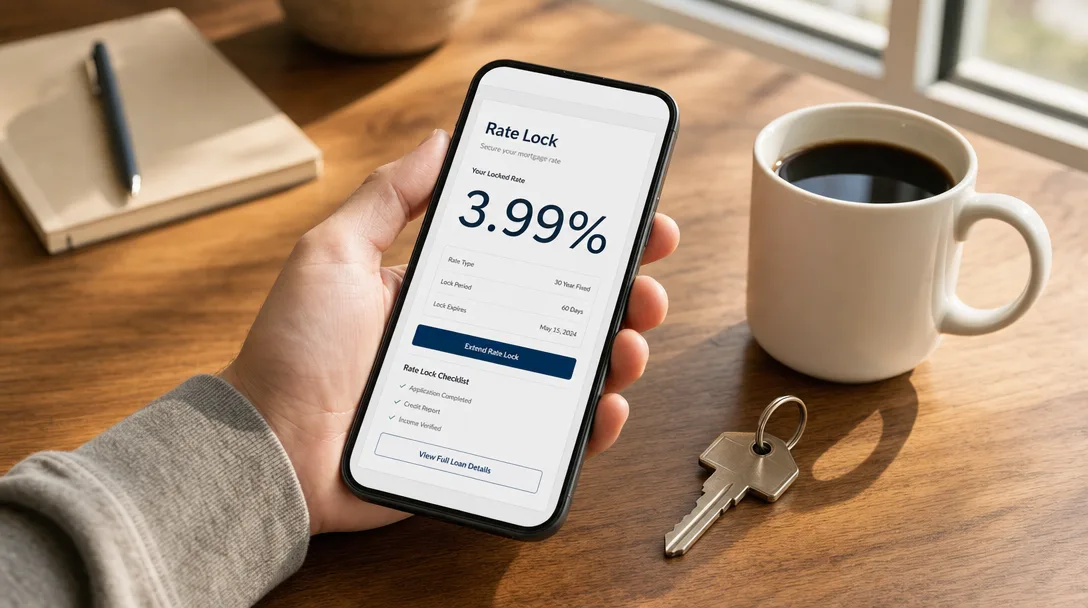
Patrick's Quick Answer
With market rates around 7%, a buydown can get you a 4.99% year-one rate through a 2-1 structure: about 2 points below the note rate in year one and 1 point below in year two, and a 3-2-1 structure can get you close to 3.99% in year one. On a $300,000 loan the 2-1 saves roughly $385 a month in year one, funded by seller or builder concessions, not discount points. It lowers early payments, then settles at the full rate.
Patriot Nation, we are in 2026, and we know where interest rates are. Freddie Mac's 30-year average hit 7.03% for the week of September 24, 2026, its highest level in a year, so most buyers are looking at rates right around 7% depending on credit scores and loan program. But what if I could get you a rate that starts about two points below that, saving you thousands of dollars without costing you a penny out of pocket? That is the magic of interest rate buydowns. Let me show you exactly how it works.
Reading about buydowns because a builder advertised one? Builders in San Antonio are advertising rates from about 3.4% to 4.99% right now, and they are not all the same deal. See the full breakdown of permanent buydowns, 2-1 buydowns, ARMs and closing-cost credits in the new guide: San Antonio Builder Incentives, Decoded (Fall 2026).
Watch Patrick explain rate buydowns on his YouTube channel. Hit the like and subscribe to support the content.
1. The Hook: What If You Could Get a Two-Point Discount?
What if you could get a rate about two points below market the first year, one point below the second year, then your market rate for the rest of the loan, saving you thousands without spending a penny out of pocket? That is exactly what an interest rate buydown can do for you. Through skillful negotiation with the seller, we can use seller concessions to pay for your rate reduction for the first couple of years. No extra cash from you. Just lower payments when you need them most.
On an average $300,000 first home purchase with a note rate around 6.99%, you are going to save about $385 per month for the first 12 months and about $197 per month for the second year. That is putting thousands of dollars back into your pocket that you can use for anything you want.
See how a builder-paid 2-1 buydown plays out in Patrick's video on 2 Reasons First-Time Home Buyers Are Choosing New Builds Right Now.
2. What Is an Interest Rate Buydown?
An interest rate buydown is simply this: the lender lowers your interest rate for a set number of years in exchange for upfront money. Usually that covers the first, second, or third years. The key difference from discount points is that buydowns are paid by the seller, not the buyer. That is a crucial distinction.
A discount point is something you, the buyer, pay to permanently buy down the rate for the full 30-year term. Each point is 1% of the loan amount. The interest rate buydown is something we want the seller to pay for through seller concessions. We do not want you to pay anything extra.
Key distinction: Discount points = buyer pays, permanent rate reduction. Temporary buydown = seller pays through concessions, rate reduced for first 1-3 years only.
3. Types of Buydowns
Let us assume a note rate of 6.99%, right around the 7.03% Freddie Mac 30-year average for the week of September 24, 2026, and realistic for a buyer with a 680 FICO score using an FHA loan. Here are the three main types of temporary buydowns:
1-0 Buydown
1% below the note rate for year 1. The simplest buydown and the least expensive.
- Year 1: 5.99% (1% below 6.99%)
- Years 2-30: 6.99% (note rate)
2-1 Buydown
2% below the note rate in year 1, 1% below in year 2. The most popular option for a reason.
- Year 1: 4.99% (2% below 6.99%)
- Year 2: 5.99% (1% below 6.99%)
- Years 3-30: 6.99% (note rate)
3-2-1 Buydown
3% below in year 1, 2% below in year 2, 1% below in year 3. The most aggressive temporary buydown, and the one that gets you a first-year rate near 3.99%.
- Year 1: 3.99% (3% below 6.99%)
- Year 2: 4.99% (2% below 6.99%)
- Year 3: 5.99% (1% below 6.99%)
- Years 4-30: 6.99% (note rate)
4. Worked Example: $300,000 FHA Purchase
Let us put real numbers on a 2-1 buydown. We will use a $300,000 purchase with an FHA loan, 660-680 credit score, and a note rate of 6.99%.
4.99%
Year 1 Rate
$1,609
Principal + Interest
Save $385/mo
5.99%
Year 2 Rate
$1,797
Principal + Interest
Save $197/mo
6.99%
Years 3-30
$1,994
Principal + Interest
Full Note Rate
Total savings over 24 months: $6,984
Year 1: $4,620 savings · Year 2: $2,364 savings
Cost to the lender for this 2-1 buydown: approximately $7,000
In the first year at 4.99%, your principal and interest payment is about $1,609. At the note rate of 6.99%, it would be $1,994. That is a $385 difference per month, or $4,620 in year one alone. In year two at 5.99%, your payment is $1,797, saving you $197 per month, or $2,364 over the second year. Over the full 24 months, you save about $7,000.
5. How to Get the Seller to Pay
How do you actually get the seller to pay for your buydown? Sellers are not just going to roll over and write a check. But in a balanced market, which is where we are right now in Texas and across much of the country, you can negotiate pretty fairly.
On a $300,000 purchase, I am averaging about $10,000 in seller concessions for my clients. The cost to set up a 2-1 buydown on that loan is approximately $7,000. So we take $7,000 out of the $10,000 in seller concessions and allocate it to the buydown fund. You still have $3,000 left over from the concessions to lower your closing costs. Your cash-to-close goes down, and your rate goes down. Win-win.
How the $10,000 Gets Split
2-1 Buydown
$7,000
Closing Cost Reduction
$3,000
Total Seller Concessions
$10,000
6. Where the Free Buydowns Live Now: Builders
In 2026 the cheapest buydowns are coming from builders, not from lender promotions. With rates over 7%, San Antonio builders are advertising 2-1 buydowns, permanent rate buydowns, and closing-cost credits on top, and each offer is a different deal. Some builders fund the buydown themselves so you get the low first-year payment without paying points, and the tradeoff is almost always the preferred lender and sometimes the title company.
A builder-funded 2-1 buydown works exactly like the example above: the note rate stays near market, the builder pays the buydown fund, and your payment steps up after year two. The difference is who writes the check, and the catch is whether the builder's lender nets better than an outside quote. Sometimes the builder's lender really is the best deal, and Patrick will say so when it is.
Want the current offers decoded? Builders in San Antonio are advertising rates from about 3.4% to 4.99% right now. The full breakdown, with verified offers, APRs, a side-by-side payment table, and a calculator that compares each structure, is in the new guide: San Antonio Builder Incentives, Decoded (Fall 2026).
7. Buydown vs. Using All Seller Concessions for Closing Costs
This is the balancing act every buyer faces. You have a fixed pool of seller concessions, and you get to choose how to use them. You have two main strategies:
Strategy A: Minimize Your Monthly Payment
Use a portion of seller concessions to fund a buydown. Your payment drops significantly for the first 1-2 years. This is ideal if monthly cash flow is your priority.
- Lower rate = lower monthly payment
- More breathing room in your monthly budget
- Still have some concessions left for closing costs
Strategy B: Minimize Your Cash-to-Close
Use all seller concessions to lower your closing costs. Your check at closing is as small as possible. This is ideal if preserving cash is your priority.
- Smallest possible check at closing
- Keep more cash for moving, furniture, repairs
- No rate reduction, full market rate payment
Both strategies are valid. It depends on your financial priorities. If lowering your monthly mortgage payment is more important, use money towards the buydown. If you are more concerned about writing the smallest check possible, use all the concessions to slash your closing costs. I work through this decision with every buyer to find the right balance.
Want to Learn More? Join the Free Webinar
I give a free first-time homebuyer webinar about every third or fourth Thursday. In 45 minutes, I walk you through pre-approval to keys. Everything you need to know about negotiation, buydowns, contracts, and closing. There is a Q&A session and I show real documents. Sign up at the link below.
Register for the Free Webinarwebinar.themortgagepatriot.com · Complimentary · Q&A included
Continue Your Education
Explore more articles from Patrick to deepen your knowledge.
5 Ways to Lower Your Mortgage Payment
Beyond the interest rate
How to Negotiate the Price of a Home
Save thousands with the right strategy
FHA vs. Conventional: Which Loan Is Right?
Compare the two best options for buyers
5 Contract Terms Buyers Should Never Agree To
Protect yourself in the contract
Ready to See What Rate You Can Get?
The math on buydowns works, but the right strategy depends on your specific situation. As a dual-licensed Loan Officer and Realtor, I can handle both the real estate and the mortgage side. That means I can negotiate the seller concessions and structure the buydown in one seamless process. Let us run the numbers together.
About Patrick Kevin Fagan, REALTOR®
Patrick Kevin Fagan is a Texas Real Estate Sales Agent (#454749) with AXEN Realty LLC and a Senior Loan Officer (NMLS ID #877741) with NEXA Mortgage, LLC (NMLS #1660690). He brings 23+ years in mortgage lending and 19 years in real estate, serving homebuyers, homeowners, and sellers across Greater San Antonio and the Texas Hill Country.
Answered by Patrick Kevin Fagan
Texas Real Estate Sales Agent #454749, AXEN Realty LLC · Senior Loan Officer, NMLS ID #877741, NEXA Mortgage, LLC
Call or text: 210-317-6514
