
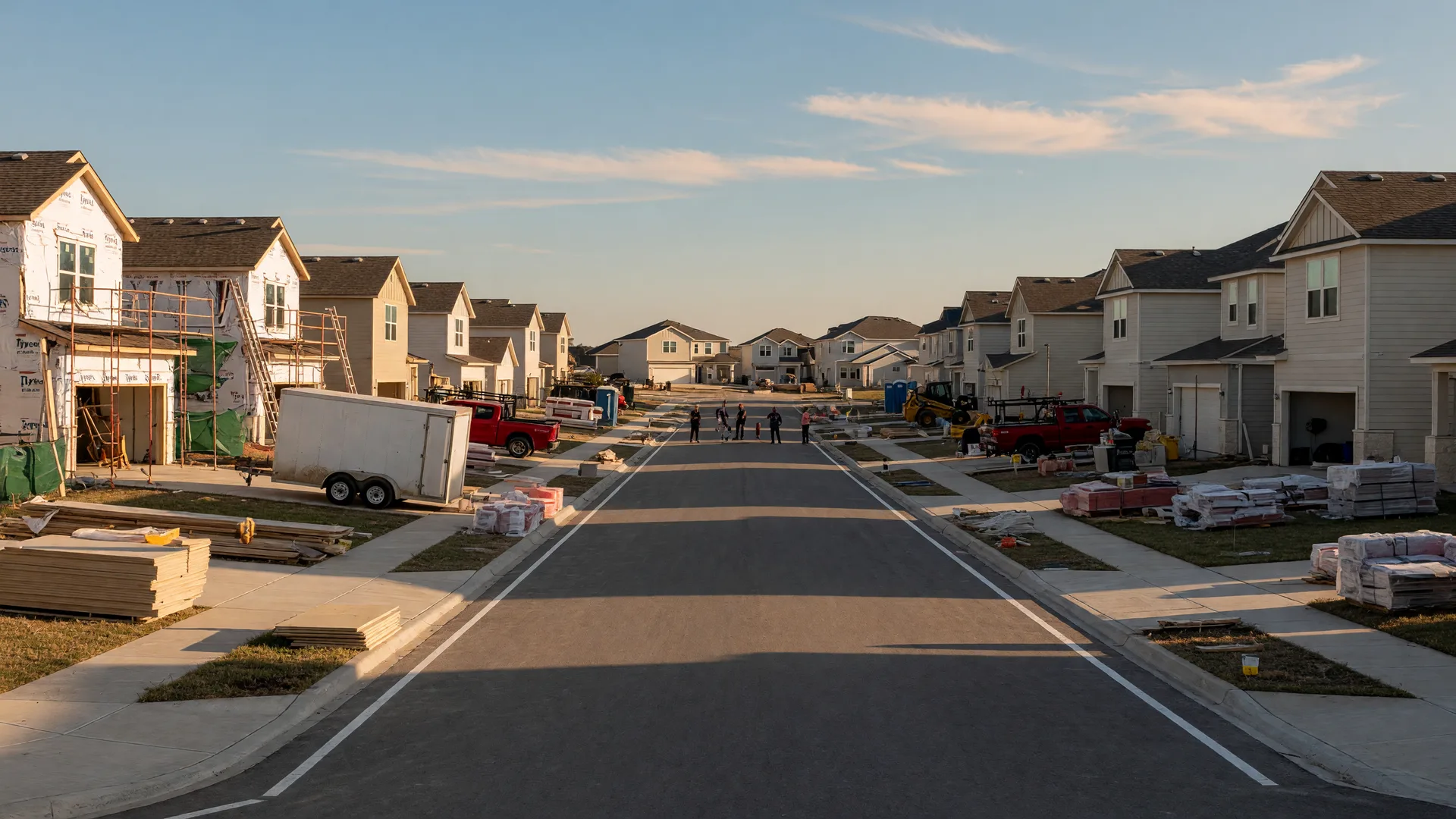
Patriot Nation, the new home sales office is the friendliest room in real estate, and it is also the one with the most fine print per square foot. Builders in 2026 are spending aggressively to move homes, mostly through rate buydowns and credits, and the buyers who read the fine print keep the value. Here is what to negotiate, what to question, and how the timing works.
Tour new communities with the incentive math prepared.
I break down each builder's offer, base versus finished price, and the special district costs before you sit down in the sales office, so you negotiate from facts.
What 2026 incentives actually contain
The headline number in the sales office is almost always a rate, and in 2026 the fine print behind it matters more than ever:
- Temporary buydowns lead the market. 2-1 and 2-1 structures are common, funded by the builder at real money, in the neighborhood of $8,000 to $15,000 per home, with 3-2-1s offered to move harder inventory. Some builders pair permanent buydowns that lock sub-6% rates.
- Closing cost credits follow. $5,000 to $15,000 is the common band, with $20,000 plus on inventory homes, and credits can often flex between closing costs, the buydown, and design upgrades.
- The negotiation order matters: rate first, then closing costs, then design credits. Builders expect that sequence.
The builder incentives explainer digs into what each offer really trades, the new construction process guide maps the whole purchase step by step, and the San Antonio Builder Incentives, Decoded guide keeps the current offers verified, with real APRs and per-community numbers.
Base price vs. finished price, the gap nobody quotes
Rounded example, not a quote
The finished price drives your loan, your taxes, and your appraisal. Budget on the finished number or the sales office math will surprise you at the design center.
The design center is where buyers overspend: flooring, kitchen upgrades, lighting, and "structural" items that cannot be added later. The rule that saves the most: set a design budget before you walk in, and let the upgrades guide tell you which items actually pay off at resale.
Special assessments, MUDs, CDDs, and the HOA reality
Newer communities in Texas lean on special districts, and the fine print lives in the builder packet:
- HOA dues in new communities commonly run about $150 to $400 a month, covering amenities or just the common areas, depending on the community.
- Special assessments are one-time charges for repairs or infrastructure the reserve cannot cover, from a few hundred dollars to thousands, and they can arrive with short payment windows.
- MUD and CDD districts fund roads, water, and sewer through property tax overlays, and in Texas they can push effective tax rates to 3% or higher of assessed value in some new communities.
My new build versus resale guide compares the true carrying costs, and the HOA explainer covers what the dues buy and what they hide.
Here's a pearl for you: read the district documents before the contract, not after.
The MUD tax rate, the HOA budget, and any planned assessments are in the builder's disclosures. I review them with buyers so the monthly cost you budget is the monthly cost you pay.
Deposits, contracts, and the builder's own rules
New construction uses the builder's contract, not the standard resale document, and it is one-sided by design. The earnest or deposit structure, the upgrade payment schedule, and the timeline are all in that paperwork, so review it with someone who knows what to challenge. The deposit's forfeiture terms deserve a careful read, and the new construction inspection guide covers the final walkthrough and builder walkthrough you must not skip, because warranty punch lists live there.
Timing and your rate lock
A new build runs on builder timelines, commonly several months from contract to closing, longer when ground has not broken, and that window is the enemy of a 30-day rate lock. The fix is a long-term lock, often 90 to 180 days or more, sometimes at a small cost, paired with a float-down that lets you capture a better rate if the market improves before closing. Inventory homes close far faster, which is why builders discount them: they want the sale off the books. My San Antonio new construction page lists the active communities and their current incentive posture.
Frequently Asked Questions
What kind of incentives do builders offer in 2026? Tap to expand
What is the difference between base price and finished price in new construction? Tap to expand
What are special assessments, MUDs, and CDDs on new builds? Tap to expand
How long does buying new construction take versus resale? Tap to expand
Can I negotiate a new construction deposit or earnest money? Tap to expand
Buy the house the builder advertises, not the paper they sign.
I have negotiated builder incentives, design center budgets, and new-build rate locks across San Antonio's communities, and I will keep the fine print from costing you what the marketing gives back.
About Patrick Kevin Fagan, REALTOR®
Patrick Kevin Fagan is a Texas Real Estate Sales Agent (#454749) with AXEN Realty LLC and a Senior Loan Officer (NMLS ID #877741) with NEXA Mortgage, LLC (NMLS #1660690). He brings 23+ years in mortgage lending and 19 years in real estate, serving homebuyers, homeowners, and sellers across Greater San Antonio and the Texas Hill Country.
Answered by Patrick Kevin Fagan
Texas Real Estate Sales Agent #454749, AXEN Realty LLC · Senior Loan Officer, NMLS ID #877741, NEXA Mortgage, LLC
Call or text: 210-317-6514
Incentive ranges, HOA dues, and district costs vary widely by community and change through the year; figures are typical 2026 ranges and examples, not quotes. Read each builder's documents for your specific community.
