
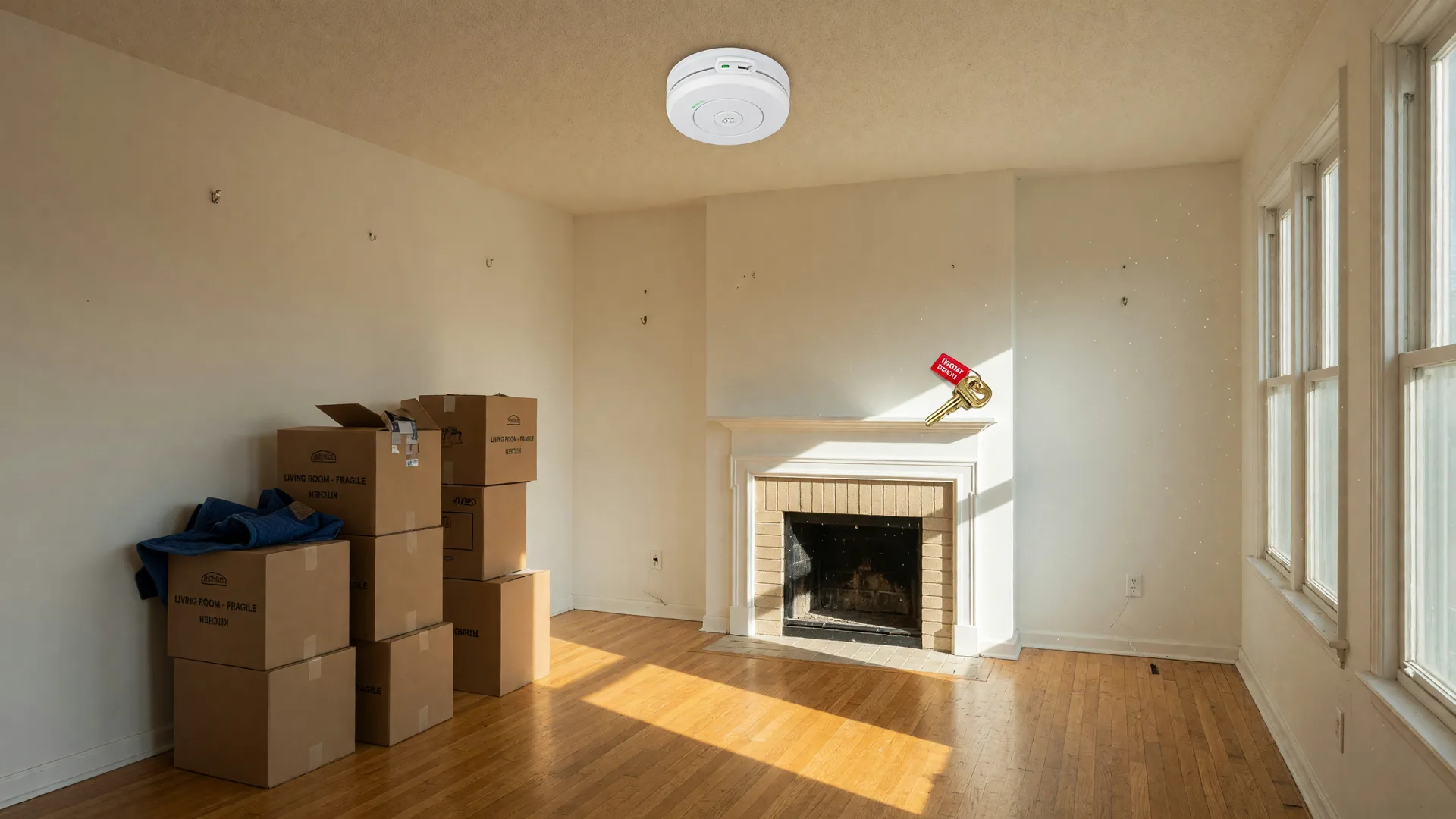
Patriot Nation, the first week after the keys land is the week that sets the tone for the first year. Everybody unpacks the kitchen and nobody locks down the house. These five missions, straight from the playbook I share with every buyer at closing, take an afternoon and protect everything else you are about to build.
Closing soon? Get the full move-in checklist.
I send every buyer a first-week punch list at closing, and I will walk you through the version that fits your home, your garage, and your budget.
Mission one: lock it down, literally
Somewhere in the world there are copies of your new house keys that you did not hand out: the previous owners, their kids, their neighbors, the handyman who worked on the plumbing two years ago. Fix that on day one:
- Change or rekey the locks on every exterior door, including the deadbolts. Rekeying is cheaper and keeps the same hardware.
- Erase the garage door opener memory and program only your remotes. Every opener has a learn button on the motor unit; press and hold to wipe all codes, then teach in your remotes.
- Change the garage keypad code if there is one, and the smart lock codes if the house has them.
A smart lock or a code change takes ten minutes and removes an entire category of risk. The final walkthrough checklist is the pre-close version of this same mindset.
Mission two: reset the air and the fire alarms
You cannot see the age of a smoke detector battery, and you cannot hear a detector that is not working. So:
- New batteries in every smoke and carbon monoxide detector, standard 9-volts for most units, and press the test button on each one.
- Check detector dates: detectors past their printed service life get replaced, not just re-batteried.
- Change the HVAC filter and note the size so future changes are painless. In a Texas summer this is not optional, a dirty filter makes the system work harder during the exact weeks you need it most.
The full air-and-fire routine, including filter schedules and detector placement for Texas homes, is in the home maintenance schedule and the smoke detector guide.
Mission three: the dryer vent nobody asks about
Lint buildup in a dryer vent is one of the most common hidden fire risks in a house, and you have no idea when the previous owner last cleaned it. A cleaning kit costs about the same as a pizza, or a service call handles it in an afternoon. Do it in week one, verify airflow at the outside vent, and never burn a house down to save an hour. This one is in my Roadmap for a reason.
The money missions are the ones that pay you back.
Locks, filters, and the dryer vent cost pocket change compared to locksmiths, service calls, and claims. Get the cheap insurance done first and spend the rest on the fun stuff with a clear head.
Mission four: build the document vault
Day one is the only day you know exactly where everything is. Create one place, a fire box, a safe, or a locked drawer you can name from memory, and put in it:
- The closing disclosure, the deed, the title policy, and the loan documents.
- The inspection report and any repair receipts from the purchase.
- The home warranty documents if you negotiated one.
- Manuals and warranty cards for the HVAC, water heater, and appliances.
Then scan digital copies to a secure drive or cloud folder. When something breaks at year three, you will find the warranty card, not a mystery. It takes one hour and saves you a weekend of digging later.
Mission five: fund the emergency account before the furniture
The most common new-homeowner regret is emptying the account on furnishings and meeting the first HVAC surprise with a credit card. Both my Roadmap and common sense agree: set aside a dedicated house fund first, a few thousand dollars to start, building toward three to six months of expenses, and let furniture wait its turn. The home emergency fund explainer has the target numbers and the build order.
Frequently Asked Questions
What should I do first in a new house? Tap to expand
Why do I need to replace smoke detector batteries on day one? Tap to expand
Do I really need to clean the dryer vent when I move in? Tap to expand
What documents should I secure after closing? Tap to expand
How much should I put in a home emergency fund before decorating? Tap to expand
Own it on purpose, starting week one.
If you are buying or recently closed in San Antonio, I will send you the first-week checklist and talk you through the Texas-specific versions of each mission. On your side, even after the keys.
About Patrick Kevin Fagan, REALTOR®
Patrick Kevin Fagan is a Texas Real Estate Sales Agent (#454749) with AXEN Realty LLC and a Senior Loan Officer (NMLS ID #877741) with NEXA Mortgage, LLC (NMLS #1660690). He brings 23+ years in mortgage lending and 19 years in real estate, serving homebuyers, homeowners, and sellers across Greater San Antonio and the Texas Hill Country.
Answered by Patrick Kevin Fagan
Texas Real Estate Sales Agent #454749, AXEN Realty LLC · Senior Loan Officer, NMLS ID #877741, NEXA Mortgage, LLC
Call or text: 210-317-6514
Recommendations here are general homeownership guidance based on Patrick's Roadmap and common practice, not professional security, electrical, or tax advice.
