
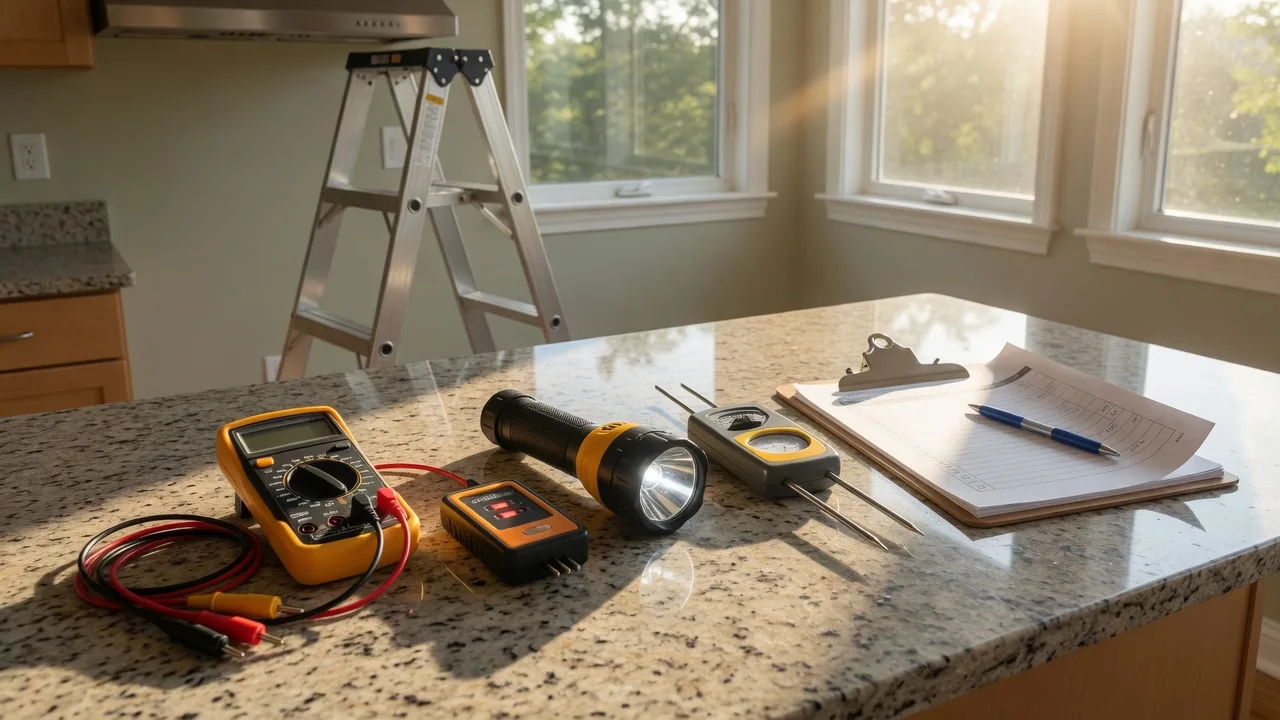
Patriot Nation, the inspection is the one place where a few hundred dollars protects you from a surprise that costs tens of thousands, and it is also the place where first-time buyers either over-react or under-react to the report. Let's get the cost, the coverage, and the strategy straight so you use the inspection like the tool it is.
Choose the inspector and the add-ons with a plan.
I recommend inspectors who work our market and tell you which specialty checks the specific home needs before you spend a dollar.
What an inspection actually covers
A licensed inspector evaluates the home's visible systems, top to bottom: the roof and attic, the structure and foundation as far as can be seen, the HVAC system, plumbing, electrical, the water heater, kitchen and baths, doors and windows, and obvious safety items. Two honest limits matter:
- The inspector does not move into walls, so hidden plumbing, wiring, insulation, and structural conditions may be missed.
- The inspector does not certify the roof, sewer, or foundation, and does not repair anything. A general inspection is a snapshot, and specialists are the zoom lens.
For the full room-by-room checklist, my what an inspection covers guide is the companion read to this one.
What it costs in 2026
Typical ranges, not a quote
San Antonio pricing commonly falls in the lower half of these ranges for a standard home. Bigger homes with multiple HVAC units run higher. Confirm actual quotes with inspectors in your area.
When to bring in the specialists
Never pay for everything, and never skip the specialist when the situation demands it. The rule I use:
- Roof: older roof, missing or damaged shingles, or a report line that says "further evaluation recommended."
- HVAC: an aging unit, or a Texas summer with a unit that cannot keep the house cool. Remember those 100-degree weeks.
- Sewer scope: older homes, big trees near the lines, or clay soils; the camera sees what nobody else can.
- Foundation: essential in the Hill Country and on expansive clay, where movement is common and the visual inspection cannot measure it. A structural engineer's report is the definitive look.
- Pool, termite, well, and septic: add each when the home has the system; wells and septic come with their own tests and their own rules, and my wells and septic guide covers those.
Lifespan context from my Roadmap, offered as general guidance and never as a promise on your home: HVAC systems commonly last 15 to 20 years, roofs 20 to 30 years, and water heaters 8 to 12 years. When a unit is inside or past that window, the replacement cost belongs in your negotiation, not in your surprise fund.
Read the report with someone who has seen a thousand of them.
I help buyers separate the must-fix from the nice-to-fix and put the must-fix into the negotiation with the seller, dollar by dollar.
The three-tier way to read the report
- Tier one: safety. Electrical hazards, fire risks, gas leaks, structural red flags. These are non-negotiable, and they lead the seller conversation.
- Tier two: major systems near the end of life. An aged roof, HVAC, or water heater with a real replacement cost. These belong in the negotiation on price or credit.
- Tier three: cosmetic and maintenance. Paint, wear, and small items. This is your after-closing to-do list, not ammunition, and pushing it at the seller usually costs you goodwill you need for tiers one and two.
Every report has tier-three items, and honest agents tell you that a 30-page report is normal, not terrifying. What matters is how much sits in tiers one and two.
Negotiating repairs, the effective way
The strongest repair negotiation asks for one number, not a list: a seller credit or price adjustment based on the tier-one and tier-two findings, rather than ten demands to repaint and re-caulk. Sellers say yes to a dollar figure more often than to a punch list, and you handle the work yourself on your own timeline after closing. The full strategy, including what to do when the seller says no, is in the inspection negotiation guide and the inspection negotiations guide.
And the calendar is part of the strategy: the inspection happens inside your Texas option period, when you can walk away and keep your earnest money, losing only the option fee. That leverage is what makes the seller listen. The earnest money and option period guide explains the timing in detail.
Frequently Asked Questions
How much does a home inspection cost in Texas? Tap to expand
What does a home inspection cover? Tap to expand
When should I add specialty inspections? Tap to expand
How should I read the inspection report? Tap to expand
Can I negotiate repairs after the inspection? Tap to expand
Know the house before you own the house.
I coordinate the inspector, the specialist add-ons, and the report review, then turn the findings into a clean negotiation. One team, from option period to keys.
About Patrick Kevin Fagan, REALTOR®
Patrick Kevin Fagan is a Texas Real Estate Sales Agent (#454749) with AXEN Realty LLC and a Senior Loan Officer (NMLS ID #877741) with NEXA Mortgage, LLC (NMLS #1660690). He brings 23+ years in mortgage lending and 19 years in real estate, serving homebuyers, homeowners, and sellers across Greater San Antonio and the Texas Hill Country.
Answered by Patrick Kevin Fagan
Texas Real Estate Sales Agent #454749, AXEN Realty LLC · Senior Loan Officer, NMLS ID #877741, NEXA Mortgage, LLC
Call or text: 210-317-6514
Inspection costs and system lifespans are typical ranges and general guidance for education, not quotes or guarantees. Your inspector's scope of work and your contract control the process.
