

Here is the money problem, Patriot Nation: rental yield answers whether a property earns its keep or just ties up your money, and the two ways to calculate it can tell opposite stories. The number the listing advertises is rarely the number that pays you, and knowing the difference is the whole game.
Quick Answer
Rental yield is annual rent divided by price: gross yield ignores expenses, net yield subtracts them. Compare both before you commit, because net yield is the number that actually pays you.
Ask Patrick how rental yield would work for your investment goals.
Gross Yield: The Listing Number
Gross yield is the simple version: annual rent divided by the purchase price, times 100 to get a percentage. It is what listings advertise and what investors quote at dinner, because it is one number and it is easy.
The money consequence is that gross yield ignores every cost of ownership, so it can flatter a deal that loses money every month. It is a useful first screen, but it is a screen, not a verdict.
Net Yield: The Number That Pays You
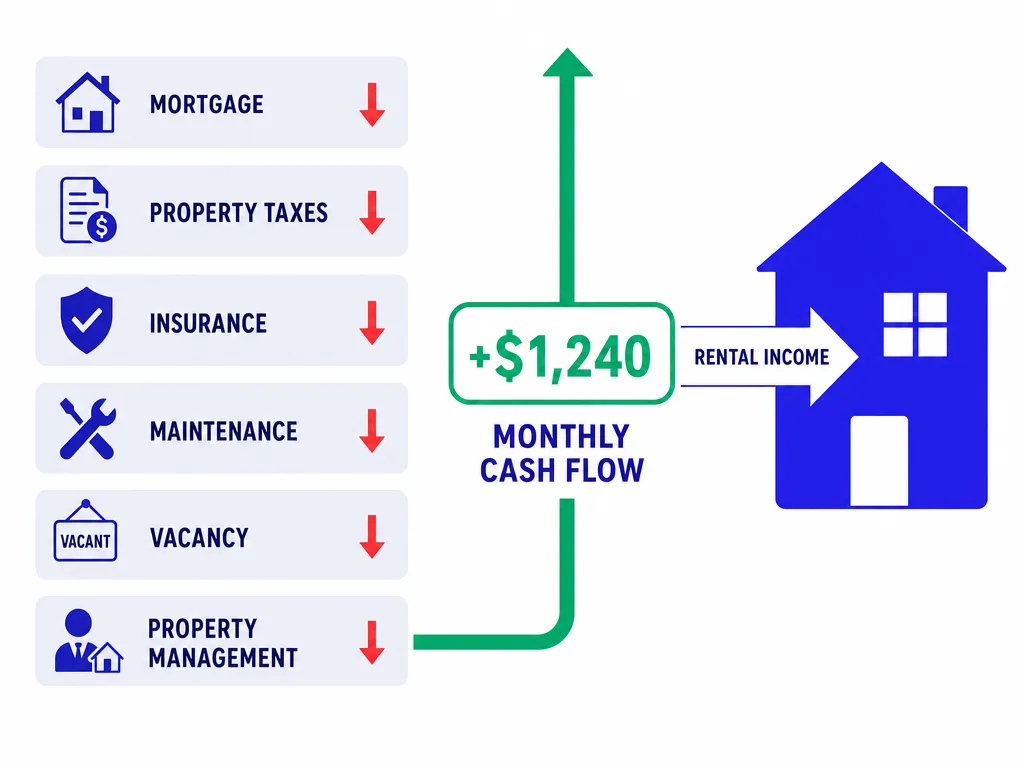
Net yield subtracts the real operating costs, property taxes, insurance, vacancy, maintenance, and management, which is why the two numbers can tell opposite stories: a property with an attractive gross yield can be cash-flow neutral or worse once Texas taxes and insurance are counted.
The real-world rule: never buy on the gross number. Build the full net model with your actual tax and insurance lines, because the net yield is what decides whether the rent covers the mortgage and leaves anything for you.
A Worked Example on a $300,000 Rental
To read it, keep it simple: a $300,000 property renting for $2,000 a month shows about 8 percent gross yield, because $24,000 divided by $300,000 is 8 percent. That is the number on the listing.
But subtracting taxes, insurance, vacancy, and maintenance often cuts that to a much smaller net number. The spread between the two is the true cost of ownership, and it is the single most important calculation you can do before writing an offer.
Read the Number With the Neighborhood
Yield also carries information: a high yield can signal a cheaper area or deferred maintenance, while a low yield can mean premium pricing in a strong submarket, so never read a percentage without the neighborhood. A 7 percent yield in a declining pocket is not the same deal as a 6 percent yield in a growing one.
The money lesson is that yield and appreciation usually trade against each other. If you are buying for growth, expect a thinner yield and plan to carry the property; if you are buying for cash flow, protect the net number with real underwriting.
San Antonio Ranges: 5 to 8 Percent Gross
Marketed gross yields for San Antonio rentals commonly run in the 5 to 8 percent range depending on area, condition, and price point, with the realized net yield lower after expenses. These are typical figures, so underwrite each property from its own numbers.
Use the same vacancy, tax, and maintenance assumptions across every deal you compare, or you are comparing apples at different weights. I keep one consistent model for all my investor clients for exactly that reason, and you should too.
The Levers That Raise Net Yield
The levers to raise net yield are the ones in your control: renovate to justify a rent bump, manage vacancies tightly, keep maintenance efficient, and reset rents to market at renewal. None of them work without a baseline, so build the net-yield model before you write an offer.
Compare deals on the same assumptions, read the yield with the neighborhood, and let the net number make the decision. Run the model, protect the yield, and make it a great one.
Ask Patrick about rental yield
Get a straight answer on rental yield and how it fits your rental or investment plan.
