

One withheld deposit, one unannounced entry, or one improvised eviction can cost a landlord more than a year of rent. The law favors landlords in Texas, and it punishes the ones who skip the procedures, so the money is in knowing the rules before the rental goes out.
Quick Answer
Texas landlord-tenant law favors landlords but punishes sloppy paperwork: deposit returns, notices, and eviction steps all have rules. Read the Property Code before you rent, and when in doubt, do it by the book.
Ask Patrick how Texas landlord-tenant laws would apply to your rental.
The Law in One Place: The Texas Property Code
Texas gives landlords strong tools, but every tool has a procedure, and the Texas Property Code is where both live. Chapter 92 covers residential tenancies, including security deposits, landlord entry, and repairs, and Chapter 24 sets the eviction path.
The landlords who lose in Texas are the ones who improvise: charging fees the lease does not allow, holding deposits past the deadline, or cutting corners on notice. Follow the statute exactly and the system works for you.
Security Deposits: The Most Common Misstep
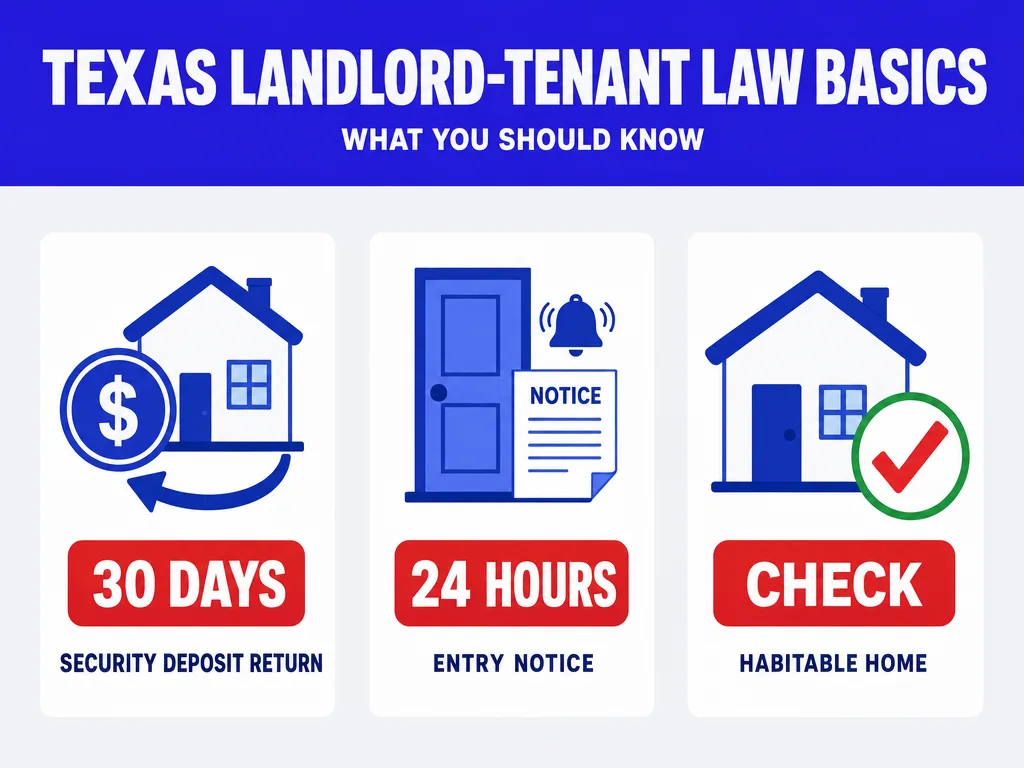
Security deposits are the most common misstep. Texas law requires the deposit back within 30 days of the tenant moving out, with itemized deductions for unpaid rent and damage beyond normal wear and tear.
A landlord who withholds a deposit in bad faith can forfeit the right to keep any of it and owe penalties, so the move-out accounting must be documented and defensible. Photograph the condition, itemize the deductions, and send the statement on time.
Entry and Habitability
Entry and habitability have their own lines: give reasonable notice before entering, usually about 24 hours for non-emergency access, and keep the property habitable, including working plumbing, electrical, and HVAC.
Skipping repairs fast, even after the tenant pays less, can backfire in court and in damages, so treat maintenance as a legal obligation, not a courtesy. The moment a unit stops being habitable, the landlord's protections start to slip.
The Eviction Path
Notice to vacate first, then a Justice Court filing, a hearing, judgment, and a constable-executed writ. Tenants have appeal rights, so budget time and legal help for a contested case.
The path is strict and sequential, and every step has a form and a deadline. Never self-help: changing locks, removing belongings, or cutting utilities is illegal in Texas and can wipe out whatever the tenant owes you.
Paperwork Is the Weapon
A written lease with clear terms, a rent ledger, and a dated notice file win cases before they start. I tell investor clients to run every rental like a court case might review it any day, because that discipline is what keeps landlord-tenant law on your side.
The landlord with the paper trail wins, and the landlord with the good intentions and no receipts loses. Document everything, file everything, and never rely on a verbal understanding to run a rental.
When to Call a Lawyer
Most landlord business is handled fine without a lawyer, but a contested eviction, a damage claim, or any case that goes sideways is the time to bring one in. An hour of legal review up front is cheaper than a lost case later.
When in doubt, do it by the book, keep the records clean, and make it a great one.
Ask Patrick about Texas landlord-tenant laws
Get a straight answer on Texas landlord-tenant laws and how the Texas rules apply to your rental.
