

A vacant unit costs you rent, but a botched eviction can cost you far more in legal fees, damages, and weeks of a tenant who should have been gone. The money is in doing the process right the first time, in the exact order the law demands.
Quick Answer
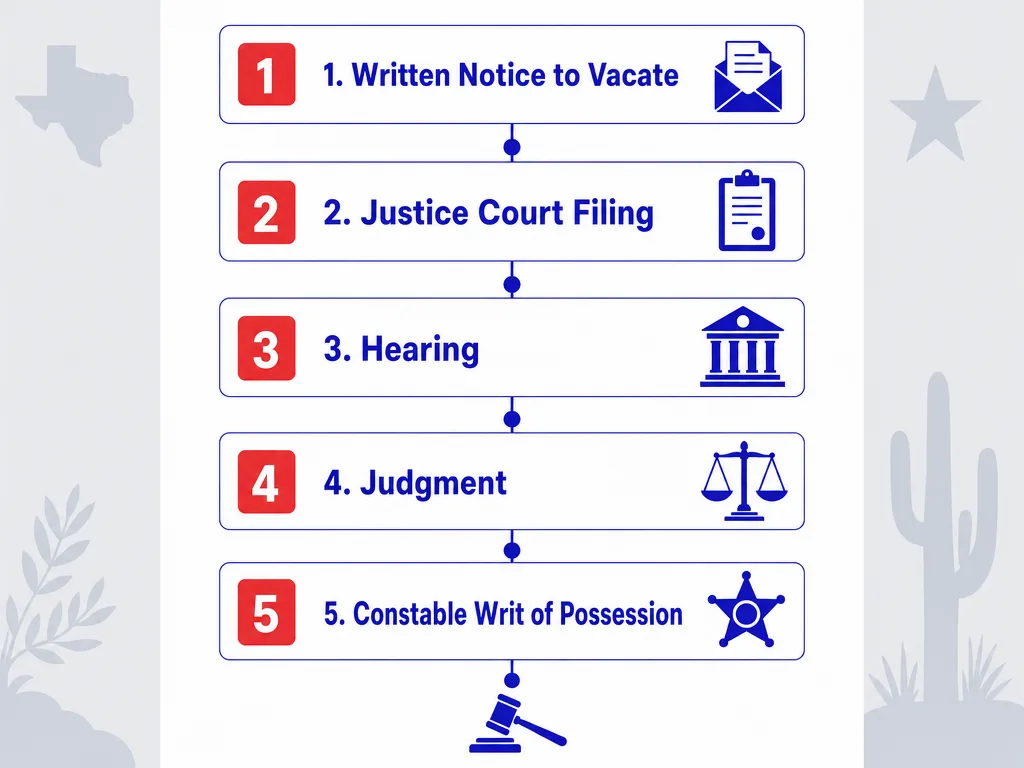
Texas eviction is a legal process: a written notice to vacate, a Justice Court filing, a hearing, and a constable-enforced writ. Never lock out a tenant or touch their belongings, that is illegal self-help. Any paperwork error resets the clock.
Ask Patrick how the Texas eviction process would apply to your rental.
The Legal Path in Texas
Texas landlords must follow the forcible detainer process exactly, and the sequence starts with notice. Under Texas Property Code Section 24.005, a tenant who defaults or holds over must get written notice to vacate, typically at least three days, before you can file suit.
The filing goes to the Justice of the Peace court in the precinct where the rental sits, with the tenant served and a hearing scheduled. If the court rules for you, the constable posts notice and executes the writ of possession. Every step has a form, a deadline, and a way to get it wrong.
The Steps in Order
Serve the notice to vacate in the manner your lease and the statute require. If the tenant does not leave, file the eviction in the right Justice Court. Attend the hearing with your lease, your rent ledger, and your evidence. Win the judgment, then obtain the writ of possession from the constable.
The steps in between carry the real risk: notice delivered the wrong way, an unclear lease, missing ledgers, or a missed hearing date, and the case is dismissed or delayed. Each misstep resets the clock and costs you another month of rent.
Never Self-Help
What you can never do is self-help: changing the locks, removing the tenant's property, or shutting off utilities. In Texas that is illegal, and it can expose you to damages far larger than the unpaid rent you were chasing.
The frustration is real, Patriot Nation, but the law is clear. Use the courts, keep the paper trail clean, and if a case is headed toward a fight, bring in a landlord attorney. One clean, legal eviction beats a month of improvised moves that land you in front of a judge for the wrong reason.
Costs to Expect
Filing fees, constable service, and any attorney fees add up, commonly a few hundred to a few thousand dollars depending on the case, and total eviction costs can range from $500 to $2,000 including legal help.
Budget for the process and weigh it against the rent at risk, because the cost is part of any eviction decision. If the tenant owes enough to make the fight worthwhile, the expense is the price of doing it right.
Appeals and Delays
Tenants also have appeal rights after a judgment, usually a short window such as five days, so a win in Justice Court is not the same as empty keys. The appeal moves the case to the county court and adds time before the constable can act.
That is why the process is planned from the start: notice documented, evidence ready, and the full calendar assumed. Expect the tenant to use every right they have, and you will never be surprised when they do.
Protect Yourself Up Front
A clean lease, a documented rent ledger, and a proper notice on file are what make an eviction quick and clean. I tell every investor client to run a legal eviction process with the paperwork tightened before a problem tenant appears, not after.
Screen carefully, document everything, and treat every rental like a court case might review it any day. That discipline keeps the process on your side, and make it a great one.
Ask Patrick about the Texas eviction process
Get a straight answer on the Texas eviction process and how the Texas rules apply to your rental.
