

The tax you are trying to defer can be six figures on a well-held Texas rental. The only thing standing between you and that tax bill is a pair of hard deadlines, and the calendar does not care about your feelings, your listing market, or your vacation.
Quick Answer
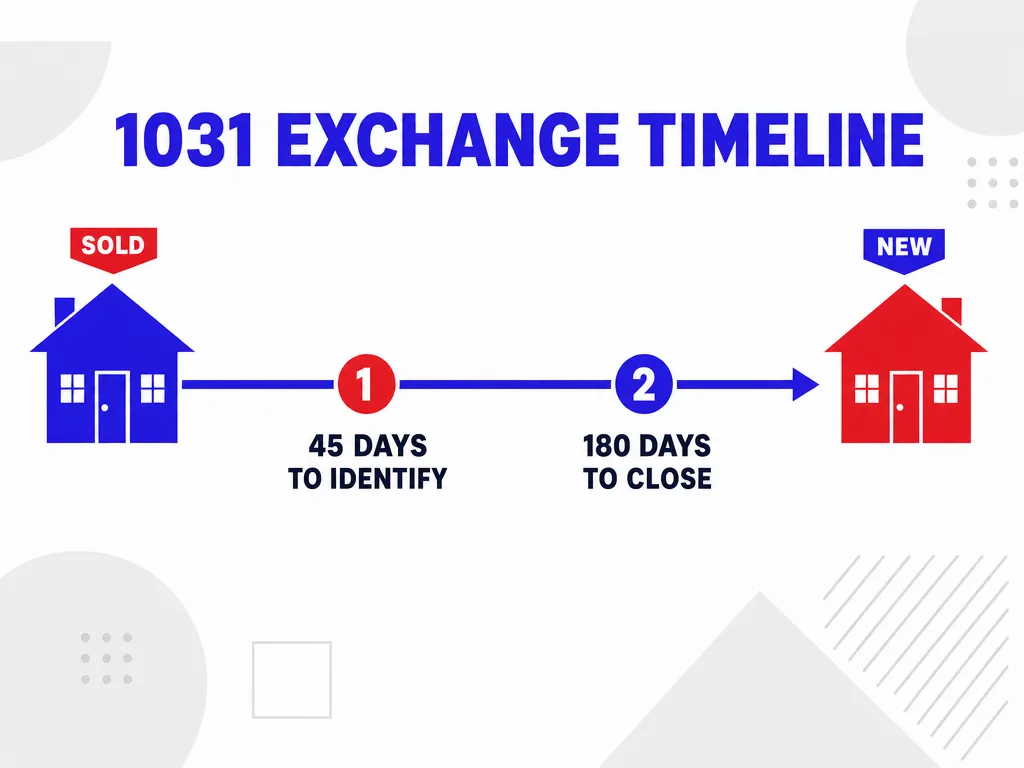
The clocks are non-negotiable: 45 days from the sale to identify replacement properties, and 180 days total to close. Use a qualified intermediary and never touch the proceeds. Miss either date and the deferred tax comes due.
Ask Patrick how 1031 exchange timelines would work for your investment goals.
The Two Clocks That Matter
A 1031 exchange runs on two hard deadlines set by the IRS, and neither can be extended for any reason. The identification period starts the day you sell: you have 45 days to name, in writing, the replacement property or properties you intend to buy.
The exchange period gives you 180 days from the sale to actually close on one of them, or the earlier due date of your tax return, whichever comes first. Miss either date and the capital gains tax you wanted to defer becomes due. These are the two numbers to tattoo on the back of your hand before you ever list the property.
The Identification Rules
The IRS offers three identification methods. The three-property rule lets you list up to three candidates regardless of their value. The 200 percent rule lets you list more than three as long as their total value does not exceed double the sale price. The 95 percent rule lets you list more than three if you actually receive at least 95 percent of the value of everything you identified.
The paperwork must be in writing and delivered on time. A missed signature, a wrong address, or a late fax can cost you the whole exchange, which is why this is not a do-it-yourself Saturday project. Work with someone who documents the identification properly.
The Qualified Intermediary
Here is the rule that catches more investors than any deadline: you never touch the proceeds. The money from the sale goes straight to a qualified intermediary, who holds it and pays it out on the replacement. If the funds land in your account, even for a day, the exchange is void.
The intermediary is the middleman the IRS demands to keep the transaction an exchange instead of a sale and a purchase. Set the intermediary up before closing, confirm the wiring instructions in writing, and treat the proceeds as untouchable from the moment the sale closes.
What Happens If You Miss
The deferred capital gains become taxable in the year of the sale, plus the exchange fails, so there is no middle ground. There is no extension, no grace period, and no fix after the fact. The tax bill you tried to defer lands, in full, in the year you sold.
That is why the calendar is planned backward from the deadlines before you ever commit to the strategy. If you cannot honestly close a replacement inside 180 days, the 1031 may not be your play this year, and knowing that before you sell beats finding out in April.
Plan Ahead
Line up possible replacements and your financing before listing the property you are selling. The best 1031 exchanges are the ones where the buyer is already found and approved, not where you are shopping against the clock.
Pre-approval matters double in an exchange because you do not have 45 days to get a loan, you have 45 days to identify a house, and then a hard close date. Having your financing ready before the first closing is what turns the 180-day clock from a threat into a formality.
The San Antonio Angle
The practical lesson is to start hunting before you sell. In active San Antonio and Hill Country markets, finding and negotiating a replacement inside 180 days is doable but tight; in a slow market with few listings, the clock is the deal-killer.
I help investors line up candidates and financing before the first closing so the timeline never forces a bad purchase. Run the clocks backward, use the intermediary, never touch the money, and make it a great one.
Ask Patrick about 1031 exchange timelines
Get a straight answer on 1031 exchange timelines and how it fits your rental or investment plan.
