

Every San Antonio homeowner knows the tell: spotty glasses, crusty showerheads, and a water heater that quits years earlier than it should. The question is not whether you have hard water, because you do. The question is whether the fix, a softener that costs real money, actually pays you back.
Quick Answer
Most San Antonio homes benefit from a water softener because the aquifer water is very hard and scale shortens the life of water heaters and fixtures. A salt-based system is the most effective fix; salt-free units do lighter duty. Test hardness first, then choose.
Ask Patrick whether you need a water softener.
Why San Antonio Water Is So Hard
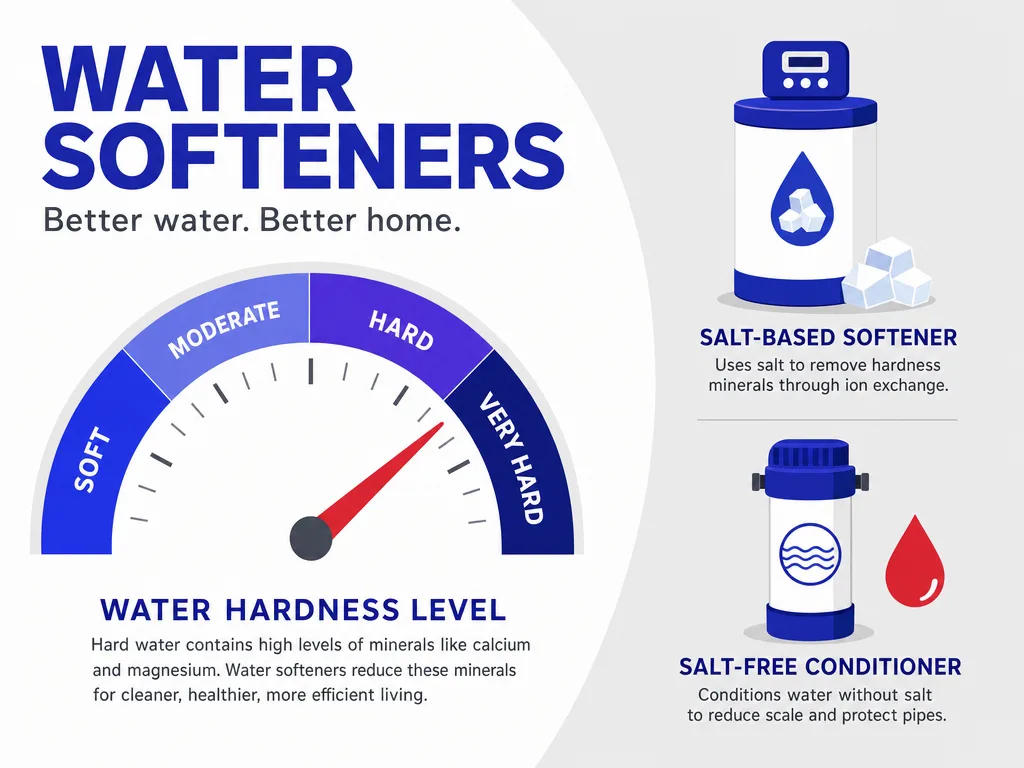
Here is the term you will hear: grains per gallon, the measure of dissolved hardness. San Antonio water typically runs 15 to 25 grains per gallon, which puts it firmly in the very hard range. That hardness comes straight from the Edwards and Trinity aquifers, which dissolve calcium and magnesium as the water moves through limestone.
The consequence lands inside your home: scale that builds up in the water heater, the coffee maker, and the showerheads, plus the dry skin and spotty dishes every local already knows. Hardness on this scale is not a maybe problem. It is a when problem, which is why the softener question is worth answering on purpose.
Salt-Based vs. Salt-Free
A salt-based ion-exchange softener actually removes the calcium and magnesium, trading them for sodium, and it treats the whole house. This is the workhorse, and for very hard San Antonio water it is the fix that holds up.
Salt-free conditioners do not remove hardness at all. They change how scale forms, which helps less when the water is this hard. Dual-tank units matter mainly for large households that run water constantly, so the system can regenerate without a gap. Know which one you are buying, because the price difference buys very different results.
What It Costs to Run
The installed unit is one line, and the ongoing costs are the other. A whole-house softener typically runs $1,000 to $3,000 installed, and beyond that you plan for the salt and the regeneration water, a modest annual cost, plus simple yearly maintenance.
Some homeowners soften the whole house, while others install a point-of-use softener for the showers and laundry, where the benefit is felt most. That smaller setup cuts the up-front cost and the salt bill, and it is the honest middle ground for a house where the kitchen stays on the municipal line anyway.
The Appliance Case for It
The real payoff is equipment life. A water heater running on hard water collects scale that insulates it from the heat source, wastes energy, and shortens its service life. In a region where water heaters work year-round, that failure arrives years early and the replacement bill lands on you.
Run the math that way and the softener is often cheaper than the first premature replacement it prevents. The scale does the same quiet damage to washing machines, dishwashers, and any valve it flows through, so the protection compounds across the whole house.
Whole House vs. Point of Use
Whole-house softening protects every tap and every appliance, which is the full insurance policy. Point-of-use softening covers just the showers and laundry, where the skin and fabric benefits matter most, and it costs less to buy and less to feed.
My guidance for the typical San Antonio home: if your water heater is on its last legs and you plan to stay, whole-house is usually the smarter spend because the appliance savings pay the difference over time. If you just want softer showers and easier laundry on a budget, point-of-use gets you most of the benefit for less.
Before You Buy a Softener
Test hardness first. A simple test kit, about $20 to $50, tells you the exact grains per gallon, and the number decides the size of system you need and whether salt-free is even worth considering. On very hard San Antonio water, the honest answer is usually a salt-based unit sized to your household.
Buy for the house you have, not the one a dealer describes, get the install quoted in writing, and run the appliance-savings math before you commit. Test, size, compare, and make it a great one.
Ask Patrick about water softeners
Get a straight answer on whether a water softener is worth it for your San Antonio home.
