

You are about to spend real money either testing your water, treating your water, or replacing a water heater that scale wrecked ahead of schedule. Hard water in San Antonio is the quietest thief in the house, and the fix starts with one honest test, not a guess.
Quick Answer
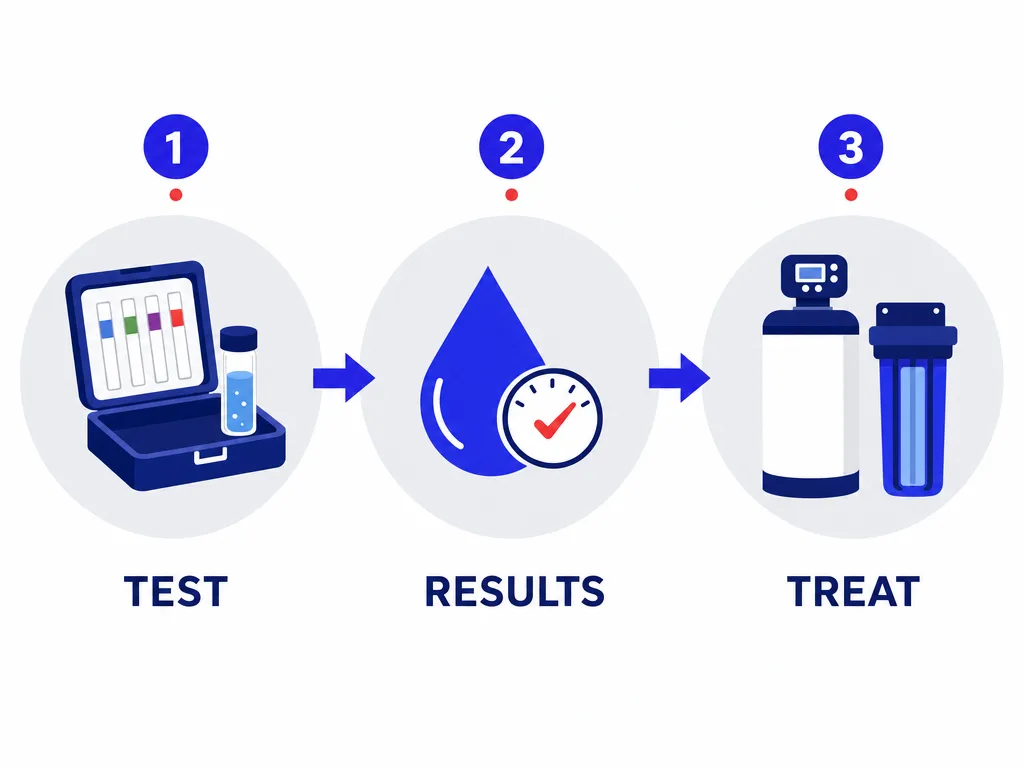
Start with a lab test, not guesswork. City water from SAWS comes pre-tested by the utility, so a home test confirms plumbing-era lead risk and hardness; well water needs its own testing for bacteria and minerals you cannot taste. Fix what the test shows, nothing more.
Ask Patrick how to check your water quality.
What the EPA Says
Here is the term you will hear: the Safe Drinking Water Act. It is the federal law that makes public water systems test their water and publish what they find, which means city water in San Antonio arrives at your meter already monitored. The utility issues an annual water quality report, and reading it is free.
What the EPA does not do is run your home's side of the line. Lead from old plumbing, mineral buildup in your water heater, and the condition of your fixtures are on you. For private wells, the EPA's role is guidance rather than enforcement, so a well owner tests on their own schedule. That split, city water tested for you and well water tested by you, is the whole story of this page.
How to Test Your Water
The honest first move is a test, and the price range is small. A home test kit runs about $20 to $50, and SAWS even offers a free test to its customers. A kit measures hardness, pH, iron, chlorine, and a handful of common contaminants in a few minutes, which is plenty to tell you whether you have a hardness problem or something specific.
If you want the full picture, especially for lead, a certified lab test is the gold standard. Either way, test the water you actually drink, usually the kitchen tap, and follow the instructions to the letter, because a sloppy sample tells you nothing. One test beats a decade of guessing.
Hard Water and Staining
Here is how to read your own house before you ever order a kit. Scale crusting on faucets and showerheads means hardness. Spotted dishes straight out of the dishwasher mean hardness. Dry skin and soap that will not lather mean hardness. San Antonio gets this from the Edwards and Trinity aquifers, which dissolve calcium and magnesium as the water flows through limestone.
Now the distinctions that change the fix. Rust-colored stains around drains point to iron, and a rotten-egg smell, usually worse in hot water, points to sulfur. One home kit names all of these for you, and each one gets a different treatment. That is exactly why I never recommend buying treatment before you test.
What Fixes What
Now the money. A whole-house water softener runs about $1,000 to $3,000 installed and removes the calcium and magnesium behind hardness, which protects your water heater and fixtures. A point-of-use filter costs far less and handles the water you drink.
The rule is simple: if the test shows hardness only, the softener is the fix; if it shows something specific like lead or chlorine, a filter aimed at that contaminant is the fix. You do not need both unless the test says you do. Spending on treatment before testing is how homeowners burn cash, Patriot Nation, and I would rather you keep it.
Well Water: Your Own Responsibility
City water gets tested for you. Well water does not. If your home sits on a well, especially in Hill Country areas outside the city limits, you own the testing schedule: at least annually for bacteria and nitrates, and sooner if the water changes taste, color, or smell.
A well that fails a bacteria test is usually fixable, but only if you know it failed. The only way to know is to test. Skip the annual test and the surprise shows up at the worst possible moment, which is how a small problem turns into a big bill.
Before You Buy, Ask About the Well
Here is the real-world consequence every buyer needs. In Hill Country areas where homes run on wells, the water test can make or break a purchase: bacteria, nitrates, and flow rate are dealbreakers if they fail. Make the water test a condition in your offer before you sign, so a surprise well failure is the seller's problem to fix, not yours to inherit.
In San Antonio proper, pull the SAWS quality report and factor hardness into your water heater and appliance planning. Know what is in your water before you own it, test first, treat only what the test shows, and make it a great one.
Ask Patrick about water quality
Get a straight answer on testing your water and the treatment options for San Antonio homes.
