
Call Text Book
Down Payment Assistance

Best Grants and Down Payment Assistance Programs: A Practical Guide

Updated August 28, 2026

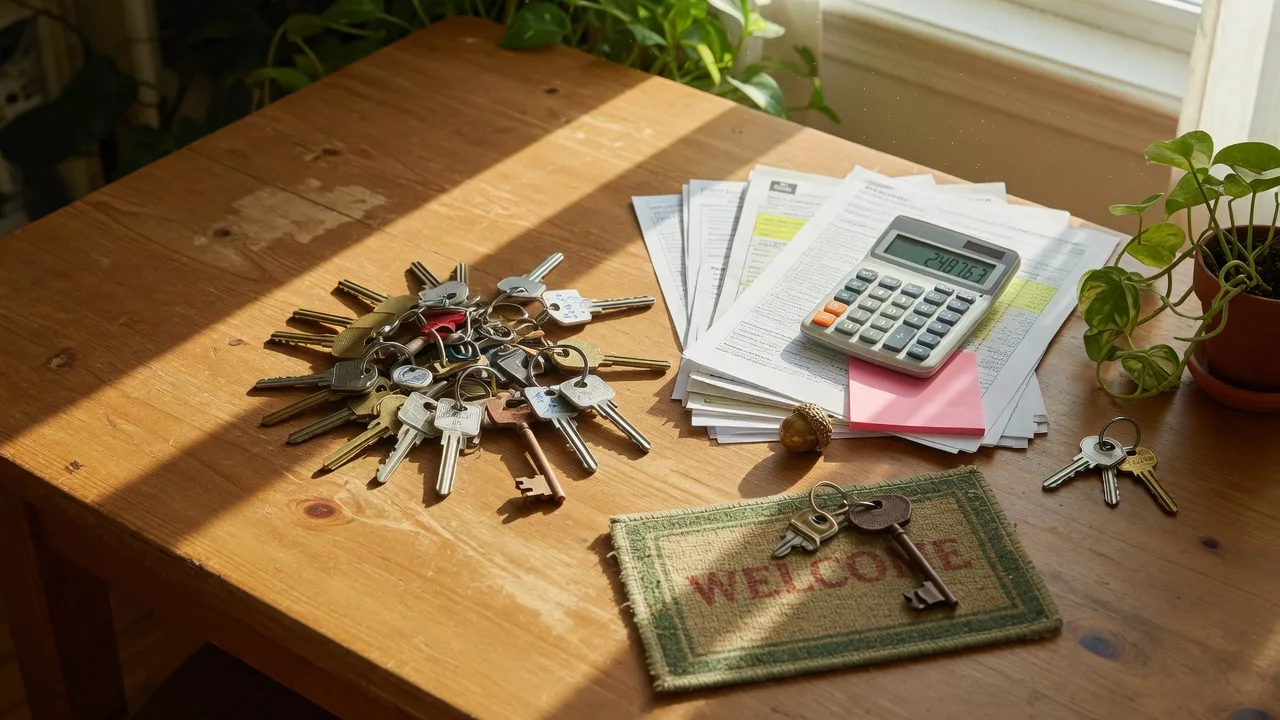
House keys, a calculator, and home loan documents on a sunlit wooden table representing down payment assistance options

If you are a first-time buyer trying to find a grant or down payment assistance program that actually works for you, the search can be exhausting. There are thousands of programs out there, and each one has its own rules, deadlines, and restrictions. This guide explains where down payment assistance really comes from, the restrictions that keep most buyers out, the two hidden costs many programs carry, and the type of program that avoids both problems. It is based on my video, "First Time Home Buyer | Best Grants and Down Payment Assistance Programs Now 2024." I am Patrick Kevin Fagan, a loan officer and REALTOR who walks first-time buyers through these choices every day.

Based on Patrick's video

This article expands on the education from Patrick's video, "First Time Home Buyer | Best Grants and Down Payment Assistance Programs Now 2024," part of The Mortgage Patriot library on YouTube. You can also read the full source transcript.

What Is Down Payment Assistance?

Down payment assistance, often shortened to DPA, is money that helps you cover the down payment, closing costs, or both on a home purchase. A grant is a form of assistance you do not have to pay back, while other forms are loans with their own repayment rules. Because these programs are funded by government bodies, housing agencies, and even lenders, the rules can look completely different from one program to the next.

The appeal is obvious: for a first-time buyer, having someone else cover part of your down payment can be the difference between buying now and waiting another year. But the word "assistance" hides a lot of fine print. Understanding the structure of these programs before you chase them will save you time and, in some cases, a surprising amount of money.

Where These Programs Come From

One reason the search feels overwhelming is that down payment assistance is not one program. It is a whole landscape, and programs come from five different levels:

National Programs

Available in many areas and overseen by federal or national housing agencies.

State Programs

Run by state housing finance agencies, with rules that change from state to state.

County Programs

Local to a specific county and often tied to a residency requirement.

City Programs

Targeted to buyers purchasing inside a specific city or municipality.

Lender-Specific Programs

Created by individual lenders, often paired with a specific loan product.

Put together, that means there are literally thousands and thousands of possibilities, and no single loan officer could know even but a handful of them by heart. The honest truth is that nobody can keep the full list in their head. That is why the right move is not to guess. The right move is to tell a lender your exact area and your current address so they can research the programs that actually fit you. I do this for my clients all the time, and it is the single most effective way to find the program you qualify for.

Patrick's advice: Forget trying to memorize the application list on your own. Give a lender your exact address and your goals, and let them do the research. If you have questions about how any of this works, the Ask Patrick explanation of down payment assistance programs is a good place to start.

The Typical Restrictions You Will Run Into

Even when you find a program that looks like a fit, almost every one of them carries restrictions. Here are the five most common, so you know what to expect before you invest your time.

Income Thresholds, Usually About 80% of Area Median Income

Most down payment assistance programs are based on Area Median Income, or AMI. The common standard is about 80% of AMI. If your household earns more than that threshold, you cannot get the assistance, no matter how strong the rest of your application looks. Because AMI is set by local area, the exact dollar limit changes based on where you are buying.

Debt-to-Income Limits, Usually About 45% to 50%

Your debt-to-income ratio compares your monthly debts to your monthly income. Most DPA programs cap this between 45% and 50%, which is tighter than what many standard loans allow. If you make $6,000 a month and already owe a large share of it in car, student, and card payments, you may be over the limit before you even apply.

Credit Score Minimums, Commonly Around 640

You will find some programs that accept a 600 or 620 score, but most require at least a 640 credit score. Meeting the minimum is not just about program entry; a higher score also gives you access to better rates and more options. If your score is below the cutoff, there are straightforward ways to raise it, so do not assume you are out of the game.

Location Duration, Often Six Months of Residency

Many county and city programs require you to have lived in that county or city for a set period, often about six months. If you are moving in from another city or state, you will not be eligible for those local programs until you have established residency. This trips up a lot of relocating buyers who assume the program will be available to them right away.

Grant Exhaustion, Money Is Gone by Mid to End of Year

Grant money is a fixed pool. Grants generally roll out at the start of the year, but that funding is limited, and by the middle to the end of the year most of it is exhausted. If you apply late in the year, the grant you had your eye on may no longer exist. Timing matters more than most buyers realize.

Two Adverse Effects to Watch For

Here is where many buyers get caught off guard. Even if you qualify for a down payment assistance program, some programs carry hidden costs that make the help far less attractive than it looks. Two adverse effects specifically are worth understanding before you commit.

1. Some Programs Do Not Give You Fair Market Rates

This is how many programs pay for themselves: they charge you a higher interest rate than you could get on the open market. Let's put some real numbers on it. Say the prevailing rate today is about 6.5% for an FHA loan and about 7% for a conventional loan. A down payment assistance FHA product might run around 7.25%, and a conventional DPA product around 7.5% to 7.75%. That is not a small difference.

On top of the higher rate, many of these programs do not allow rate buydowns. On a fair market loan you can use seller concessions to buy the rate down, sometimes getting from 6.5% down to 6% or even 5.75%. With many DPA programs, that option is simply not available. You lose the ability to use seller concessions to lower your rate, and you are stuck paying more every single month.

What this means in practice: The "help" can quietly raise your monthly payment and your total interest over the life of the loan. Before you accept a program, ask what rate it actually offers and whether seller concessions can be used to buy that rate down.

2. Many Programs Attach a Second Lien to the Home

Many programs place a second lien on the property to secure the assistance. You have a first lien for the actual financing of the home, and a second lien, sometimes called a "silent second," that represents the down payment assistance amount. Here is how the numbers look.

Worked example: Say you are buying a $300,000 home with an FHA loan at a 3.5% down payment, which comes to $10,500. The program covers that $10,500 and adds it to your home as a 0% interest second lien. Sometimes you make a payment on that lien and sometimes you do not. But either way, that lien stays on the property. If you sell or refinance within the program's window, often 3, 5, or 10 years, you have to repay it.

Patrick points to a state-level grant that covers about 5% of the purchase price as an example. On a $300,000 home, 5% is $15,000, and that amount is attached as a 0% interest second lien that persists. It never goes away on its own. If you refinance you pay it off, and if you sell you pay it off. So the honest question to ask is whether a program is really giving you help or not. In some cases it makes sense, but Patrick's honest take is that there are better options. On the two programs he recommends below, neither adverse effect shows up.

The Type of Program Patrick Prefers

After running buyers through the landscape for years, Patrick looks for programs that avoid both problems above. The ideal structure offers a fair market rate, attaches no second lien, and allows buyer concessions to buy the rate down. Two national products fit that pattern, and they are the ones he pointed buyers to in 2024.

1. The SPCP Grant

The SPCP grant provides up to about $6,000 of closing cost coverage combined with a 3% down conventional loan. Eligibility is fairly simple compared to most programs: you generally need around a 620 credit score and a current address. Because it is paired with a 3% down conventional loan and does not raise the rate or attach a second lien, it combines the benefit of a grant with the flexibility buyers actually want, including the ability to use seller concessions.

Real Example: A $250,000 Home

Down Payment (3% Conventional) $7,500
Closing Costs (estimated) about $5,000
SPCP Grant about -$6,000
Seller Concessions about -$5,000
Approximate Cash to Close about $5,000

With the grant and seller concessions combined, you could be writing a cash to close check of around $5,000 on a $250,000 home. That is a fraction of what most first-time buyers expect to bring to closing, and it comes without a higher rate or a hidden second lien.

2. The 1% Down Conventional Loan

If the SPCP grant does not fit for any reason, Patrick says to try the 1% down conventional loan first. This product lets you put down just 1% on a conventional mortgage. It is income-restricted: you generally qualify if your income is below about 80% of the Area Median Income where you live or where the property is located.

Only 1% Down

A very low entry point for buyers short on cash

Fair Market Rate

No rate penalty versus a standard conventional loan

No Second Lien

A straight first mortgage, no hidden repayment

Rate Buydown Allowed

Seller concessions can buy your rate down

Why these two are different: Neither the SPCP grant nor the 1% down conventional loan creates a higher interest rate. Both give you prevailing rates and allow you to buy the rate down if you need or want to. And neither attaches a second lien, silent or otherwise, that you have to pay off, pay down, or pay monthly. That combination is why Patrick points buyers to this structure.

Feature Typical DPA Programs SPCP Grant / 1% Down
Fair Market Rate Often higher, about 0.25% to 0.75% above market Yes
Second Lien Yes, often repayable on sale or refinance No
Rate Buydown Allowed Typically no Yes
Credit Score Minimum Usually 640, sometimes higher Around 620

How to Pick the Right Program for You

Start with your address, not with a random program you found online. Because programs are tied to where you live, your current address determines which state, county, and city options you can even consider. Then run every option you are given through the two tests above: what rate does it actually offer, and does it attach a second lien?

Compare the grant you qualify for against the 1% down conventional structure, especially if your credit is around 620 and your income is under about 80% of AMI. And remember that a slightly lower cash to close is not the same as a good deal if the rate is meaningfully higher for 30 years. The total cost of the loan matters more than the check you write on day one.

Frequently Asked Questions

Where do I even start looking for down payment assistance?
Tell a lender exactly where you live. Because DPA is location-specific, your address determines which programs you can even consider. Do not try to track down programs on your own from a random list; a licensed lender can research what fits your actual area.
What credit score do I need for down payment assistance?
Most DPA programs want at least a 640 score, though some accept 600 or 620. The SPCP grant structure Patrick prefers asks for around a 620 credit score. If your score is below that, you can often raise it in a few months. See the credit score tips for home buyers for a starting point.
Do down payment assistance programs charge higher rates?
Many do, and many also block rate buydowns with seller concessions. That is one of the two adverse effects to watch for. The structure Patrick prefers, like the SPCP grant and 1% down conventional loans, avoids this entirely by offering fair market rates and allowing buydowns.
What is a second lien and why should I care?
A second lien is an extra loan placed on your property to secure the assistance. Even if it is a silent second with no monthly payment, it can still need to be repaid if you sell or refinance within the program's window, often 3, 5, or 10 years. Ask every program whether one is attached before you commit. The overview of how DPA works covers this in more depth.
Can I still buy a home if I cannot find a program I fit?
Yes. Down payment assistance is one tool, not the only one. Low down payment loans and seller concessions can shrink your cash to close without any DPA at all. The no money down guide explains how buyers get to closing with very little cash.

A Note for 2026

Specific grant and program names, availability, income limits, and terms change over time, and they must be confirmed with a licensed lender for your exact area before you rely on them. The two products Patrick named in 2024 may or may not still exist or be the best fit for you now. Treat them as examples of the structure he prefers, not as current guarantees. Always verify what is actually available in your area on the day you apply.

Your Next Step: Tell Patrick Where You Live

The best program for you depends entirely on your address, your income, and your goals. Patrick does not pretend to know every program in every area by heart, but he can research what is available for your exact situation. That is the conversation he has with every client. Get in touch and he will find out which grant or program actually fits you, and start you toward pre-approval.

Before you rely on any program details, customize your plan with a licensed lender for your exact area.

Patrick Kevin Fagan portrait

Patrick Kevin Fagan

Loan Officer and Realtor · The Mortgage Patriot · San Antonio and Texas Hill Country

Licensed Sales Agent · 454749 · TX

Sincerely, Patrick Kevin Fagan

} })(); >