

"Clear to close" (or CTC) is the moment your loan officer is waiting on, and the moment you should feel a real lift. It means the underwriter has signed off on your loan file and it is approved to fund. It is a big deal, and it is also not the finish line. Here is exactly what clear to close means, what still has to happen, and how to protect that green light until you have the keys.
The Quick Answer
"Clear to close" (CTC) is the lender's official green light that your loan has satisfied all underwriting conditions and is approved to fund. It is the final major approval, but it is not the last step: closing and funding still follow, and you still need to avoid financial surprises until you have actually signed. Ask Patrick what clear to close means for you.
From Conditional to Clear: How You Got Here
Most buyers first hear a version of this back at conditional approval. That is the underwriter saying "yes, conditionally" with a list of items still to resolve: extra bank statements, a letter of explanation, a verification of employment, updated pay stubs, that sort of thing. The conditions are the to-do list.
From there you work through the list. Once every condition is cleared, the underwriter takes one final look at the complete file. When they confirm everything checks out, the file is stamped clear to close. That is the whole journey in one line: conditional approval, clear the conditions, then clear to close. If it feels like the underwriter keeps asking for more paperwork along the way, that is normal and worth understanding in why your underwriter keeps asking for more documents.
The Path to Clear to Close
PATRICK TEACHING. This is the approval flow, not a promise of specific timing. Timelines vary by lender and program.
- 1
Conditional approval
The underwriter says yes with a list of conditions still to clear. You and your loan team get to work on them.
- 2
Clear every condition
Documents, verifications, and explanations all delivered. Nothing left outstanding on the file.
- 3
Clear to close
The underwriter confirms the total package and approves the loan to fund. The green light is on. Signing can move forward.
- 4
Closing, funding, keys
You sign the closing documents, the lender funds, the deed records, and you get the keys. Still work ahead, but the hard underwriting part is behind you.
What It Means in Plain Terms
Patrick Teaching
Here is the way I explain it to first-time buyers: clear to close is the loan team saying yes, out loud, to your entire file. The paperwork can proceed to closing. It is the green light that lets you set your closing date with real confidence, because the biggest remaining question, whether your financing will actually happen, has just been answered in your favor. Hold onto that feeling, because it is earned. It is not the same as being done, but it is the closest thing to a handshake from the lender before the closing table.
What Still Has to Happen
Clearing to close is not keys in hand. There is a short, meaningful checklist between the green light and moving day, and each step matters:
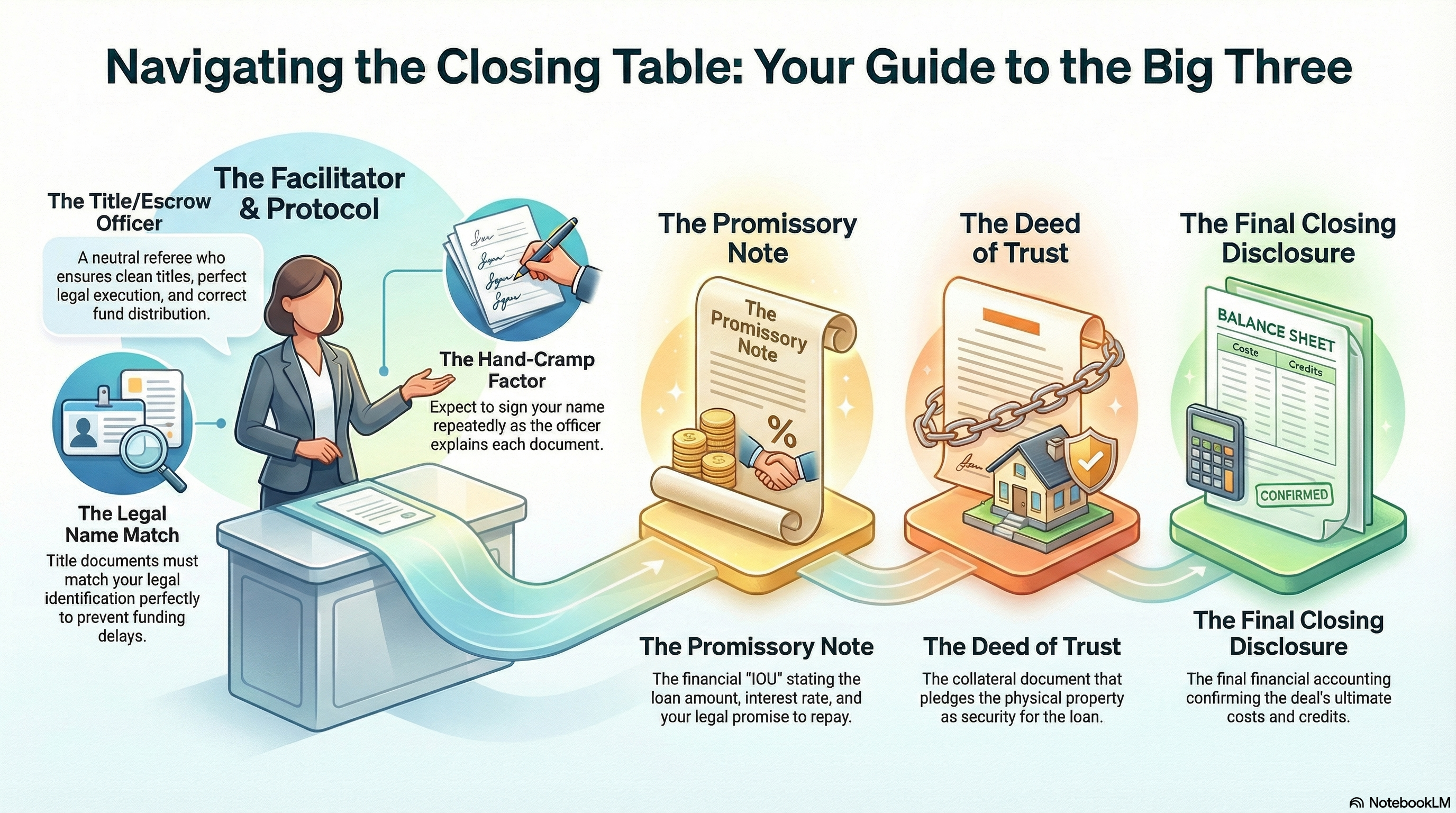
- You sign the closing documents at the title company: the Closing Disclosure, the deed of trust, the promissory note, and the rest. This is the full closing-day walkthrough.
- The lender funds the loan, releasing the money to the title company.
- The deed records with the county, making you the owner of record.
- Then the keys. The exact moment depends on whether your closing funds the same day or the next business day, which I cover in when you actually get the keys after closing.
The "Don't Change Anything" Warning
Protect the Green Light
Even after clear to close, do not open new credit, do not change jobs, and do not shift money around before you sign. Your finances get re-checked right up to the wire, and a last-minute change can pull the green light. A brand-new car loan or a big credit card spend can reopen your file or stall the close. This is the same reason lenders ask about changing jobs while buying and where your funds are coming from, and you can dig into why a lender asks where your money came from. Be boring for these last days. It is the cheapest thing you will do all transaction.
If you are wondering whether the money sitting in your accounts passes muster, the overview of what assets you need to qualify for a mortgage explains how lenders see your balances.
What Could Push It Back
Stay Ready Until Signing
PATRICK TEACHING. These are the common reasons a close moves, not a guarantee any of them happen to you.
- A new document request. The underwriter may come back for one more piece of paper right up against closing. That can delay things while it is gathered and reviewed, which is why a closing delay often traces back to paperwork.
- A value or appraisal issue. If something about the property value comes into question, the file can be reopened while it is sorted out.
- A financial change. New debt, a job change, or unexpected movement in your accounts can pull approval and send the file back. More on what happens when financing falls through.
The way to stay ready is simple: keep your phone on, keep your documents handy, keep your finances quiet, and respond fast if your loan team asks for anything. Speed and cleanliness are your two best friends between clear to close and signing.
Patrick's Take
"Clear to close is the green light, not the finish line. Get it, protect it, and keep your hands clean until you sign. Celebrate it, absolutely, but save the full celebration for the day you hold the keys. I tell every buyer the same thing: those last few days are when you look out for the deal, and the deal looks out for you."
Quick Answers on Clear to Close
How close to closing do I get clear to close?
There is no single day that fits every loan. Timing can vary by lender and program, and it depends on how quickly every condition clears. Some files clear well ahead of closing so the date can be set with confidence; others clear right at the end as the final items are wrapped up. Your loan officer is the one who can tell you where your file sits.
Is clear to close the same as approved?
Not quite. Conditionally approved means the loan looks good with conditions still to meet. Clear to close is the stronger step: every condition is cleared and the loan is approved to fund. Think of approved as "on the way" and clear to close as the underwriter's final sign-off before closing.
Can I lose clear to close?
Yes, it can be pulled back if something changes between your clear to close and the closing table. A new credit account, a job change, or unexpected money movement are the usual culprits. That is exactly why the advice is to keep everything steady until you sign.
Who tells me I'm clear to close?
Your loan officer or your mortgage processor is the one who delivers the news, typically with a quick call or message. If you have a REALTOR on your side, they hear it too and it often moves straight into confirming your closing appointment. When you get that message, it is a good day.
Ask Patrick about clear to close
Get a straight answer on what clear to close means and what happens next.