
The Quick Answer
Closing day is when you sign the final documents, the lender's funds are released, the title company records the deed with the county, and you walk out with the keys. In Texas, most purchases close about 30-45 days from contract, and the closing appointment itself usually takes about 30-60 minutes at the title company. It all comes down to one thing: keys in hand.
Before Closing: The Final Walkthrough
Closing day starts the day before it gets old. Do your final walkthrough the day of closing or the day before, and do it with your agent. You are not just looking at the paint here. You are confirming two things: the agreed-upon repairs are actually done, and the home is in the contracted condition when you were under contract. If the seller was supposed to fix a leaky faucet or replace a broken window, this is the moment to check it. Check that appliances are still there, the big systems run, and nothing has quietly changed since the inspection.
If something is off, tell your agent right away. Repairs and credits can still be negotiated before you sign, but that window shuts fast once everyone is at the table. This walkthrough is your last real leverage, so use it.
The Closing Disclosure: Read It Before You Sign
By federal rule (TRID), your lender must deliver your Closing Disclosure at least 3 business days before closing. That is not a suggestion, it is the law. The Closing Disclosure is the final, official summary of your loan terms: your interest rate, monthly payment, and every line of your closing costs.
Before you sign anything, compare it line by line to the Loan Estimate you received at the start. The line that matters most is the cash-to-close: the total amount you walk in with. If that number moved up for no clear reason, flag it to your agent and lender before closing. A small, expected drift happens, but an unexplained jump should never be quietly absorbed. If something looks wrong, do not sign first and ask questions later. The 3-business-day window exists so you have time to ask.
What to Bring to Closing
Being prepared on closing day starts with what you bring. Missing a key document can delay the process, so double check your bag before heading out the door:
- Government-issued photo ID -- your driver's license or passport. This is non-negotiable; the title company needs it to verify your identity.
- Proof of homeowners insurance -- the policy document your lender requires before funding the loan.
- Certified funds or a confirmed wire for any cash due at closing -- in the exact amount your title company confirmed. No more, no less.
- Any outstanding documents your lender requested before closing -- updated bank statements, pay stubs, or signed disclosures.
- Phone numbers for your agent and the title company saved in your phone, plus confirmed wire instructions if you are wiring funds.
If you are wiring money, confirm your wire instructions by phone with the title company using a number you looked up yourself. Never trust a wire number that arrives by email alone -- that is exactly how mortgage wiring fraud happens.
What Actually Happens on Closing Day, Step by Step
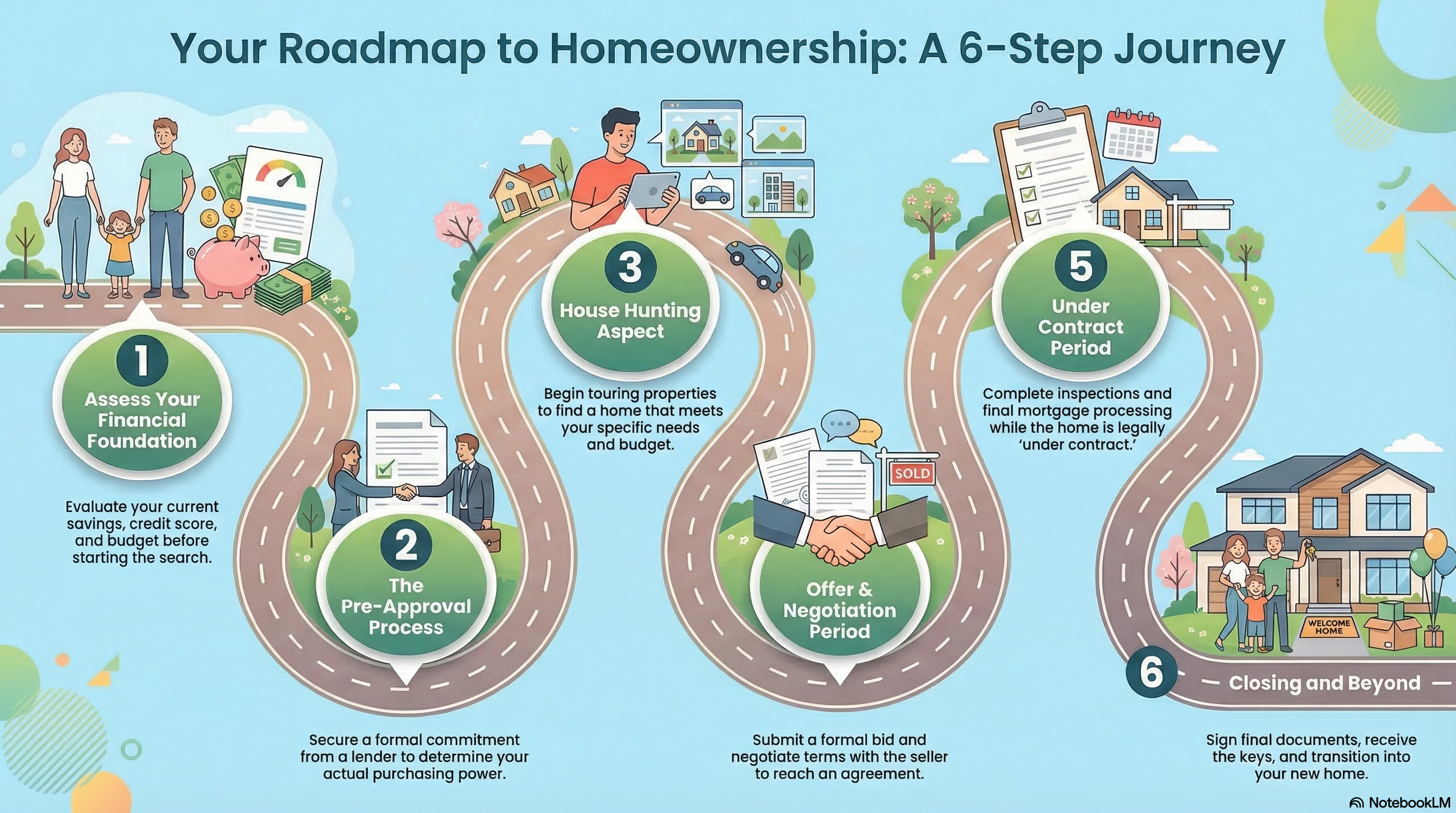
Once you arrive at the title company, the day moves in a fairly predictable order. Here is the walkthrough so none of it is a surprise:
- 1
Check in and verify identity.
The closing agent or escrow officer confirms who you are with your photo ID and runs through the plan for the signing.
- 2
Review the final numbers.
You go over the Closing Disclosure and the cash-to-close line one more time. Your agent checks that the numbers match what was promised.
- 3
Sign the documents.
You sign the deed of trust, promissory note, Closing Disclosure, and the title and state documents. You are never rushed through this, and it is fine to ask questions.
- 4
Funds are delivered.
Your cash due at closing goes to the title company, and the lender releases the loan funds. The title company oversees this transfer.
- 5
The deed is recorded.
Once the lender confirms funding, the title company records the deed with the county clerk. This is the legal step that makes you the official owner.
- 6
Keys in hand.
Once the deal has funded and the deed is recorded, you get the keys. Most Texas purchases hand them over the same day, sometimes shortly after the appointment.
The Signing Process
The closing agent (often called the escrow officer) will walk you through each document step by step. You are not expected to know everything -- they explain each page. Here is what you will sign:
- Deed of Trust -- This is your mortgage document. It gives the lender a security interest in the property.
- Promissory Note -- Your promise to repay the loan. This is the legal document that creates your debt obligation.
- Closing Disclosure -- The final, official summary of your loan terms, interest rate, monthly payment, and all closing costs. Review this carefully.
- Title documents -- Including the deed that transfers ownership from the seller to you.
- Federal and state disclosures -- Various required forms from the Consumer Financial Protection Bureau, your lender, and the state of Texas.
Ask questions about anything you don't understand. The closing agent has seen it all and expects you to have questions. This is the biggest financial transaction of most people's lives -- there are no silly questions.
Cashier's Check vs Wire Transfer
The money you bring covers your down payment plus closing costs. For a full look at what buyers really pay, check the breakdown of buyer closing costs in Texas. You have two ways to deliver your closing funds, each with pros and cons:
- Cashier's check: Drawn from your bank and made payable to the title company. Safer than wire transfer because there is no digital trail for scammers to intercept. The check must be for the exact amount -- no more, no less.
- Wire transfer: Funds sent directly from your bank to the title company's escrow account. Faster for large amounts and convenient if you cannot get to a bank branch. However, wire fraud is a real risk.
Wire Fraud Warning
Always verify wire instructions by phone using a number you independently look up -- never trust wire instructions sent by email alone. Scammers intercept email threads and send fake wiring instructions. Call your title company directly to confirm the routing and account numbers before sending a single dollar.
After Signing
Signing the documents is not the final step -- recording is. Here is what happens after you put down the pen:
- The title company records the deed with the county clerk's office. This is the legal step that makes you the official owner.
- Recording usually happens the same day or the next business day, depending on the county's processing time.
- Once recorded, you officially own the home. Congratulations -- you are a homeowner.
- You receive the keys. Some title companies hand them over at signing; others wait until recording is confirmed.
- The original deed will be mailed to you in 2-4 weeks after recording. Keep it safe with your other important documents.
Same-Day Closing vs Next-Day Funding
The timeline between signing and actually getting the keys varies depending on how your transaction is structured:
- Same-day funding is common for purchase transactions in Texas. You sign, the title company records, and you get the keys all in one day.
- Some closings are structured as "record and fund" -- the lender funds the loan after recording is confirmed.
- Other closings fund the next business day, especially if the signing happens late in the afternoon.
Your agent will confirm the timeline a few days before closing so you know exactly when to expect the keys.
Patriot Pro Tip
Keep your paperwork tidy from day one. As a loan officer, I've seen closings held up because a document was missing at the last hour. Create a folder the week of closing: your ID, insurance binder, the wire confirmation, and a printed copy of the Closing Disclosure. Hand that folder to the closing agent and the signing flies. Organization on your end is the difference between a 30-minute close and an afternoon of chasing documents.
Reality Bites
Closing can get delayed, and when it does, it's usually a funding or document issue, not a grand conspiracy. Keep your phone on and your funds ready. And this is the part buyers hate hearing: do not use your credit, change jobs, or take on new debt between the Closing Disclosure and closing. Financing is re-checked right up to the wire, and a new car loan or a big credit card spend can blow the whole deal. Be boring for those last few days.
A note before you close: this is general information, not legal advice. Your title company and lender give the authoritative instructions for your specific closing, and they are the right people to check with on any document.