Call Text Book

Quick Answer

How much house can I afford? Using my 29/41 framework, keep your total housing payment near 29 percent of your gross monthly income and your total monthly debt near 41 percent. On $84,000 a year that lands around a $305,000 to $310,000 home ceiling. Debt-to-income ratio (DTI) is the engine that runs this whole number, and this page is the deep dive on both.

Quick overview: want the 60-second version first? Read my quick answer on how much house you can afford, then come back here for the full breakdown.

This page is the complete guide: how much house you can afford, the 29/41 and x115 frameworks, a full $320,000 FHA payment breakdown, and exactly how your debt-to-income ratio fits into it.

My Affordability Frameworks: The 29/41 Rule and the x115 Rule

I keep it simple for buyers. Two rules of thumb do 90 percent of the work, and both are conservative on purpose. You are not trying to stretch to the maximum a lender will approve. You are trying to stay comfortable for the next 30 years.

The 29/41 Rule

  • 29 percent of gross monthly income toward housing: principal, interest, taxes, insurance, plus mortgage insurance when it applies.
  • 41 percent of gross monthly income toward all your monthly debt, including the housing payment.

A lender will often approve you at a higher ratio. My framework stops where most families keep breathing room, which is why the back-end number tends to be the one that actually binds.

Patrick's x115 Affordability Rule

Once we know your monthly housing room, we have to turn it into a price. That translation is what my x115 affordability rule does. The honest math is that the price changes with your rate, your tax district, and your insurance quote, so I never quote a single multiplier as law. What stays fixed is the discipline: keep the total payment inside your 29 percent line, and back into a price from there.

The $84,000 Worked Example

Let me show you the math the way I teach it. Say you earn $84,000 a year. That is $7,000 a month gross. Under the 29/41 framework:

Annual income$84,000
Gross monthly income$7,000
29% housing line (29% x $7,000)~$2,030 / mo
41% total-debt line (41% x $7,000)~$2,870 / mo
Patrick's framework home ceiling~$305,000 to $310,000

Back the $2,030 monthly housing line through a current-ish 6.6 percent rate plus Texas property taxes, homeowners insurance, and FHA mortgage insurance, and the framework lands near a $305,000 to $310,000 ceiling. Raise the rate or the tax bill and the same income supports less. Lower them and it supports more. That is why I always say the payment, not the price tag, is the real question.

The math behind mortgage qualification: how income, debt-to-income ratio, and the monthly payment combine to set your qualifying price range

The $320,000 FHA Example: Where the Payment Really Goes

Here is the figure I walk first-time buyers through on a $320,000 FHA purchase: about $2,659.61 a month in total housing payment. Too many buyers quote only principal and interest and get surprised at the escrow analysis in year one. Texas property taxes and homeowners insurance are part of your payment from day one, and on an FHA loan the mortgage insurance rides along for the life of the loan.

Monthly payment line Amount
Principal and interest$1,893.08
Escrowed property taxes (Texas)$480.00
Homeowners insurance$145.00
FHA mortgage insurance (MIP)$141.53
Total housing payment$2,659.61

The assumptions: 3.5 percent down on a $320,000 home (about $11,200), a 30-year fixed rate near 6.6 percent for illustration, Texas property taxes at about 1.8 percent (the Bexar County reality), homeowners insurance around $145 a month, and FHA MIP at about 0.55 percent annually. On top of the payment, budget the one-time 1.75 percent FHA upfront mortgage insurance, which is usually rolled into the loan rather than paid at closing.

Change any one of those assumptions and the total changes. Rates fluctuate, and your tax district and insurance quote will differ from mine. That is the point of showing the whole breakdown.

Front-End vs Back-End DTI

My 29/41 framework and the lender's DTI math run on the same engine. Debt-to-income ratio (DTI) is simply how much of your gross monthly income your debts eat. Lenders split it into two ratios, and I want you to understand both because one of them decides most deals.

Front-end DTI (also called the housing ratio) includes only your proposed mortgage payment: principal, interest, taxes, and insurance (PITI). My framework holds this to about 29% or below.

Back-end DTI includes all your monthly debt payments: the mortgage payment plus credit cards, car loans, student loans, personal loans, child support, and any other recurring obligations. My framework holds this to about 41%.

Why the back-end usually binds: most buyers have car notes, student loans, or credit cards that eat into the 41 percent line before the housing payment ever gets there. So even when your housing ratio looks fine, the back-end is the number that really decides how much house you qualify for. When I structure a purchase, I structure the offer to protect that back-end room.

Patrick's Take

Here is the line I repeat on every first call: a lender's approved amount is a ceiling, not a target. I have seen pre-approval letters that look like a winning ticket, and I have seen the buyers who spent every dollar of them. The happiest homeowners I know bought below where the numbers said they could, because they kept room for the rest of their lives.

Think of DTI like a bouncer at the door. The front-end ratio checks the mortgage payment: it turns away housing that eats more than about 29 percent of your income. The back-end ratio checks your whole wallet: every debt, car, student loan, credit card, all of it, up against about 41 percent. The bouncer keeps the max out, it does not wave the max in. My job is making sure you budget on the strict side of that line and buy like you set the limit, not the lender.

Want the big-picture decision before the math? My companion guide walks through the gap between your approved amount vs. comfortable budget from the top.

How to Calculate It

The formula is simple: add up all your monthly debt payments, divide by your gross monthly income (before taxes), and multiply by 100.

Example: If your monthly debts total $2,000 and your gross monthly income is $6,000, your DTI is 33% ($2,000 / $6,000 = 0.33).

How to calculate your DTI ratio: add up total monthly debt payments and divide by gross monthly income

What Counts as Debt

  • Credit card minimum payments
  • Car loans and leases
  • Student loans (even if deferred, lenders use 0.5-1% of the balance)
  • Personal loans
  • Child support and alimony
  • The proposed mortgage payment (PITI)

Maximum DTI by Loan Type

Loan Type Max DTI Notes
Conventional 36-43% Up to 45-50% with strong compensating factors
FHA 43-50% Up to 50% with strong credit
VA No set limit Residual income analysis is more important
USDA 29/41% Front-end 29%, back-end 41%

How to Lower Your DTI

  • Pay down debt — Paying off a car loan or credit card reduces your monthly obligations
  • Increase income — A second job, side hustle, or raise increases your denominator
  • Do not add new debt — Avoid financing a car or opening new credit cards before applying
  • Consider a longer loan term — A 30-year loan has lower payments than a 15-year

What Actually Moves Your Number

Same income, same city, two different buyers, two different affordable prices. Here is what changes the number, and the 2026 picture on each.

  • Down payment size. More down means a smaller loan and, on a conventional loan, PMI that can be removed. Conventional PMI can be requested off once you hit 20% equity (80% LTV) and is dropped automatically at 22% equity (78% LTV) by law. FHA is different: MIP stays for the life of the loan.
  • Interest rate. 30-year fixed rates have been running in the mid-to-high 6% range as of August 2026, and they fluctuate. Half a point on a large loan moves your payment by real dollars every month.
  • Texas property taxes. Effective rates in Bexar County and much of the Hill Country land around 1.5% to over 2%, and the tax line is often one of the biggest pieces of your escrow.
  • Homeowners insurance. Texas premiums run high thanks to wind and hail exposure. Shop and bundle, because a $50-a-month swing changes what you can buy.
  • Mortgage insurance: MIP vs PMI. FHA MIP is a 1.75% one-time upfront fee (usually financed) plus roughly 0.55% annually on most 30-year loans (0.50% with 5% or more down), and it lasts the life of the loan. Conventional PMI stops once you build 20% equity. Same goal, very different lifetime cost.
  • Your other debts. Car, student loans, and credit cards eat your back-end room directly. Pay them down and you immediately buy more house.
  • The loan program. FHA takes 3.5% down with a credit score around 580 (500-579 needs 10% down). Conventional runs around 620+ with 3% or more down. VA and USDA allow 0% down for eligible borrowers. Which program you use changes your payment and your cash to close.

Not sure which loan fits? Start with my guide to the best loan for a first-time buyer, and check how much down payment you really need.

How Much House at Your Income?

Here is how the framework shakes out at a few income levels, assuming a current-ish 6.6% rate, Texas taxes and insurance, and 3.5% to 5% down. These are estimates and they shift with your actual rate, tax district, and insurance quote, but they give you a shopping range.

Annual income 29% housing room Framework ceiling
$60,000~$1,450 / mo~$220,000
$84,000~$2,030 / mo~$305,000 to $310,000
$100,000~$2,417 / mo~$360,000 to $370,000
$120,000~$2,900 / mo~$430,000 to $440,000

Your credit score changes all of this more than people expect. A stronger score gets you a better rate, and a better rate is more buying power for the same monthly payment. See how your credit score affects your first purchase.

Want to watch the numbers in action? See my video on how much house you can afford at $80K to $120K incomes.

What to Gather Before You Apply

Do not walk into a pre-approval empty-handed. Having these ready on the first call means a straight answer instead of a follow-up week.

  • Two years of W-2s and tax returns, plus recent pay stubs
  • Two months of bank statements showing your down payment and savings
  • Proof of any gift funds and the gift letter, if a family member is helping
  • Your credit picture, so we know which loan program fits your score
  • A list of your monthly debts: credit cards, car, student loans
  • Proof of any extra income: bonus, VA benefits, rental income, second job

The step-by-step order of everything from here to keys lives in my First-Time Homebuyer Guide.

The Texas Reality: Taxes and Insurance

Texas has no state income tax, which is a real bonus for your take-home pay. The trade is that property taxes carry a heavy load. In San Antonio and Bexar County, effective property tax rates routinely run 1.5% to over 2% of assessed value, so escrow is not an afterthought: it is one of your biggest lines every month. New construction and some Hill Country communities can add improvement district assessments or a higher initial assessment on top.

Insurance is the other Texas reality. Wind and hail claims keep homeowners premiums high here, so quote actual policies before you lock a budget. The covenant is the same across the state: keep the total payment, taxes, insurance, and mortgage insurance combined, inside your 29 percent line. More San Antonio and Bexar County answers, including property taxes and buying tips, are in the buying-a-home question library.

Affordability Is More Than the Payment

The monthly payment is the headline, but it is not the whole story. I have watched buyers qualify on paper and still struggle, and it is almost never the payment that did it. It is the money around the payment.

  • Cash to close: your down payment, closing costs, title, and prepaids. On a $320,000 FHA purchase that is the $11,200 down payment plus several thousand in closing costs on top.
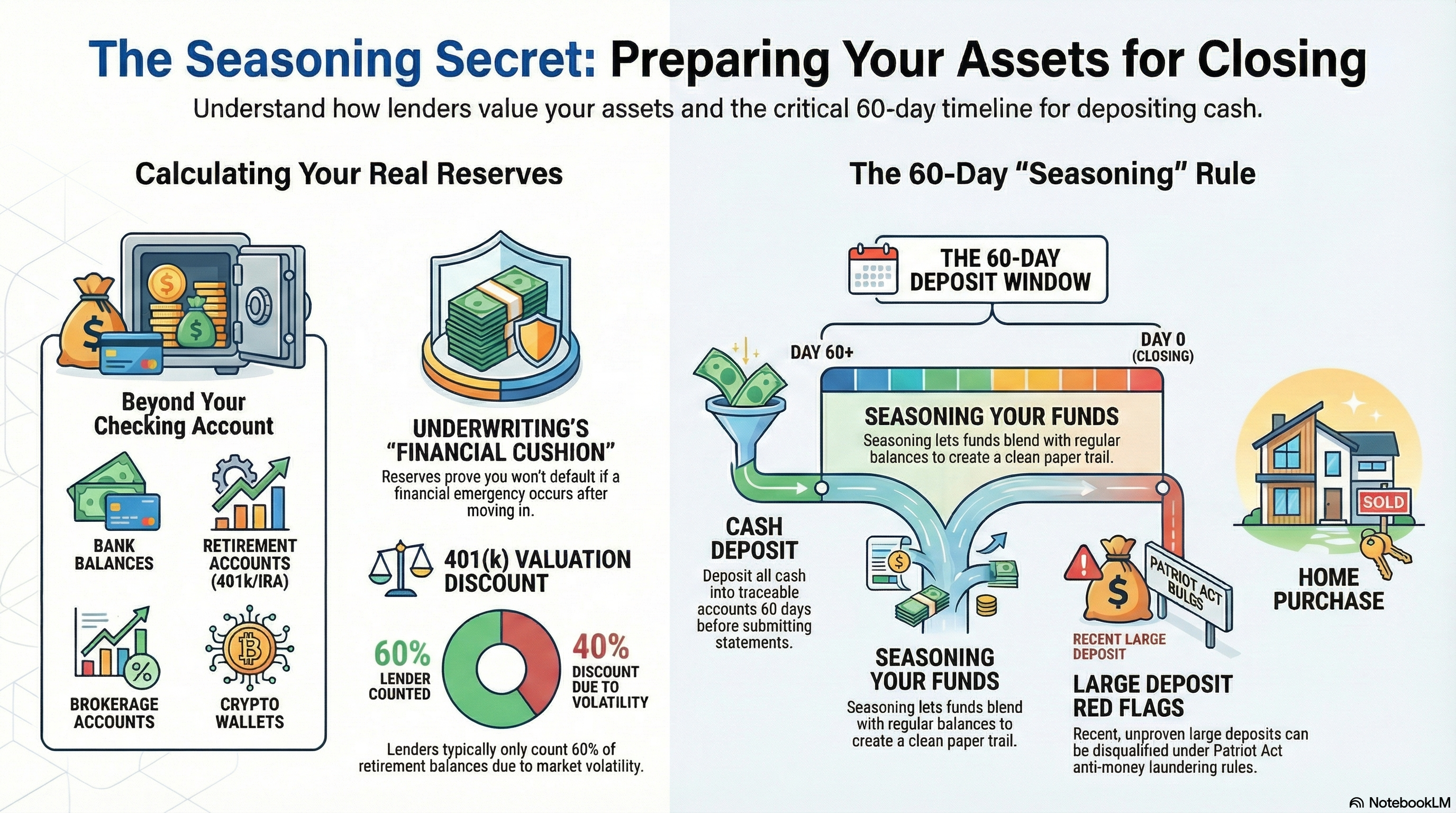
  • Reserves: what is left in the bank after closing. The water heater and the HVAC do not wait for your convenience, and Texas heat makes that painfully real.
  • Life changes: a job change, a new fixture in the family, a donor car. The comfortable budget is the one that absorbs these without a crisis.

Quick Answers Before You Call

Can I buy a house with little money down?

Yes, more than most people think. FHA takes 3.5% down with a credit score around 580, conventional runs around 620+ with 3% or more down, and VA and USDA allow 0% down for eligible buyers. Each brings different mortgage insurance, so compare them before you choose.

Should I get pre-approved before I look at homes?

Always. Pre-approval turns "can I afford this?" into a real number, tells you exactly where your DTI sits, and makes your offer competitive in a multiple-offer situation. It is the first thing I do with a buyer.

How much are closing costs on top of the down payment?

Buyer closing costs in Texas typically run 2% to 5% of the purchase price once you add title, lender fees, and prepaids for taxes and insurance. That is on top of your down payment, which is exactly why cash to close is part of the affordability equation.

What if my DTI is too high right now?

It is rarely a dead end. Paying down a car note or credit card lowers your back-end ratio, a higher income raises the denominator, and sometimes the honest fix is a slightly lower price target. I have walked buyers through all three, and the full order of operations is in the roadmap below.

Patrick's Take / Reality Bites

"A clueless buyer is a dangerous buyer. The most dangerous move in this market is buying at the maximum a lender approves, because affordability is not just the payment. It is the cash to close, the reserves left in the bank after closing, and the room in your budget for life to happen. I would rather you buy a little less house and sleep well than stretch for the ceiling and regret it at year three. DTI tells us where the line is, and my job is keeping you on the safe side of it."
PF
Patrick Kevin Fagan
Patrick Kevin Fagan

Patrick Kevin Fagan

Loan Officer and Realtor · AXEN Realty LLC

Sales Agent · 454749 · TX

Ready to See What You Can Afford?

As a loan officer and Realtor, Patrick runs your real numbers and shows you the exact payment and price range your budget supports. No guesswork.

} })(); >