

Quick Answer
An ARM has a fixed rate for the first 5, 7, or 10 years, then adjusts annually. It starts cheaper than a 30-year fixed, but the payment can climb afterward.
Get help comparing your loan options and what fits your situation.
What an ARM is: fixed first, then adjustable
An adjustable-rate mortgage keeps your interest rate fixed for an initial period, commonly 5, 7, or 10 years, and then resets on a regular schedule based on an index plus a margin the lender sets. Caps limit how much the rate can move at each adjustment and over the life of the loan, so the payment can climb, but it cannot climb without a ceiling.
Because the lender takes less risk in the early years, the starting rate is usually lower than a comparable 30-year fixed. CFPB describes ARMs as a trade-off between a lower initial payment and the risk of a higher payment later. [1] Consumer Financial Protection Bureau. That trade-off is the whole decision, and it is a good deal for exactly one kind of buyer: the one who knows the fixed period will cover the time they actually live in the house.
The "arm" part of the name is the part you have to plan for. I model the worst-case adjusted payment with every client before we choose, so the number on the disclosure never surprises anyone at year six.
The sweet spot: moving inside the fixed period
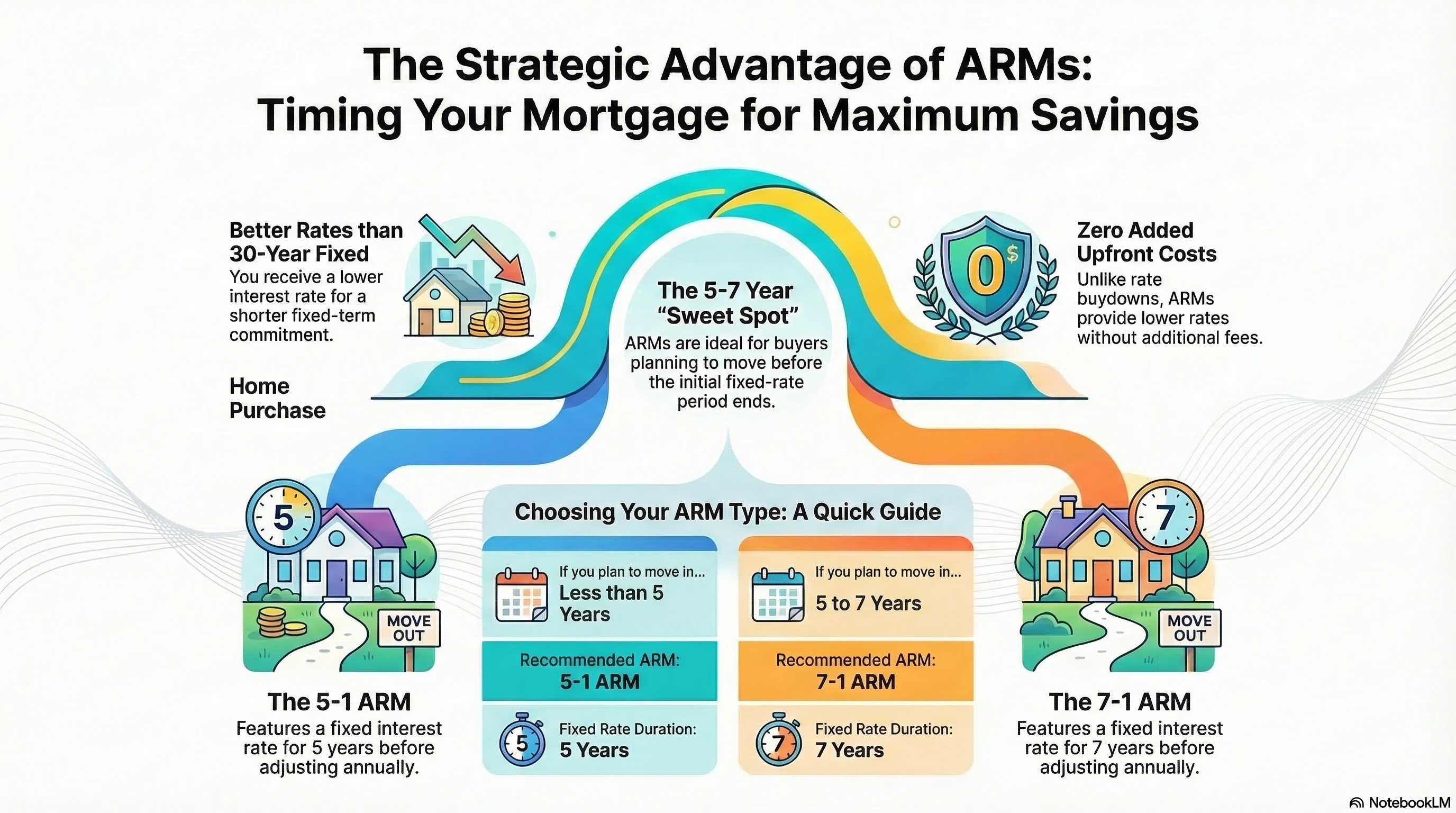
An ARM rewards buyers who expect to sell or refinance before the fixed period ends, or who need the lower payment now and fully understand the future reset. Think relocation buyers, PCS orders, transfer employees, or investors who flip within a few years: they pay the low fixed rate for exactly as long as they need the house, then move on before any adjustment ever lands.
For buyers planning to stay many years with a stable budget, a fixed rate removes the risk entirely, and the peace of mind is worth real money. Texas buyers also face rising property taxes and insurance, so even a payment that only adjusts on rate still changes as taxes and premiums do. [2] Texas Comptroller. An ARM is a plan, not a prediction, and the plan has to include an exit.
5-1 and 7-1 ARMs: who each one fits
The numbers in an ARM name tell you the fixed period and the adjustment cadence. A 5-1 ARM has a fixed rate for five years and then adjusts once a year; a 7-1 ARM holds the rate fixed for seven years and then adjusts annually. The longer the fixed period, the lower the risk, and the higher the starting rate.
5-1 ARM: built for the buyer who knows they are leaving or refinancing in roughly five years, which is a very common window for first homes and military buyers in San Antonio. The payment savings are biggest here because the fixed period is shortest.
7-1 ARM: the middle path for buyers who want a real window of stability. It fits the growing family that plans to be in the home through the school years and evaluate at year seven, or the second-time buyer who will likely upgrade once the equity builds.
Either way, the question is never "does the ARM start cheaper?" It is "can you honestly see yourself out before the fixed period ends?" If the answer is "probably not," a fixed rate is the safer bet.
Pricing and costs vs a 30-year fixed
An ARM does not come with a giant bill of extra fees. The costs look like any other mortgage: origination fee, title, appraisal, and the same closing items. What differs is the rate, and the rate difference is the entire game.
The starting ARM rate is typically a fraction lower than a 30-year fixed, often the difference of a few tenths of a point, and on a $300,000 loan even a quarter point can be a meaningful monthly savings during the fixed period. The honest cost is on the back end: if you are still in the house when the rate resets, the payment can jump, within the caps, to whatever the market is doing that year.
CFPB's buying tool walks through comparing offers on rate, fees, and terms, which is how you judge whether an ARM's savings are real. [3] Consumer Financial Protection Bureau. I also run the worst-case adjusted payment alongside the best case, because a Texas payment is only "cheaper" if it still fits when taxes, insurance, and the eventual rate reset all land at once.
The lower-rate playbook beyond the ARM
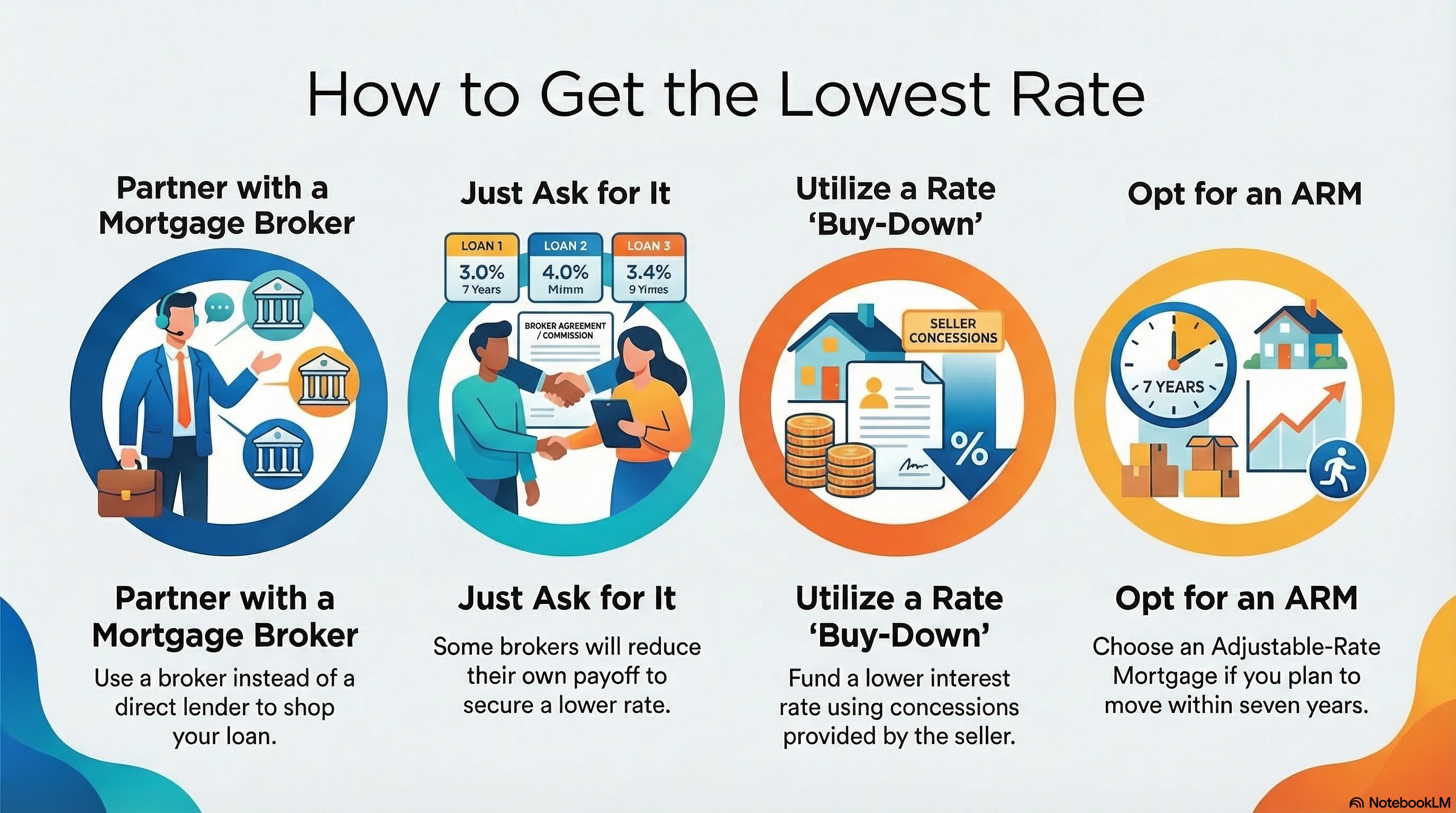
The ARM is one tool in the lower-rate box, and it is not always the best one. Here is the wider playbook I walk buyers through before we commit to any single loan:
- Shop multiple lenders. A mortgage broker can compare price sheets across lenders for the same loan, and I do exactly that on every file, because identical programs price differently from shop to shop.
- Ask for the concession. On new construction, a builder incentive often buys your rate down or pays closing costs. The builder wants your business, so the concession is a negotiation, not a favor.
- Seller-funded buydown. In a resale, the seller can contribute toward buying the rate down at closing, which shrinks your payment without shrinking your down payment.
- ARM for a short horizon. If you are moving within the fixed period, the ARM can beat all of the above on monthly savings, because you capture the low start rate and never pay the reset.
The order matters: get the lowest rate the market offers, then decide whether the ARM's fixed period covers your actual plan. That is how a lower rate becomes real savings instead of a gamble.
Ask Patrick about adjustable-rate mortgages
Get a clear read on ARM rate caps, adjustment periods, and whether this loan fits your plans.
