
PATRICK'S QUICK ANSWER
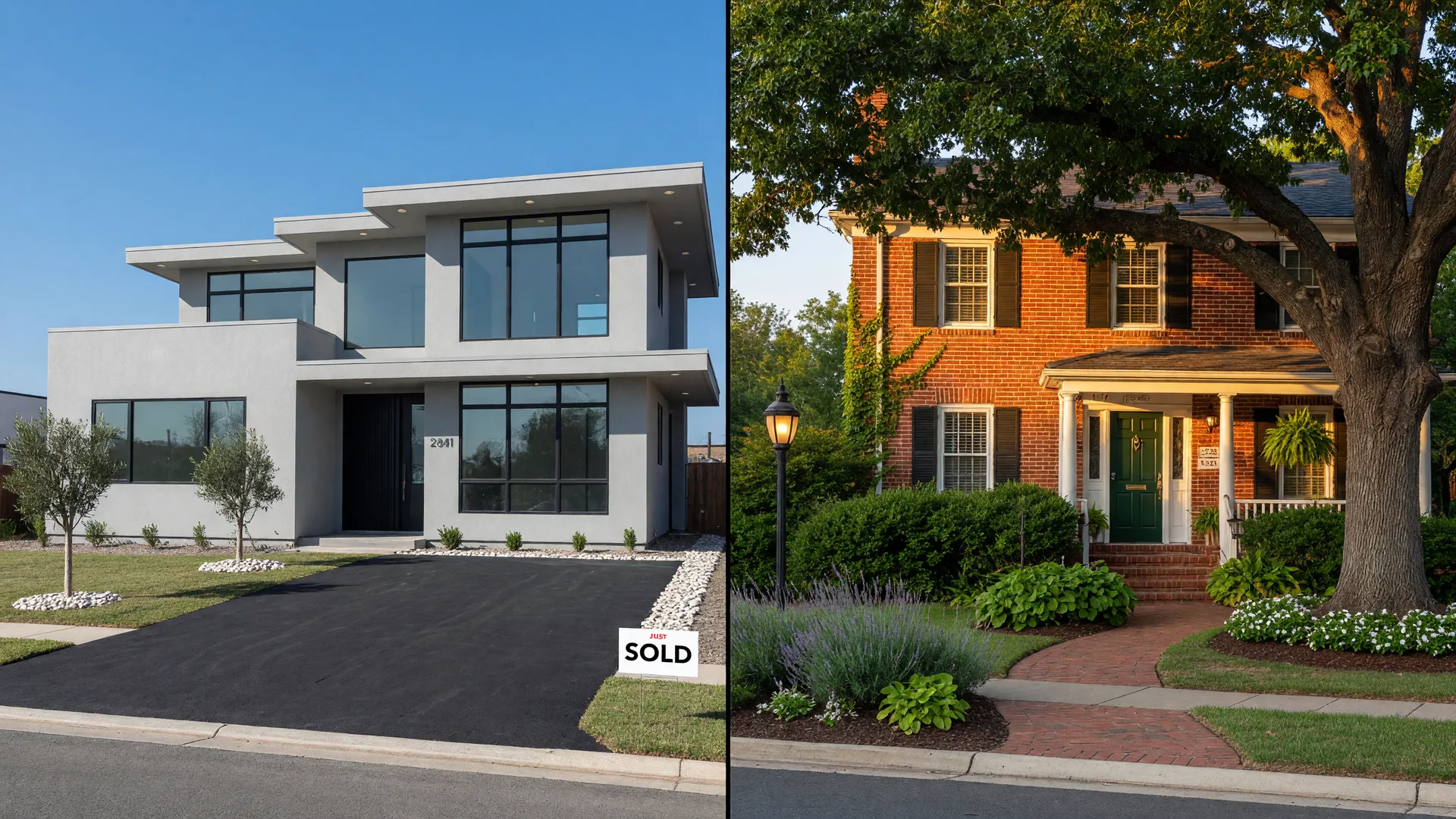
Neither is inherently better; the right pick depends on your priorities, timeline, and budget. New builds give you a modern home, design center customization, builder warranties, and a price point that fits growth areas like San Antonio and the Hill Country, but you wait months and often pay more per square foot. Existing homes offer mature neighborhoods and move-in speed, but you may buy repairs. Decide on price, customization, and timeline, and the answer becomes clear fast.
As a first-time buyer, the biggest decision you will face is whether to buy a new construction home or an existing home that is already built in a mature neighborhood. I have been doing this for over 23 years in loan origination and 19 years in real estate sales, and I can tell you this: neither choice is inherently better -- the right choice depends on your priorities, your timeline, and how well you understand what each option really offers. In this article, I break down the five major points of consideration that will save you money, avoid headaches, and give you confidence in your decision.

Prefer to watch? Patrick walks through all five considerations in this video.
Why New Builds Are Gaining Popularity
The real estate market across Texas and much of the country is experiencing a significant inventory shortage. We are roughly a million homes below what normal inventory levels should be. A big reason for this is that many homeowners locked in historically low interest rates during 2020 and 2021, and they are reluctant to sell and take on a new mortgage at today's rates. That inventory shortage is pushing a lot of first-time buyers toward new construction, especially in rapidly growing areas like San Antonio, Bulverde, and the Texas Hill Country.
In many communities, new builds are almost the only game in town. But that does not mean every new build is the right choice for you. Let me walk you through the five major considerations that will help you decide.
Advantages of New Construction
Price Point and Availability
In many mature neighborhoods, the available inventory may not fit your budget. Builders are constructing homes on the outskirts of communities at price points that first-time buyers can afford. If you are priced out of established neighborhoods in San Antonio or the Hill Country, a new build community may be your entry point into homeownership.
Customization at the Design Center
This is the biggest attraction for many first-time buyers. In a new build, you get to go to the builder's design center and choose your color schemes, flooring type, cabinetry, and countertops. The selections are typically coordinated so everything blends together nicely. By the time you move in, everything is exactly the way you want it.
That kind of customization is not an option with an existing home. You might walk into a perfectly nice house with funky paint colors or outdated cabinets that you will want to change immediately. I want to point out a workaround, though. You can use a renovation loan on an existing home -- you add, say, $25,000 to your purchase price that goes into a side account to change out the colors, paint the walls, replace the carpet, and so forth. It is not the same as picking everything from scratch, but it gets you closer to a turnkey home.
Builder Warranties
A new build typically comes with a builder warranty. Coverage varies by builder, but generally you can expect the foundation to be covered for 5 to 10 years, electrical and HVAC for 2 to 3 years, and other systems for roughly one year. That gives you peace of mind knowing that major components are protected if something fails.
On an existing home, you can buy a home warranty that covers the major systems. These typically cost $500 to $600, depending on the level of coverage. But here is the honest truth about both: when you file a claim, the warranty provider will try to limit its payout. That is just how the system works. You need to know the exclusions in your contract and hold them accountable. In either situation, having an experienced agent who knows how to navigate warranty claims makes a real difference.
Builder Incentives
Builders often advertise financial incentives to attract buyers. These can include rate buydowns (say, 4.99% instead of market rates), closing cost coverage (like $10,000 toward your closing costs), or a combination of both. These packages are designed to make the monthly payment more attractive and lower your cash-to-close.
But here is what I want you to understand: the entire incentive package is a negotiation, and the package they show you first is their baseline, not their best offer. It is common for builders to extend better terms when a knowledgeable agent pushes back. Keep in mind that incentives may also be tied to using the builder's preferred lender -- something you should evaluate carefully.
Existing homes have their own version of incentives: seller concessions. On every deal I do as a loan officer or agent, I negotiate seller concessions. On a $300,000 house, I routinely secure $9,000 to $10,000 in seller concessions to help pay for closing costs. Both options can reduce your out-of-pocket costs, but the mechanics are different.
5 Things You MUST Know Before Buying a New Build
I want to share something a little different here. I recorded a separate video on the specific things every buyer should know before walking into a builder's sales office, and the feedback was overwhelming. Buyers kept telling me, "I wish I had known this before I started." So I am putting these five points right here, in writing, so you have them before you make a move.
Everything Is Negotiable
Price, upgrades, design elements, financial incentives — all of it is on the table. But if you walk into a builder showroom without a buyer's agent already registered, you will get the standard package, nothing more. The sales staff works for the builder, and their job is to sell you on what the builder wants to sell, not to get you the best deal. An experienced agent who understands both sides of the deal can negotiate $15,000 to $20,000 more than the standard package, far beyond the $10,000 most builders offer everyone. Because I am dual-licensed as both loan officer and agent, I know exactly which levers to pull to maximize your incentives without blowing up your financing.
The Builder's Contract Is Not Your Friend
Most states, including Texas, do not require builders to use the standard purchase agreement form that real estate agents use for existing homes. Builders use their own custom contracts, and those contracts are heavily tilted in their favor. The earnest money — sometimes called a builder deposit — can be $10,000 to $15,000, and it is at risk from day one. That is different from an existing home, where your earnest money stays protected during the option period. You need an experienced agent to review that contract language before you sign anything.
Be Extremely Flexible on Timeline
Builder sales reps will give you a completion date that they frequently miss. They have good intentions, but construction delays are the norm. You might gear up for a March move-in, then find out in January it is now May. If you have a lease ending, you could be forced into expensive month-to-month extensions or scrambling for short-term housing. I tell every one of my clients to plan for 2 to 3 months of timeline variation. Do not let your lease end within a month of the builder's estimated date. Give yourself a buffer so a delay becomes a minor inconvenience, not a financial emergency.
Watch for Special Assessments
Many new communities have special assessment districts — Municipal Utility Districts (MUDs) in Texas, or similar districts in other states — on top of normal county, city, and school taxes. These can add $200 to $500 or more per month to your payment. Builders will not mention these when they are presenting their $10,000 incentives and low interest rates. They want you focused on the monthly payment they show you, not the one you will actually have. An experienced loan officer who can analyze the full tax picture will catch these costs before you commit, not after.
Get Registered Early
If you are considering a new build, register with the builder through an agent before you visit the showroom. Once you walk in unregistered, you lose the ability to have proper representation for that community. Most builders will not allow you to bring in an agent after the fact. Registration costs you nothing — the builder pays the commission from their marketing budget — but it gives you a professional advocate on your side who knows how to negotiate, how to read the contract, and how to protect your deposit from day one. For more tips for buying new construction, see my Ask Patrick guide. Call me at 210-317-6514 before you go, and I will get you registered right away.
Things You MUST Know Before Buying New Construction
Builder Contracts Are Not Standard
Most states, including Texas, do not require builders to use the standard real estate contract form that agents use for existing home sales. Builders typically use their own custom purchase agreement, and that contract is written entirely in their favor. The language can include clauses that put your earnest money at risk from day one, with no option period to back out or negotiate repair issues.
Patrick's warning: On an existing home, your earnest money deposit is protected during the option period. You have time to do inspections, review the property, and decide if you want to move forward. On a new build, you may be asked to put up $10,000 or $15,000 as a deposit to hold a home that will not be ready for six or seven months. And that deposit can be at risk from day one unless you have specific protections written into the contract. You need an experienced agent who understands builder contract language and knows what to watch for.
Registration: You Must Have Your Agent Before You Walk In
If you walk into a builder's sales office without an agent already registered with the builder, you are representing yourself. And even though the sales staff will be wonderfully nice and helpful, their job is to represent the builder, not you. Once you walk through that door unrepresented, most builders will not allow you to bring in an agent later for that community.
Before you visit any new construction sales office, contact me or another experienced agent first. We register with the builder on your behalf, it costs you nothing, and it puts a trained negotiator on your side from the start. The builder pays our commission from their marketing budget, not from your pocket.
Timeline Delays Can Cost You
Builders give you an estimated completion date, but those dates slip frequently. You might walk into the showroom in September, fall in love with the model home, put down a deposit, and be told to expect a March 1 move-in. You time your lease to end in February, and then in January the builder says, "We are behind schedule -- it will be May now." Now you are stuck paying month-to-month rent at a higher rate or scrambling to find short-term housing.
I advise my clients to build in a buffer. Do not let your lease end within a month of the builder's estimated completion date. Give yourself two to three months of flexibility so a delay does not become a financial emergency.
Special Assessments and MUD Taxes
Many new communities in Texas are built within Municipal Utility Districts (MUDs) or other special assessment districts. These are additional property taxes on top of the normal county, city, and school district taxes, used to pay for the infrastructure of the new community. A special assessment can add $200 to $500 or even more to your monthly payment.
Builders rarely mention this when they are showing you the model home and talking about their $10,000 incentive package and low interest rate. But that special assessment is real, and it directly impacts your monthly payment and your affordability. As a dual-licensed professional, I always run the numbers with these additional costs included, so you know exactly what your true monthly payment will be before you sign anything.
Lot Size, Garage, and Landscaping Realities
Lot sizes in new build communities have been shrinking. You can almost pass the sugar between your neighbor's kitchen window and yours. Builders also squeeze square footage by shrinking the garage -- a "two-car garage" in a new build may barely fit two cars, which is why so many people park on the driveway or the curb. Over the last 10 to 20 years, garage sizes have noticeably decreased.
Landscaping is another area where new builds fall short. You might get a couple of small trees out front and a concrete slab in the back that the builder calls a patio. The backyard is often bare dirt, and grass is an upgrade. Compare that to an existing home where you have mature trees, established landscaping, and often a deck or covered patio. Those features are worth tens of thousands of dollars.
Why You Need an Agent Who Knows Both Sides
Here is where my dual license changes the game for my clients. As both a loan officer and a real estate agent, I understand the financing side and the real estate side of a new build transaction. When the builder offers you a 4.99% rate buydown with $10,000 in closing cost credits, I can look at the full picture and tell you whether that is genuinely a good deal or whether we can negotiate something better.
I also know the games. The builder's contract is written in their favor. The warranty exclusions are real. The special assessments are hidden. The timeline delays are common. Having someone who has negotiated dozens of new build transactions means you are not learning these lessons the hard way with your own money on the line.
The bottom line: Before you visit any builder's sales office, call me at 210-317-6514 or text me. I will register with the builder on your behalf. It costs you nothing and protects your interests from day one.
Patrick's Take
I have been doing this for 23 years, and I have seen both new builds and existing homes work beautifully for first-time buyers. The choice is not about which option is universally better. It is about which option fits your specific situation.
If you value customization, lower maintenance in the first few years, and builder incentives, a new build may be the right path for you. But you need to go in with your eyes open: builder contracts are one-sided, timelines slip, lot sizes are shrinking, and special assessments can add hundreds to your monthly payment.
If you value a larger lot, mature landscaping, a garage that actually fits two cars, and an established neighborhood with proven schools and resale values, an existing home may serve you better. With a renovation loan, you can even customize the finishes to your taste.
The most important thing is having someone on your side who understands both the numbers and the contracts. That is what I am here for.
New Build vs. Existing: Quick Comparison
Here is a side-by-side look at the key factors to help you compare.
| Factor | New Build | Existing Home |
|---|---|---|
| Customization | Choose finishes at design center | Renovation loan can fund changes |
| Lot size | Smaller lots, less privacy | Larger lots, mature trees |
| Garage | Shrinking, tight for two cars | Full-size, comfortable |
| Landscaping | Minimal, grass is an upgrade | Mature trees, established yards |
| Warranty | Builder warranty (5-10 yr foundation, 2-3 yr systems) | Home warranty ($500-$600) |
| Incentives | Rate buydowns, closing cost credits | Seller concessions (up to 3% of price) |
| Contract | Builder's custom form, tilted to builder | Standard TREC contract, buyer protections |
| Earnest money | At risk day one without option period | Protected during option period |
| Timeline | 6-7 months, delays common | 30-45 days to close |
| Special assessments | MUD taxes can add $200-$500+/month | Typically none beyond standard taxes |
Real Numbers: $325K New Build vs. $300K Existing
Let me show you a real example. Assume an $80,000 household income (about $6,667 per month gross). With a builder incentive bringing the rate to 5% on a new build at $325,000, your monthly payment is roughly $2,520. With a conventional loan at 6% on a $300,000 existing home, your monthly payment is roughly the same $2,520.
New Build
$325,000
Approximate purchase price
Rate: 5% (builder incentive)
Monthly payment: ~$2,520
Cash-to-close with incentives: ~$12,000
Existing Home
$300,000
Approximate purchase price
Rate: 6% (market rate)
Monthly payment: ~$2,520
Cash-to-close with concessions: ~$8,000
The monthly payment is similar, but the new build gives you a higher-priced home and a lower rate (if you negotiate the incentives properly), while the existing home costs less upfront and may come with more land and established features. Your priorities will determine which trade-off works best for you.
Frequently Asked Questions
Is the builder's incentive package a good deal?
Do I need to use the builder's lender to get the incentives?
Can I negotiate on a new build?
Can I buy a new build without a real estate agent?
What is a MUD tax and how does it affect my payment?
Is an existing home cheaper than a new build?
Continue Your Education
Explore more resources from Patrick to deepen your home buying knowledge.
Want the Full Homebuyer Roadmap?
Join my free first-time homebuyer webinar for a full start-to-finish walkthrough of financing, negotiating, inspections, closing costs, and the complete path to getting your keys.
Join the Free WebinarThinking About a New Build or an Existing Home?
Before you visit any builder's sales office or start touring existing homes, let us have a conversation. I will help you compare your options, run the numbers for both scenarios, and make sure you have a strategy that fits your budget and your goals. As a dual-licensed professional, I can handle your financing and your representation, so nothing gets lost in translation.
About Patrick Kevin Fagan, REALTOR®
Patrick Kevin Fagan is a Texas Real Estate Sales Agent (#454749) with AXEN Realty LLC and a Senior Loan Officer (NMLS ID #877741) with NEXA Mortgage, LLC (NMLS #1660690). He brings 23+ years in mortgage lending and 19 years in real estate, serving homebuyers, homeowners, and sellers across Greater San Antonio and the Texas Hill Country.
Answered by Patrick Kevin Fagan
Texas Real Estate Sales Agent #454749, AXEN Realty LLC · Senior Loan Officer, NMLS ID #877741, NEXA Mortgage, LLC
Call or text: 210-317-6514