
Patrick's Quick Answer
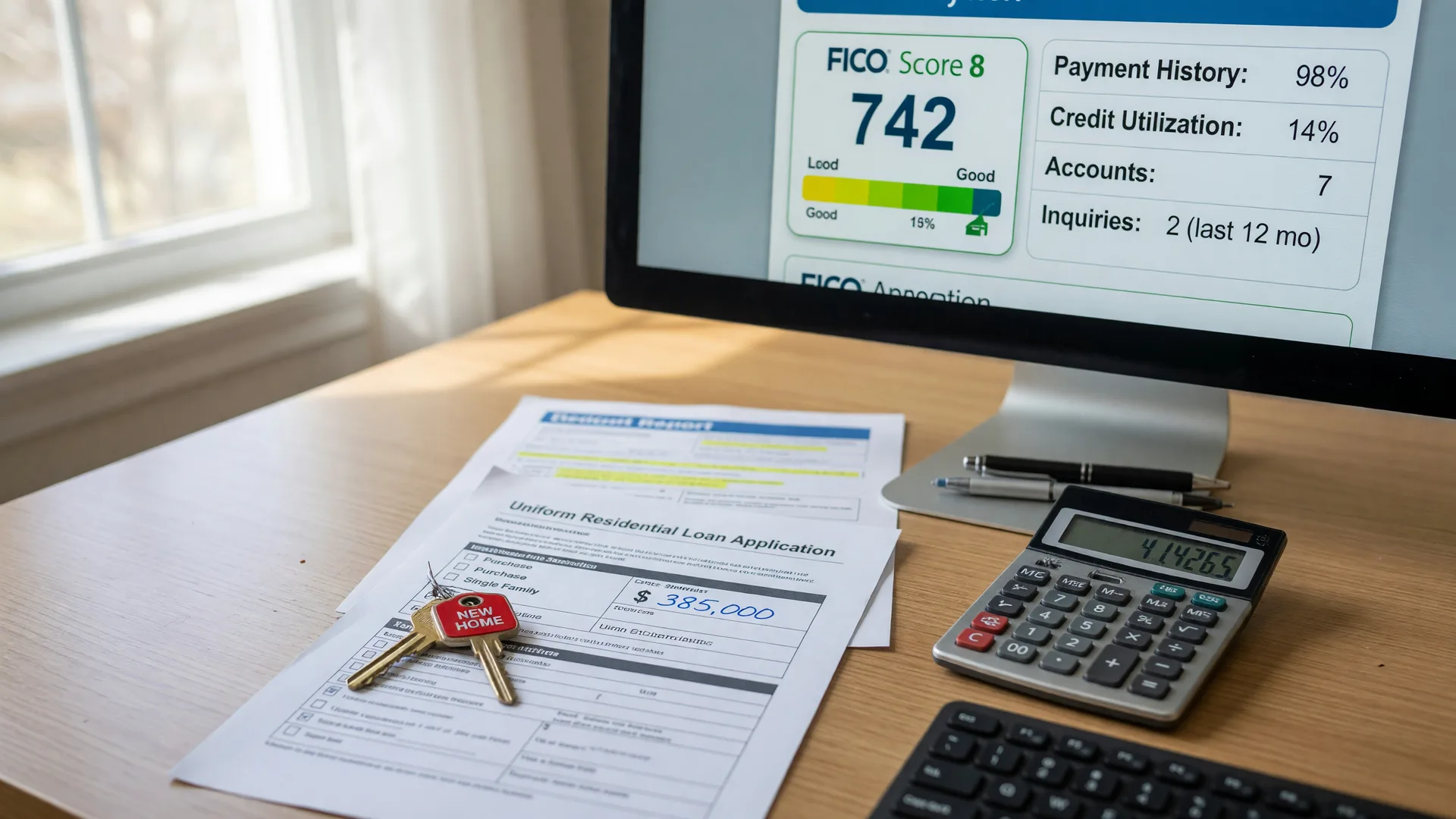
Lenders do not see a single score, they see your full file: payment history, utilization, credit age, mix, and inquiries, then they use your mortgage middle score to set your rate. A free app score can differ from the FICO version lenders actually pull. Understanding what lenders see lets you fix the things that matter instead of chasing the wrong number.
Your Credit Karma score says 720. The lender pulls your credit and sees 688. What happened? You are not alone, and there is nothing wrong with your credit. The number on your phone and the number the lender uses are almost always different because they are calculated on completely different scoring models. In this post, I explain exactly what mortgage lenders see when they pull your credit, how that number determines your rate, and what you can do to put your best foot forward before you apply.
Watch More from The Mortgage Patriot on YouTube
Patrick covers credit, financing, and real estate tips in plain language.
Credit Karma Shows 720. Lender Pulls 688. What Happened?
Credit Karma uses a scoring model called VantageScore. It is a legitimate score, but mortgage lenders do not use it. They use FICO Score, and not just one version of it. They pull FICO versions 2, 4, and 5 from all three credit bureaus: Equifax, TransUnion, and Experian. For a clear explanation of what credit score you actually need for a mortgage, check out my Ask Patrick guide.
Once they have all three scores, they take the middle score. If you have three scores, they drop the high and the low and use the one in the middle. If you only have two scores, they use the lower of the two. That middle (or lower) number is the one that determines your interest rate and whether you qualify at all.
This is the single most important thing to understand about mortgage credit scoring. The number you see on your phone is not the number the lender uses. And that is normal. Knowing which number actually matters helps you focus your energy on the right things before you apply.
The Five Factors That Make Up Your FICO Score
There are five things that determine your FICO score. Understanding them tells you exactly where to focus your effort.
Payment History
This is the biggest piece of the puzzle. Late payments hurt your score more than anything else. One missed payment can drop your score significantly and stay on your report for seven years. If you have a history of on-time payments, you are in strong shape here.
Credit Utilization
This is how much of your available credit you are actually using. If you have a $10,000 credit limit and you are carrying a $9,000 balance, that is 90% utilization, and it will tank your score. Lenders like to see utilization below 30%, and ideally below 10%. This is the factor you can improve the fastest by paying down balances.
Length of Credit History
The longer you have had credit accounts open, the better your score. This is why closing old cards can hurt you. Even an old card you do not use anymore is helping your score by adding years of history. Keep them open and let them age.
New Credit Inquiries
Every time you apply for new credit, the lender runs a hard inquiry and your score takes a small temporary dip. Multiple applications in a short period add up. This is why I tell buyers to stop applying for new credit cards, store cards, or auto loans in the months leading up to a mortgage application.
Credit Mix
Lenders like to see that you can handle different types of credit. Credit cards, auto loans, installment loans, and mortgages. You do not need one of each. Having a mix tells the scoring model you know how to manage different kinds of debt responsibly.
Pre-Mortgage Credit Prep: What to Do Before You Apply
Getting your credit ready for a mortgage application is about more than just knowing your score. Here is what I walk every buyer through.
Check your credit report at AnnualCreditReport.com
You can pull your full credit report from each bureau once a week through 2026. Look for errors. You would be surprised how many people have incorrect information on their reports. A collection that does not belong to you, an account that was paid off but still shows as open, a wrong date of last activity. Dispute anything that is inaccurate. This alone can improve your score.
Pay balances below 30%, ideally below 10%
This is the fastest lever you can pull. On a $1,000 card, keep the balance under $300. Under $100 is even better. Payment history takes years to build, but utilization can improve in a single billing cycle. Pay down your revolving balances and watch your score respond.
Do not open new accounts or close old ones
Six months before you apply for a mortgage, stop applying for any new credit. No store cards, no auto loans, nothing. And do not close old accounts either. Closing an old card removes its years of history from your report and can also increase your overall utilization ratio. Just let everything sit exactly where it is.
Do not make big purchases on credit
No new furniture. No new car. No new appliances on a store card. Keep everything stable. Big credit purchases increase your debt-to-income ratio and can raise your utilization at the same time. If you need something, wait until after closing.
Talk to your loan officer before paying collections
This one surprises people. Sometimes paying off an old collection can actually lower your score. Here is why. When you pay a collection, the credit bureau refreshes the date of last activity. The collection becomes more recent in the scoring model's eyes, and your score can drop. Always talk to your loan officer before paying off anything old. They can tell you whether it will help or hurt in your specific situation.
Your Score Changes Every Month. That Is Good News.
A lot of people think their credit score is a fixed number that barely moves. It is not. Your score updates every month based on new information from your creditors. If your score is 680 today, it could be 720 in three months if you do the right things.
That 40-point difference could save you tens of thousands of dollars over the life of your loan. A better score means a better interest rate. A better rate means a lower monthly payment. A lower monthly payment means you can qualify for a better home or save more every month.
Your credit score is not your destiny. It is your current score. And it can change.
Continue Learning About Credit and Home Buying
These articles build on the same topic and go deeper into strategies that work.
3 Credit Score Hacks That Help First-Time Buyers Qualify
Strategies to boost your score for home buying
FHA vs. Conventional: Which Loan Is Right for First-Time Buyers?
Comparing loan options side by side
How Much House Can You Afford on $80K-$120K?
Real numbers and affordability breakdowns
5 Things You Must Know Before Buying a Home
Essential prep for every buyer
Frequently Asked Questions
Why is my Credit Karma score different from what the lender pulled?
Which credit score do mortgage lenders actually use?
What can I do to improve my score before applying for a mortgage?
How much can my credit score change in a few months?
Should I pay off collections before applying for a mortgage?
Ready to See Where Your Credit Really Stands?
I can pull your credit across all three bureaus and tell you exactly where you stand, what score the lender will use, and what steps will help you improve it. No pressure. Just a straightforward conversation about your goals and the path to getting there.
About Patrick Kevin Fagan, REALTOR®
Patrick Kevin Fagan is a Texas Real Estate Sales Agent (#454749) with AXEN Realty LLC and a Senior Loan Officer (NMLS ID #877741) with NEXA Mortgage, LLC (NMLS #1660690). He brings 23+ years in mortgage lending and 19 years in real estate, serving homebuyers, homeowners, and sellers across Greater San Antonio and the Texas Hill Country.
Answered by Patrick Kevin Fagan
Texas Real Estate Sales Agent #454749, AXEN Realty LLC · Senior Loan Officer, NMLS ID #877741, NEXA Mortgage, LLC
Call or text: 210-317-6514
