
Call Text Book
Buying & Selling

How to Buy a New House Before Selling Your Current Home

After Patrick's video "How To Buy a New House Before Selling Your Current Home 2024", watch the full video breakdown

Updated August 28, 2026

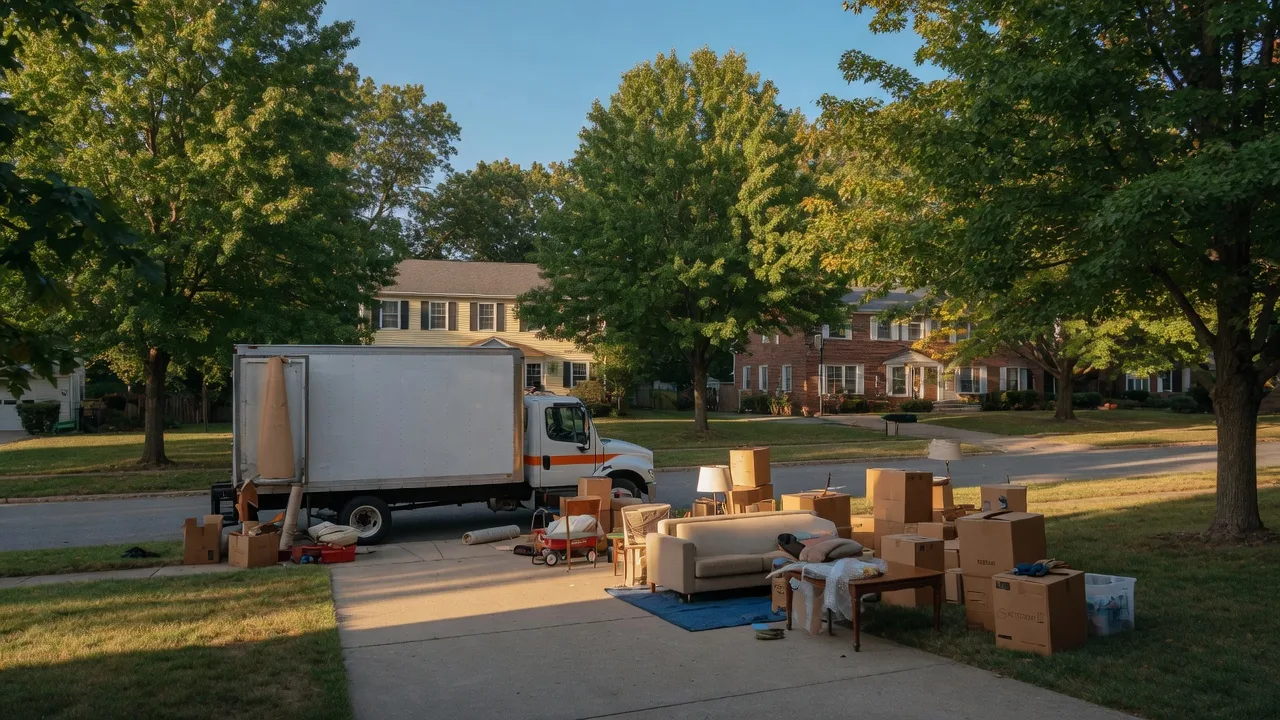
A moving truck and packed boxes outside a suburban home on move-in day, representing buying a new home before selling your current one

This guide explains how buyers can purchase their next home before they have sold the one they are in. When life changes, like a growing family that needs a fourth bedroom or empty nesters ready to downsize, moving usually means trying to buy a new home while still selling the old one. The problem is that most people cannot carry two mortgage payments at the same time, so they get stuck making a weak contingent offer. There is a smarter way: a "buy first, sell later" program that lets you make a non-contingent offer by wrapping your existing home into it. Below is how it works, who qualifies, and what to watch for.

Watch Patrick walk through this buy-first, sell-later strategy on The Mortgage Patriot YouTube channel.

Watch the Video on YouTube

What this is based on: This is a written deep dive on the same topic as Patrick's video, "How To Buy a New House Before Selling Your Current Home 2024." The criteria below are the ones Patrick shares with buyers from his video. Buy-before-sell and bridge programs vary by lender and market, so treat the numbers as a starting point, not a guarantee, and confirm details with a licensed lender for your specific situation. See the current 2026 note at the end.

The Problem: You Need to Buy, But You Can't Carry Two Mortgages

Most people who want to move are not trying to sell because they want to, they are trying to sell because they have to. Consider a couple in San Antonio with two kids and another on the way. Their three-bedroom house works today, but they need a fourth bedroom, and they have outgrown the layout. They want to buy a bigger home now. The only thing standing in their way is the house they are sitting in.

The lender looks at their debt-to-income, and that is where it falls apart. Their current mortgage payment already counts on their balance sheet. Add the new mortgage payment on top of it and roughly 55% of people cannot qualify for two mortgages at the same time, based on the figure Patrick cites. Their income simply cannot carry both payments. So on paper, they cannot qualify for the new home unless they sell the current one first. That leaves them with the standard answer, a contingent offer, and that is exactly the offer that loses.

Why a Contingent Offer Is Weak

A contingent offer basically asks the seller to hold the home for you while you try to sell yours. In plain terms you are saying, "please go under contract and do not show it to anybody else while I try to sell my house." That is a big ask, because from the seller's point of view, your ability to close depends on a sale that has not happened yet.

Sellers do not like that kind of uncertainty. When two offers come in that are similar on price and terms, sellers and their agents simply pick the non-contingent one. The contingent offer needs the house to stay available while the buyer scrambles to sell, and a seller who has another clean, ready-to-close offer has no reason to wait. So yours gets pushed aside. For a deeper look at how sale contingencies work and what your options are, see sale contingencies explained and what "contingent" actually means on a listing.

The Solution: A "Buy First, Sell Later" Program

The answer is a buy first, sell later program. Patrick notes this type of program is sold under a couple of different national names, so you may hear different brand names for essentially the same structure. What it does is simple in concept: it wraps your existing home into the program so you do not have to sell before you buy.

Because your existing home is now part of the program, you can submit a clean, non-contingent offer on the new house. To the seller it looks just like any other ready-to-close buyer. Your financing on the new home is the only payment you have to qualify for, so you are no longer stuck with the two-mortgage problem.

Who Qualifies

Not everyone fits the program. These are the general criteria Patrick shares from his video:

  • Own your existing home with about 30% equity. As a rule of thumb on Patrick's numbers, a $300,000 home needs a loan balance below roughly $210,000. Here is the math: 30% of $300,000 is $90,000, and $300,000 minus $90,000 equals $210,000, so your outstanding balance should be under about that amount.
  • A FICO score of 620 or higher. This is the credit floor Patrick typically looks for with these programs.
  • Qualify for the new loan on a conventional basis. These programs are currently not available for VA or FHA loans.

How It Works

Inside the program, there is a bridge loan built against the roughly 30% equity you hold in your current home. That equity is the engine that makes the whole thing work.

  • With that equity, the program can advance the money you need for your down payment and closing costs on the new home.
  • The program also covers the monthly mortgage payments on your existing property during the transition, effectively taking that payment off your balance sheet.
  • Because the existing payment is covered, you only have to qualify for the new home's payment.
  • With your financing squared away on just the new home, you can submit a non-contingent offer.

The result is that the two-mortgage problem disappears from your application, and your offer no longer looks risky to a seller. You look like a buyer who is ready to close, because structurally you are.

The Stipulations You Need to Know

Every program has rules, and you want to understand these before you build a plan around them.

  • You must sell your current home within about 6 months of closing on the new one. The program advances money against your equity, and that advance gets repaid when your old home sells.
  • Your existing home generally needs to be in a major metropolitan area. Most programs cover 70 or more metro areas. If you are in an obscure rural area with low demand, the program typically will not work, because the lender needs confidence your home will sell within the window.

The Benefits

What you gain is control over your move instead of being at the mercy of the market.

  • Sell on your own timeline, up to 6 months. You are not forced to take the first offer that comes in. You can wait for the right price.
  • Less stress. You buy the home you want first, move in, get settled, and then sell your old home on a schedule that works for you.
  • No pressure to sell at a bad time. You are not racing the clock or accepting a lowball offer because you are trapped.
  • No contingent offer. Your offer stands on its own, which makes it competitive in a market where other buyers are stuck making contingent offers.

Who This Is Right For

This program fits best when you have real equity built up in your current home and a solid credit profile. The classic matches are the growing family that needs more space, the move-up buyer who wants to lock in a new home before the market moves, and the empty nester downsizing into something that better fits a new stage of life. If you have equity, a convention-qualifying situation, and a credit score at or above 620, it is worth a conversation.

If you are a first-time buyer without an existing home, this program is not aimed at you, but the broader roadmap from pre-approval to keys is still your path, and the complete first-time home buyer roadmap walks through every stage.

Common Questions About Buying Before Selling

Is this the same as a regular bridge loan?

It uses the idea behind a bridge loan, borrowing against the equity in your current home, but it is a packaged program that also handles the existing monthly payment so you only qualify for the new home's payment. That structure is what lets you present a non-contingent offer.

What if I use a VA or FHA loan for the new home?

As Patrick notes in his video, these programs are currently not available for VA or FHA loans. They work on a conventional basis, which means you need to qualify for a conventional loan on the new home to use the program.

How much equity do I actually need?

The general target is roughly 30% equity. Using Patrick's example, a $300,000 home needs a loan balance below about $210,000. The equity is what the program lends against to cover your down payment, closing costs, and the existing monthly payment, so more equity gives you more room.

What happens if my current home doesn't sell within 6 months?

The 6-month window is why the program requires your home to be in a major metro area where there is demand. If a sale looks like it will run long, the terms and options depend entirely on your lender and your contract. This is exactly the kind of detail to confirm upfront before you commit, which is why it belongs in the current 2026 note below.

A Current 2026 Note on Buy-Before-Sell Programs

Buy-before-sell and bridge programs vary by lender and by market. Program availability changes over time, and eligibility criteria differ from one lender and one program to the next. The 30% equity figure, the 620 credit score, the conventional-only rule, the major-metro-area requirement, and the roughly 6-month sale window are Patrick's criteria as he presents them in his video. They are meant to give you a practical sense of how these programs work, not a universal guarantee. Rates, costs, terms, and eligibility must be confirmed with a licensed lender for a buyer's specific financial situation before relying on them.

Patrick's Take

When you work with someone who is both a loan officer and your agent, you do not get a discover-your-own-way answer to the buy-before-sell problem. I can run your numbers, tell you whether a buy-first program fits, and structure the offer around what your financing can actually do. That is the advantage of having both sides handled by one person who is on your side.

I believe a family's home is the biggest wealth building asset a person or family can create. Being able to move into the right home on your own timeline, instead of being forced to sell first, should be a tool in your toolbox. My job is to help you use it the right way.

Want to Know If Buy First, Sell Later Works for You?

The only way to know whether your equity, credit, and loan situation line up is to run the real numbers. I will review your current home, your goals, and your financing options, and lay out exactly what your move could look like. No obligation, just a clear picture.

Ready to get pre-approved instead? A pre-approval letter tells you exactly what you qualify for and puts you in a position to make a strong offer. Start that conversation through any of the options above.

Patrick Kevin Fagan portrait

Patrick Kevin Fagan

Loan Officer and Realtor · AXEN Realty LLC · San Antonio and Texas Hill Country

Licensed Sales Agent · 454749 · TX

Sincerely, Patrick Kevin Fagan

} })(); >