
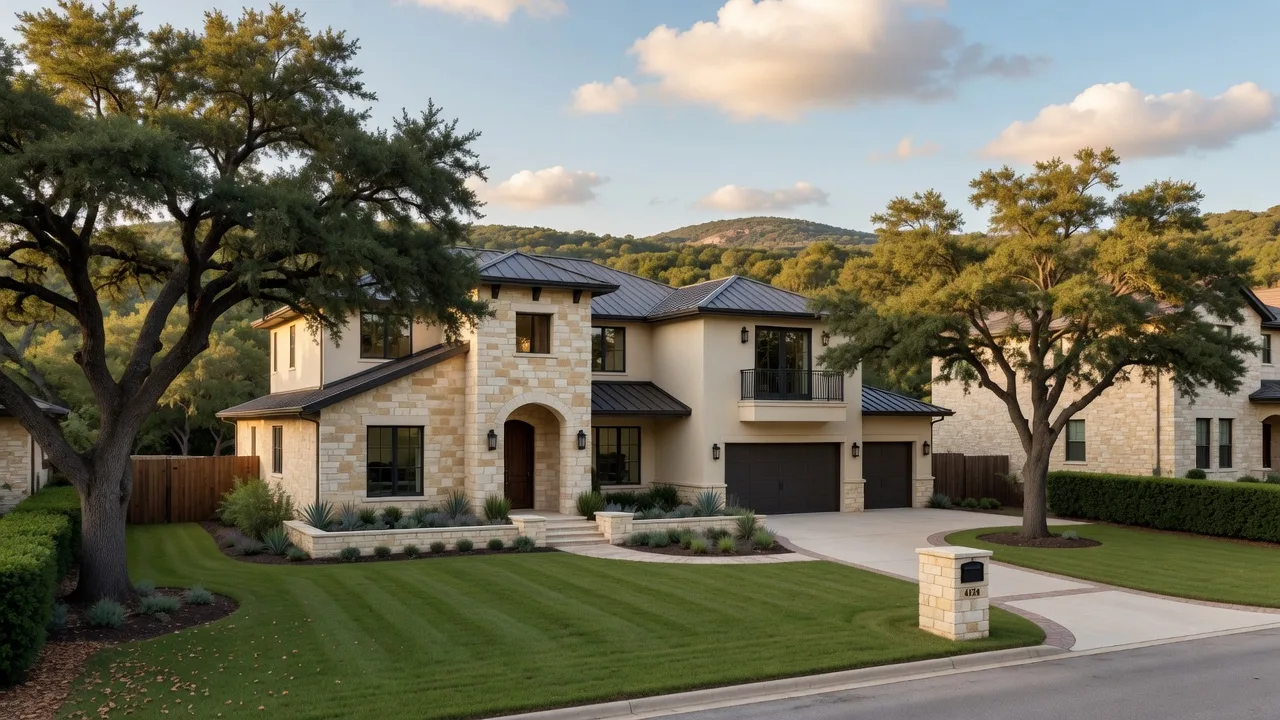
Patrick's Quick Answer
Owning builds wealth in a way renting does not: every payment builds equity, and your housing cost stays predictable while rents keep rising. In San Antonio and the Hill Country, buying usually beats renting if you plan to stay five years or more. Renting makes sense when you are not ready or not sure. Run the five-year math before you decide.
There is no debate between renting versus owning when you look at the long-term numbers. If you can possibly own immediately, you need to own immediately. Do not wait for the perfect interest rate environment. Do not wait for housing prices to come down. Do not wait for more closing cost coverage. All those things might feel smart in the short run, but in the long run, they only keep you from building significant wealth over time. I am going to prove that with real data and a real example you can apply to your own situation.
Watch Patrick walk through the real numbers behind renting versus owning.
The Wealth Gap: What the Data Shows
Let me start with some empirical data from the U.S. Consumer Finance survey that tracks the wealth gap between renters and homeowners from 1989 all the way to 2022. The trend line is clear, and it has only gotten wider.
1989 Wealth
2022 Wealth
Notice that the renter's wealth barely climbed from about $200,000 to $400,000 over three decades. Meanwhile, homeowners went from about $500,000 to roughly $1.4 million. That gap is now a million dollars. The longer you hold a property, the bigger your wealth grows. This is not theory, this is empirical data from federal sources.
Renting vs. Owning: A Real-Number Example
Let me show you with real numbers that apply to San Antonio today. I am going to use two individuals. Both earn the same income and both are deciding whether to rent or buy the exact same property.
Individual A (Renter)
Earns $72K/year ($6K/month)
Individual B (Homeowner)
Earns $72K/year ($6K/month)
Individual B buys a $275,000 home in San Antonio using an FHA loan with 3.5% down at a 6% interest rate. The total monthly payment including property taxes and insurance comes to $2,365. Individual A rents the same home for $2,150 per month. That is a difference of only $215 per month.
Now let us assume that both home appreciation and rent increases run at 4% per year. Historically, home prices have gone up at about 4%, and rental rates follow inflation at about the same rate.
Year-by-Year Breakdown
Here is what happens when you wait instead of buying now.
| Timeline | Renter Pays | Home Value | Cost To Buy Later |
|---|---|---|---|
| Today | $2,150/month | $275,000 | $275,000 |
| Year 1 | $2,236/month | $286,000 | $11,000 more than today |
| Year 2 | $2,325/month | $297,000 | $22,000 more than today |
| Year 3 | $2,418/month | $309,000 | $34,000 more than today |
After two years, the renter is paying $2,325 per month, almost exactly what the mortgage payment would have been. Meanwhile, the home they could have bought for $275,000 is now worth $297,000. Every year you wait, both your rent goes up and the price of the house goes up. You get squeezed from both directions.
The Cash-to-Close Reality Check
You might be thinking: "But Patrick Kevin Fagan, I don't have the money to buy right now." Let me compare what you actually need in cash.
Renting
$4,300
First month + last month deposit
Buying ($275K home)
$8,000*
*or less using seller concessions & DPA
Renting requires two months up front, or $4,300 in our example. Buying that $275,000 home, using seller concessions and down payment assistance programs, I can get the cash-to-close down to about $8,000 or even lower. That difference of $3,700 is not that big when you consider that every dollar of your rent goes to your landlord while every dollar of your mortgage payment builds equity in your own asset.
I have a popular video showing how to buy a $300,000 home for $1,000 total using down payment assistance and seller concessions. The gap between renting and owning, from a cash perspective, is much smaller than most people think.
The 30-Year Horizon: Where the Real Wealth Is
Let me show you what 30 years looks like. I have seen this happen over and over. People keep waiting for the market to come down, waiting for interest rates to drop. They go five years, ten years, fifteen years, and next thing they know they are in their 50s and they still do not own a home.
The Renter After 30 Years
With 4% annual rent increases, that $2,150 rent becomes $6,750 per month by year 30. Total equity built: $0. Every dollar went to making your landlord wealthier.
The Homeowner After 30 Years
With 4% appreciation, that $275,000 home is now worth $892,000. The mortgage is paid off. Total equity built: ~$900,000. That is family wealth that can be passed down or used for retirement.
The bottom line: The homeowner has generated almost $900,000 in family wealth from that one asset alone, not counting investments, retirement accounts, or any other savings. The renter has zero. Your home is going to be your greatest wealth-building asset if you give it time. You have to jump on the homeownership train, and with the right guidance, you can.
A Quick Tip on Maintenance
One concern people have about owning is maintenance. Something breaks and you are on the hook to fix it. But there is a simple solution: a home warranty. When you first buy a home, ask about a home warranty. It costs roughly $500 to $600 for the first year and covers major systems like appliances, AC, water heater, and electrical. Many times the seller will pay for it as part of the deal. You have a small deductible, typically about $100, but it gives you peace of mind that your first year of homeownership will not come with surprise repair bills.
When Renting Actually Makes Sense
I am not going to tell you renting is never the right call. There are situations where it makes perfect sense. Here is my honest take.
Flexibility
Leases can be 3 months, 6 months, or 12 months. If you know you are going to move in less than a year, renting is the right move. You do not want to buy a home and sell it six months later. The transaction costs alone would eat any short-term appreciation.
No Maintenance Responsibility
When something breaks in a rental, you call the landlord. That is a real advantage for some people, especially if you are not handy or do not want the responsibility of maintaining a property.
Patrick's Rule of Thumb on Timing
Moving in
<1 Year
Rent
Moving in
1-2 Years
Likely Buy
Moving in
2+ Years
Definitely Buy
If you are going to be in one place for at least a year and a half to two years, buying is almost always going to put you ahead financially. After two years, there is no question. You want to own.
Patrick's Take: Why Waiting Costs You Wealth
I have been watching this for over 23 years in my professional life and even longer in my personal life and the lives of friends and family. If you do not own a home at some point, you fall so far behind the curve that you may not be able to make up for that lost time when you reach your senior years and need a nest egg.
The people who keep waiting for the perfect time to buy do not realize that the perfect time never comes. Rates will fluctuate. Prices will go up and down. But over any 10-year or 20-year period, homeowners have built significantly more wealth than renters. It is not even close.
If your credit scores need work, if you do not think you have enough cash, if you are unsure about the process, talk to me. I can help you build a game plan to get you into a home within 3 to 6 months. Let me, the Mortgage Patriot, help you get set up and ready to own.
Frequently Asked Questions
How much money do I actually need to buy a home?
Should I buy a home if I might move in 2 years?
What if home prices drop after I buy?
Is now a good time to buy a home in San Antonio?
Continue Your Education
Explore more resources from Patrick to deepen your home buying knowledge.
Ready To Start Building Wealth Through Homeownership?
Whether you are ready to buy now or just want to understand your options, I can help. As a dual-licensed loan officer and Realtor, I can show you exactly what is possible with your income and savings. Let me build a game plan to get you into a home within 3 to 6 months.
About Patrick Kevin Fagan, REALTOR®
Patrick Kevin Fagan is a Texas Real Estate Sales Agent (#454749) with AXEN Realty LLC and a Senior Loan Officer (NMLS ID #877741) with NEXA Mortgage, LLC (NMLS #1660690). He brings 23+ years in mortgage lending and 19 years in real estate, serving homebuyers, homeowners, and sellers across Greater San Antonio and the Texas Hill Country.
Answered by Patrick Kevin Fagan
Texas Real Estate Sales Agent #454749, AXEN Realty LLC · Senior Loan Officer, NMLS ID #877741, NEXA Mortgage, LLC
Call or text: 210-317-6514