
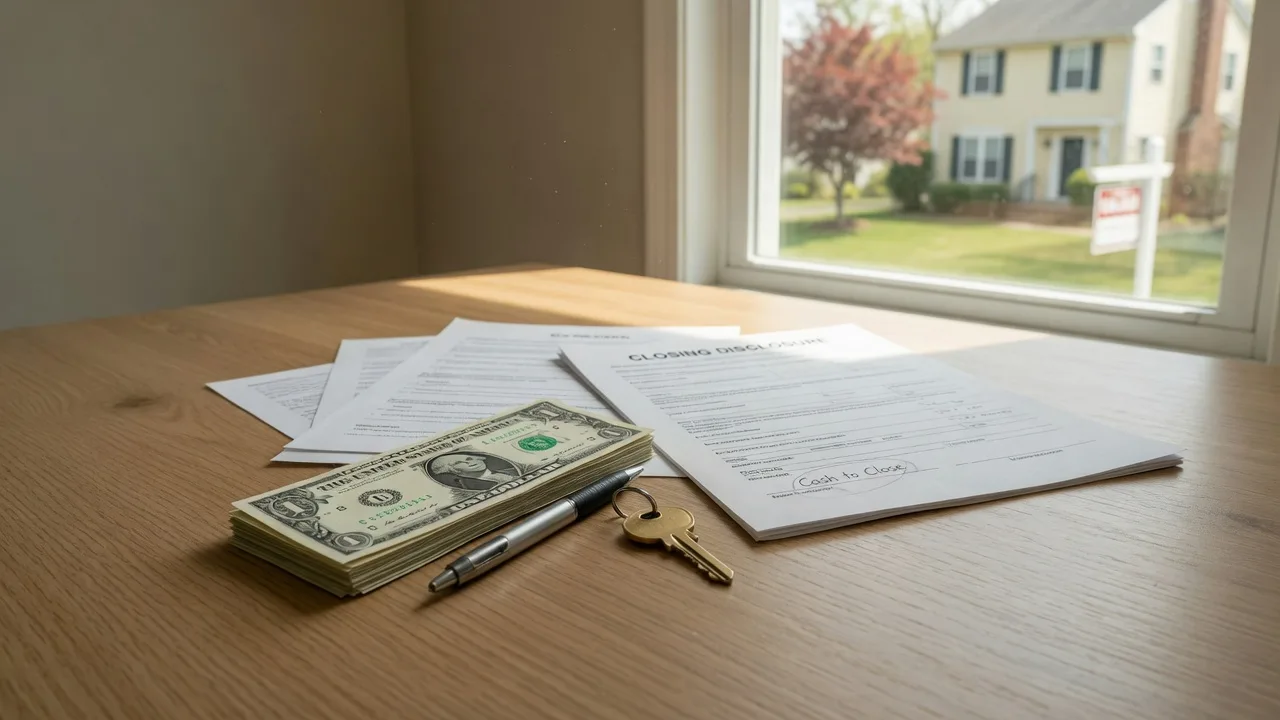
An FHA loan is not itself a zero-down loan. The FHA program requires a 3.5 percent down payment, so on its own FHA is never 100 percent financing. What some buyers advertise as a "zero down FHA" is actually a combination strategy: a standard FHA loan at 3.5 percent down, paired with a down payment assistance second lien that covers that down payment, plus seller concessions that cover most of the remaining closing costs and escrows. Stacked together, that combination can bring a buyer's cash to close down to about $1,000. It is the strategy, not the loan product alone, that does the work.
I am Patrick Kevin Fagan, The Mortgage Patriot, and I have spent over 23 years originating loans and 18 years in real estate sales. This article follows up on my video on this exact strategy, and I will walk you through the real numbers on a $300,000 home so you understand exactly how the pieces fit together and whether this path makes sense for you.
I walk through this same strategy with real numbers on my YouTube channel. You can find this and every other first-time homebuyer video in my video library, and follow along with the whole channel on The Mortgage Patriot on YouTube.
Who This Strategy Is For
This approach is built for buyers who have steady income and decent credit but who do not have a big pile of cash saved for a down payment. In my experience the down payment is the single biggest obstacle for most first-time buyers. FICO scores can often be worked on, and income usually qualifies once two borrowers combine theirs, but coming up with $10,000, $15,000, or $20,000 out of pocket is what stops people cold. This strategy attacks exactly that problem.
It is a natural fit for first-time buyers and anyone who wants the lowest possible cash to close. If you are a veteran using a VA loan or a buyer in an eligible rural area using a USDA loan, you already have a true zero-down program and this specific combination is less necessary. For everyone else, this is the closest most buyers can realistically get to a low-cash closing.
What the Strategy Actually Is
To be clear about the central point: the FHA loan alone does not buy a home with no money down. What it does is give you a very low 3.5 percent down payment. The strategy then layers two more tools on top to handle that down payment and the rest of your closing costs:
1. Standard FHA Loan at 3.5% Down
The base mortgage. At 96.5% loan to value, it keeps your out-of-pocket down payment small to begin with.
2. Down Payment Assistance Second Lien
A DPA program loans you enough to cover the 3.5% down payment, secured as a small second lien behind your first mortgage.
3. Seller Concessions
The seller agrees to pay some of your closing costs at closing instead of reducing the sale price, covering most of what remains.
That is the whole recipe. No single piece gets you to near zero. Together they do.
The Three Pieces That Make Up Cash to Close
Before the strategy makes sense, you need to know what cash to close actually is. It is the total amount you wire to the title company at signing, and it is made up of three components.
Down Payment
The percentage of the purchase price you put down. Unless you pay cash, use a VA loan, or qualify for USDA, most buyers owe a down payment on an FHA loan of 3.5 percent.
Transaction and Closing Costs
The real cost of doing the financing: underwriting, processing, appraisal, title work, recording, survey, and inspection fees. It adds up to a laundry list of charges on your closing statement, and in Texas it typically lands around $5,000 to $6,000 on a $300,000 home.
Escrow Pre-Funding
At closing you pre-fund your property tax and insurance escrow accounts. That means roughly a full year of homeowners insurance plus a few months of property taxes set aside at signing, even though your monthly payment handles them going forward.
Patrick's Real Worked Example: A $300,000 Home
Let us run the real numbers Patrick uses in the video, so you can see exactly how near-zero cash to close is built. On a $300,000 home, before any help, here is what a buyer would normally need.
FHA Down Payment (3.5%)
Of the $300,000 purchase price
Texas Closing Costs
Underwriting, appraisal, title, recording, survey, inspection
Escrow Pre-Funding
Roughly 12 months insurance plus about 4 months property taxes
Total Cash to Close Without Help
How the Combination Drops That to About $1,000
Now the two strategies go to work. The down payment assistance second lien covers the full $10,500 down payment. It is a small loan, and because it is spread over the full 30-year term, it adds only about $80 a month to your payment. Your down payment is now $0 of your own money.
That leaves the $6,000 in closing costs plus $2,400 in escrow, or $8,400 total, to cover. Enter seller concessions. The seller agrees to give you, say, $7,400 toward your closing costs at closing instead of cutting their price. That covers the bulk of the remaining $8,400.
That is the only check you write at the title company: about $1,000 on a $300,000 purchase.
Why would a seller accept this? Because helping with closing costs at a full-price offer is often a better deal for them than dropping the price by $10,000. In a concessions scenario on a $300,000 price with $7,400 conceded, the seller nets $292,600. On a straight $290,000 price cut with no concessions, they net only $290,000. The seller keeps more, you keep cash, and the deal gets done. In today's market, I see seller concessions in close to 90 percent of the transactions I handle, and they can range from a thousand dollars up to $15,000 or more.
Requirements and How to Qualify
This is not a no-questions-asked program. You still have to qualify, and there are real limits. Here is what the pieces generally ask for.
For the FHA Loan
- Minimum 580 credit score for the 3.5% down payment tier
- Stable income and acceptable debt-to-income ratio
- Owner-occupied primary residence
For the Strategy as a Whole
- DPA programs often carry their own income limits, so not every buyer qualifies
- The seller has to agree to the concessions and stay within FHA concession limits
- Many DPA programs require completing a homebuyer education course
The specific DPA program, its income caps, and its eligibility rules depend on where you are buying. That is exactly why you need a lender who knows the local programs, and why I run the numbers for each buyer individually.
The Advantages
-
Lowest possible cash to close. On the example above, a buyer writes a single check for about $1,000 instead of roughly $19,000.
-
Gets first-time buyers in the door sooner. It removes the biggest barrier, which is usually the down payment, not the income or the credit.
-
Small, manageable monthly cost. The DPA second lien around $80 a month is far easier to absorb than a $10,500 check at closing.
-
Keeps more cash in your pocket. That saved money stays available for reserves, moving, or whatever comes up after closing.
The Drawbacks and Warnings
I want to be honest about the trade-offs, because this strategy is not right for everyone and it is not free.
The DPA second lien adds a monthly payment
You are not getting free money. The down payment assistance is a real loan in second lien position, and it adds roughly $80 a month to your payment for 30 years. That matters for your budget and your debt-to-income approval.
Not everyone qualifies
You still need to qualify for the FHA loan itself, and the DPA program has its own income limits and credit requirements. If your income is too high or the DPA is not available in your area, this specific combination is off the table.
The seller has to agree
Seller concessions are common today, but they are negotiated, not guaranteed. In a strong seller's market or a multiple-offer situation, the seller may not agree to cover your closing costs. Your offer still needs to be competitive.
FHA still has its own costs
Every FHA loan carries an upfront mortgage insurance premium and a monthly premium that lasts for the life of the loan unless you refinance. That is on top of the DPA second lien. You are low on cash at closing but not low on monthly obligations, so make sure the payment fits.
Common Misunderstandings
Is FHA a zero-down loan by itself?
Does "zero down FHA" mean I pay nothing at all?
Is this really common in Texas right now?
Does the second lien hurt my chances of approval?
A Note for 2026
Loan program details, down payment assistance availability, seller concession limits, FHA loan limits, and pricing change over time. The numbers in this article reflect Patrick's worked example and the market at the time he recorded his video. Before you rely on any figure here, confirm the current program details, income limits, and availability with a licensed lender in your area. This article is educational and is not a commitment to lend.
Your Next Step
The numbers are different for every buyer, and whether this strategy works for you depends on your credit, your income, the DPA programs in your area, and the negotiation on your specific home. That is exactly what I help people figure out.
Ready to See Your Real Numbers?
Whether you want to get pre-approved, see if a down payment assistance program fits your situation, or simply start the First-Time Homebuyer Roadmap, I will walk you through every step and keep you on your side.
Keep Learning with Patrick
- FHA Loans Explained: Everything You Need to Know
The full deep dive on the FHA program, including the mortgage insurance you need to budget for.
- Texas Down Payment Assistance Programs for First-Time Buyers
Which local DPA programs pair with FHA and how to combine them with seller concessions.
- Essential First-Time Homebuyer Roadmap
The step-by-step path from deciding to buy through closing, with this strategy in context.
Frequently Asked Questions
Can I really buy a home with $0 down using an FHA loan?
How much would the down payment assistance add to my payment?
Are seller concessions common enough to count on?
Does everyone qualify for this strategy?
Patrick Kevin Fagan
Loan Officer and Realtor · AXEN Realty LLC · San Antonio and Texas Hill Country
Licensed Sales Agent · 454749 · TX · NMLS 877741
Sincerely, Patrick Kevin Fagan