
Patrick's Quick Answer
HUD homes let FHA buyers in with as little as $100 down in some cases, and HUD may pay up to 3% toward closing costs. The catch: you usually buy the home as-is, so the inspection matters even more, and bidding is competitive. I walk buyers through the HUD process so the $100-down opportunity does not become an expensive surprise.
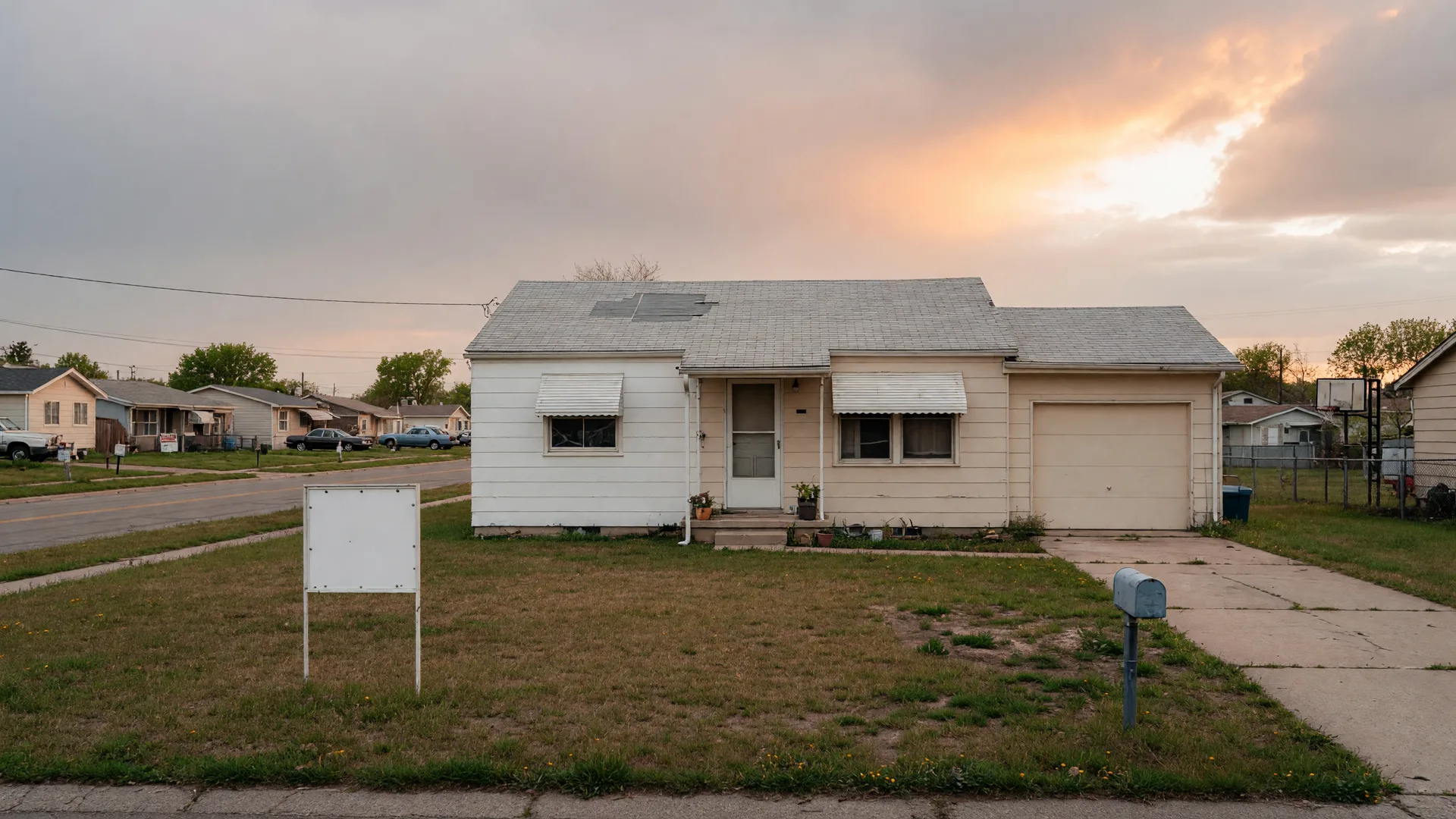
A HUD foreclosure home is a government-backed FHA or VA loan that went into foreclosure, took the property back, and is now reselling it as a HUD-owned REO. The opportunity for a buyer is the special FHA program that lets you put as little as $100 down instead of the normal 3.5 percent. In this companion guide to my video, I walk you through what a HUD home actually is, how to find them, how the bidding works, how you qualify, and a fully worked $300,000 example so you know exactly what cash to close really looks like.
I am Patrick Kevin Fagan, a dual licensed loan officer and REALTOR® serving Greater San Antonio and the Texas Hill Country. I have spent over 23 years originating loans and 19 in real estate sales, and this is one of the questions I get asked most often by first-time buyers. If you want the video version of everything below, watch How to Buy a HUD Foreclosure Home on my channel.
Watch the Full Video
This article is the written deep dive behind my step-by-step video on buying HUD foreclosure homes with the $100 down FHA option.
What Is a HUD Foreclosure Home?
When someone buys a home with an FHA or VA loan and later stops making payments, the lender eventually forecloses. Because the loan was government-backed, the Department of Housing and Urban Development, HUD, pays the insurance claim to the lender, takes back the property, and resells it. Those resales are what we call HUD homes, and they show up as REO, real estate owned, inventory.
The big draw for owner-occupants is the $100 down payment program. On a normal FHA loan you put 3.5 percent down. On a HUD home bought with FHA financing, HUD allows the down payment to drop to just $100. That does not mean the home is free; closing costs and escrows still apply, and I will break those buckets out in the example below. But it can lower the cash you need at closing dramatically when you combine it with seller concessions.
How to Find HUD Homes
Every HUD-owned home is listed on the official HUD Home Store. Go to the HUD Home Store website, enter your city or ZIP code, and you will see the current inventory of HUD homes in your area. It is the only source of record for what HUD actually owns, so start there rather than relying on third-party lists.
Use the official site: search for the HUD Home Store at hudhomestore.gov. Do not fall for lookalike domains. When you pull up a property, your licensed broker works directly through that system to prepare and submit your bid.
One thing Patrick points out in the video: expect the list to grow. The COVID-era foreclosure moratorium protected many homeowners from losing their homes, and as that protection is being unwound, more properties are working through the pipeline and landing on the HUD Home Store. That means buyers who are prepared right now may have more inventory to choose from than they did in the last few years.
The Bidding Process, and Why You Need an Agent
You do not bid on HUD homes directly. You have to work with a licensed real estate agent who will represent you as a buyer. Your agent signs a buyer's representation agreement with you, gets registered on the HUD system, and then submits bids on your behalf.
How a HUD Bid Works
Find your agent and sign a buyer's representation agreement
Your agent formally represents you before any bidding happens.
Your agent registers and submits your bid
Bids go through an approved, registered broker on the HUD system, never directly from you.
A 10 to 14 day bidding window opens
Each property has a defined window where bids are accepted.
Raise your bid in minimum increments
You can see the current high bid and raise yours by a minimum increment to stay in the running.
Time your bid
You can bid early or wait until near the end of the window. Many buyers choose to wait and watch how the bidding plays out before committing.
Because this is a bidding process with a window and a minimum increment, it takes a little strategy. I help my buyer clients track the current high bid, decide when to jump in, and set a discipline so they do not overpay for a property that still needs work.
Qualifying for the $100-Down FHA Loan
Qualifying for the $100-down HUD FHA program is essentially the same as qualifying for a normal FHA loan. Your credit score, your debt-to-income ratios, and your reserves all come into play. Let me give you the honest real-world numbers.
Credit Score
Around 620
FHA can theoretically go down to a 580 credit score, but most lenders set their own minimum around 620. In practice, plan for roughly a 620 to have a smooth approval.
Debt-to-Income
Front ~38-39% · Back ~53-54%
Your housing ratio (principal, interest, taxes, insurance, FHA mortgage insurance, and HOA) is capped near 38-39 percent. Your total backend DTI, all monthly debts, can go up to about 53-54 percent.
Reserves matter too. This is where the "$100 down" headline trips people up. The $100 is the down payment, but lenders still want to see that you have reserves, savings set aside after closing. You are not literally closing with only $100 in the bank. You need enough cushion to show you can actually support the mortgage, and escrows and transaction costs still come out of pocket unless seller concessions cover them.
The Primary Residence Rule: This Is Not for Investors
Here is the rule that filters out a lot of people: FHA financing is for primary residences only. You cannot use the $100-down HUD program to buy a second home or an investment property. You must move into the home and make it your primary residence. That is a real occupancy requirement, not a suggestion, and it is a big part of why HUD offers the incentive in the first place: to put these homes into the hands of people actually living in them.
If you are an investor, this program is not your lane. But if you are a first-time buyer, a growing family, a veteran, or a relocating family who plans to live in the home, this owner-occupant advantage was built for you.
The Reality of Condition, and the FHA 203(k) Renovation Option
Let me be straight with you, because this is where buyers get caught off guard. HUD homes are foreclosures. They are rarely move-in ready. You might see holes in walls, dated systems, signs of dilapidation, and deferred maintenance that sat through the foreclosure process. Some are in fine shape; many need work. You have to go in with realistic expectations about condition.
The remedy is the FHA 203(k) renovation loan. HUD allows you to pair the $100-down HUD purchase with a 203(k), which rolls the cost of needed repairs and updates into the same mortgage. That way the same low-down-payment deal can also cover bringing the home up to code. Instead of needing cash for the home and separate cash for the repairs, they ride in one note. This is one of the smartest ways to buy a fixer at a discount without emptying your savings.
Related reading: I go deep on this whole strategy in my fixer-upper renovation loans guide, and you can see the full FHA renovation mechanics explained in my FHA loans deep dive.
The Worked Example: A $300,000 HUD Home
This is the example Patrick walks through in the video, and it is worth seeing every bucket. This is a teaching example, not a guarantee, but it shows you exactly how the numbers fit together.
Step 1: Purchase Price Plus Repairs
Say the home is $300,000 and needs about $15,000 of repairs. FHA requires you to address safety and system items: roof, foundation, wiring, plumbing, and similar. In this case, that comes to roughly $15,000. With a 203(k), those repairs roll into the note. That bumps the financed amount up to about $314,900, and your down payment is $100.
Step 2: The Three Buckets of Cash to Close
1. Down Payment
$100
The special HUD $100 down instead of 3.5%.
2. Transaction Costs
~$5,500
Appraisal, inspection, underwriting, processing, title, recording.
3. Escrows
~$3,500
Prepaid property taxes and 12 months of insurance.
Add those three buckets and you are at roughly $9,100 total cash to close: $100 down, about $5,500 in transaction costs, and about $3,500 in escrows.
Step 3: Seller Concessions Cut It Down
Here is where it gets interesting. FHA allows seller concessions, and HUD is a seller here. With 3 percent seller concessions on a $300,000 price, that gives you about $9,000 to apply toward your costs. Run that against your roughly $9,100 of cash to close and your out-of-pocket drops to about $100. That is the whole story of the "$100 down" HUD deal: the $100 is real, and the concessions do the heavy lifting to cover the rest.
That is the math that makes HUD homes exciting for owner-occupants. You get into a primary residence with a tiny cash outlay, and if you use a 203(k), the repairs that scare off other buyers are financed into the same note.
Who Is This Right For?
A Good Fit If
- You plan to live in the home as your primary residence.
- You are comfortable with a home that may need work.
- You want to minimize your cash to close.
- You have time to navigate a bidding window.
Think Twice If
- You need a turn-key, move-in-ready home.
- You are an investor or buying a second home (not allowed with FHA).
- You have little appetite for repair projects.
- Your credit or reserves are not yet where the program expects.
Frequently Asked Questions About HUD Homes
Can I really buy a HUD home with only $100 down?
Do I need a real estate agent to buy a HUD home?
What credit score do I need for the $100-down FHA HUD program?
Are HUD homes move-in ready?
Can I buy a HUD home as an investment?
How do I find the current HUD inventory?
A Note for 2026: Confirm Everything Before You Rely on It
HUD programs change over time, and 2026 is no exception. HUD inventory, the $100-down program terms, credit, DTI, and reserve guidelines, seller-concession limits, and the HUD bidding rules and moratorium status can all shift. The dollar figures above are Patrick's example for teaching, not guaranteed current numbers. Before you rely on any of them, confirm the current terms with a licensed real estate agent and on the official HUD Home Store. Your loan officer can tell you exactly where your own credit, debt, and reserves stand today.
In short: the strategy is sound, but always verify the current program details before basing a purchase on them.
New to the process? Start with the Roadmap
HUD homes ride on the same fundamentals as any home purchase. If you are starting from zero, step through the full journey from pre-approval to closing so you always know what comes next.
About Patrick Kevin Fagan, REALTOR®
Patrick Kevin Fagan is a Texas Real Estate Sales Agent (#454749) with AXEN Realty LLC and a Senior Loan Officer (NMLS ID #877741) with NEXA Mortgage, LLC (NMLS #1660690). He brings 23+ years in mortgage lending and 19 years in real estate, serving homebuyers, homeowners, and sellers across Greater San Antonio and the Texas Hill Country.
Answered by Patrick Kevin Fagan
Texas Real Estate Sales Agent #454749, AXEN Realty LLC · Senior Loan Officer, NMLS ID #877741, NEXA Mortgage, LLC
Call or text: 210-317-6514