
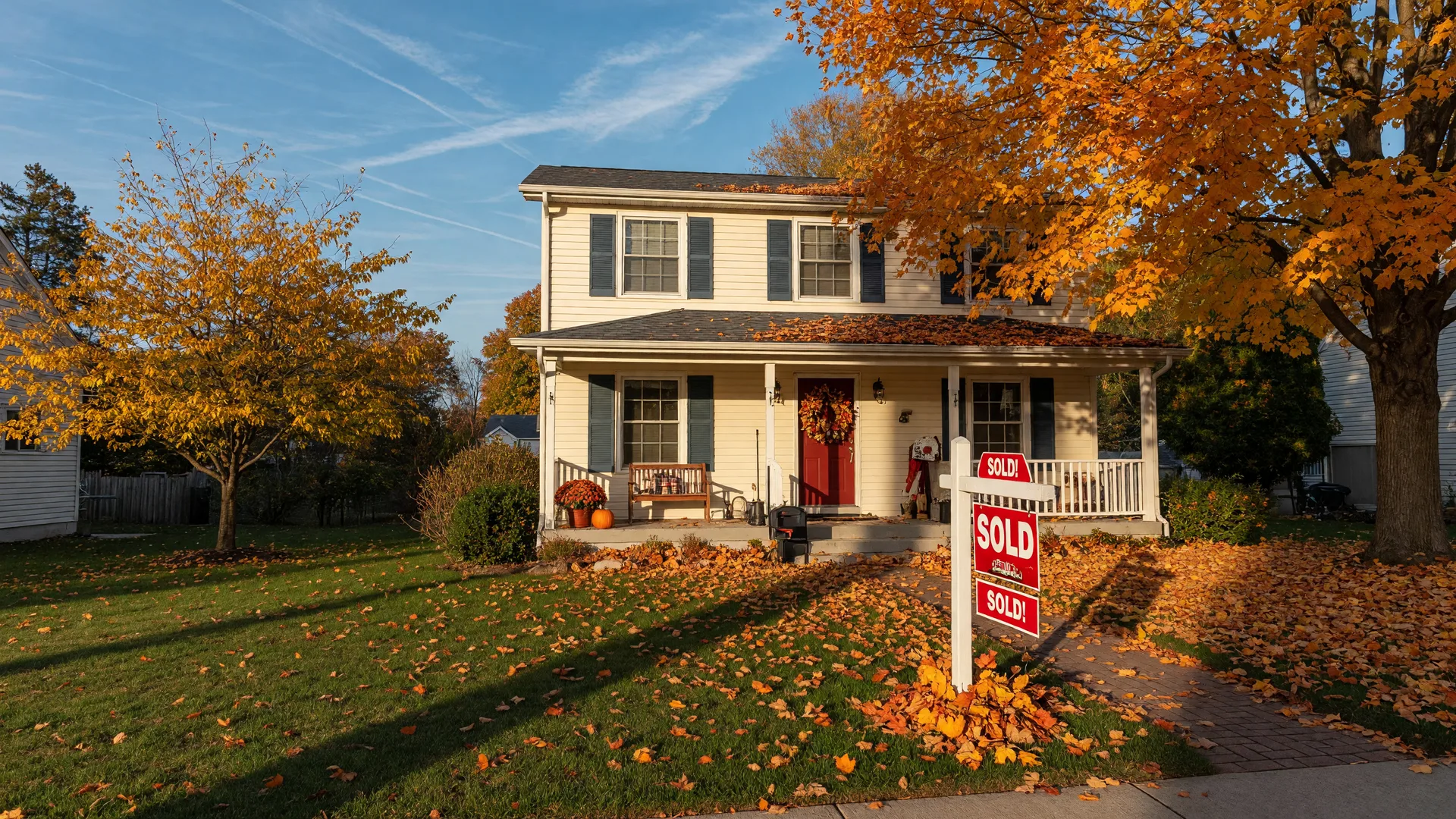
Patrick's Quick Answer
The best time to buy a home is when you are financially ready, not when the calendar says so. That said, in San Antonio and the Hill Country, late fall and winter often bring motivated sellers and less competition, and more inventory means more room to negotiate. Get pre-approved first so you can move fast when the right home comes up.
The best time to buy a home during the year is November, December, and January. That is not just my opinion from over 23 years of loan origination and 19 years in real estate sales, it is the period when buyers have the most leverage, the least competition, and the greatest chance of negotiating expanded seller concessions. If you are a first-time buyer trying to reduce your cash-to-close or an investor looking for the best deal of the year, the end of the calendar year is your window.

Prefer to watch? Patrick walks through the full seasonal strategy in this video.
The Seasonal Pattern: When Inventory Peaks
The housing market follows a predictable seasonal rhythm every year. Most buyers start looking in April, May, June, and July, what the industry calls the buying season. During those months, demand outstrips supply. More buyers compete for fewer homes, and sellers hold the advantage. They can raise prices, reject lower offers, and hold firm on terms because there is always another buyer behind you.
The inventory that does not sell during the buying season carries over into the late summer and early fall. By September and October, sellers who have been on the market for months start getting nervous. Their homes have sat through the peak season without selling. Some have had offers fall through. Others have price-adjusted twice. These are the homes that are still listed in November, and they are there for one reason: the seller needs to sell.
That shift in motivation is what creates the buyer's advantage. When a seller has to sell, they are willing to negotiate on price, closing costs, seller concessions, and terms in ways they would not have considered four months earlier.
Winter vs Summer: Pros and Cons
Winter (Nov-Jan)
- Lowest competition from other buyers
- Maximum seller leverage and negotiation power
- Easier to get full 6% seller concessions (FHA)
- Lowest cash-to-close of any season
- Sellers are motivated and ready to deal
- Fewer homes on the market to choose from
- Weather may slow showings and moving
Summer (Apr-Aug)
- Largest inventory and most listings available
- Good weather for tours, inspections, and moving
- Easier to coordinate school-year moves
- Highest competition and bidding wars
- Seller has all the leverage
- Seller concessions are much harder to negotiate
- Prices are often inflated by demand
How Seasonal Timing Affects Competition and Prices
To understand why timing matters, it helps to look at a concrete example. Let us use a $300,000 home, a realistic price point for many first-time buyers in the San Antonio area.
If you buy that home in May during the peak buying season, you are competing against multiple other buyers. The seller has leverage. You ask for seller concessions of 6%, which on an FHA loan is $18,000, but the seller says no. Why would they give away $18,000 when another buyer is ready to offer the same price without asking for concessions? In May, a realistic seller concession might be $5,000, if you get one at all. Your cash-to-close on a $300,000 purchase with minimal down payment and limited concessions lands around $21,000 to $22,000.
Now consider the same home in November. The house has been on the market since July. It did not sell during the buying season. The seller has already adjusted the price once or twice. They are carrying holding costs, property taxes, and maybe two mortgage payments. They need to sell before the end of the year. Your leverage is completely different.
In November, you can offer $290,000 and ask for the full 6% seller concessions. And the seller will likely say yes, because they have no other buyers lined up and they need to close. Instead of writing a $22,000 check at closing, you are writing a check closer to $4,000 or $5,000. The difference between buying in May and buying in November is not a few hundred dollars. It is thousands of dollars in cash you get to keep in your pocket.
Real example: A $300,000 home purchased in May with limited seller concessions ($5,000) versus the same home purchased in November with full seller concessions ($18,000) and a lower sale price ($290,000) can reduce your cash-to-close by roughly $17,000. That is the difference between barely affording closing and having breathing room to furnish your new home or handle unexpected repairs.
The Rate Myth: Why Waiting Costs More
Many buyers tell me they are waiting for interest rates to come down before they buy. I understand the instinct, but here is what I have learned from two decades in this industry: waiting for the perfect rate often costs far more than buying on your own timeline.
Interest rates are cyclical. They go up, they go down, and no one can predict exactly when or by how much. What I can predict with more certainty is seasonal leverage. The difference between a rate of 6.5% and 7% on a $300,000 loan is about $100 per month. The difference between buying in the spring with $22,000 cash-to-close and buying in the winter with $5,000 cash-to-close is $17,000 in your pocket today.
And here is the part that surprises many first-time buyers: you can refinance later. If rates drop in two years, you can refinance into a lower rate. But you can never go back and recapture the equity or the lower cash-to-close that you gave up by waiting.
Patrick's perspective: Rates and timing are separate conversations. The best financial decision is usually to buy when you are ready and when the market conditions favor you as a buyer. Do not let rate headlines keep you on the sidelines while seasonal leverage slips away.
Patrick's Take: Buy When It Makes Sense for You
I have been doing this for over 23 years. I have seen buyers wait for the market to cool, wait for rates to drop, wait for the perfect time, and in the meantime they paid rent for another year or two, watched prices go up, and eventually bought at a higher price with less favorable terms anyway.
My advice is not to try to time the market perfectly. My advice is to buy when the conditions align with your personal readiness. If you have your credit in order, your savings in place, and you are financially ready, then the best time to buy is when you can get the most leverage. For most buyers, that means November through January.
But I also understand that life does not always give you a choice. Military families moving on PCS orders, job relocations, and family changes happen on their own schedule. If you are locked into a summer move, that is okay. We can still make the numbers work. You just need to be prepared for a different negotiation dynamic, and that is where having an experienced agent who also understands financing makes all the difference.
My Bottom Line on Timing
The best time to buy a home is not when the market is perfect, because it never is. The best time is when you are ready, and when you have an experienced guide who can structure the deal to work in your favor. The November to January window gives buyers the most negotiating power, the best seller concessions, and the lowest cash-to-close of any time of year. That is not a prediction. It is a pattern I have watched play out for two decades.
If you are thinking about buying, don't wait for the spring. Start the conversation now. Let us run the numbers and see what is possible with your situation.
Frequently Asked Questions
Is November really the best month to buy a home?
Is it harder to buy a home in winter?
What if I cannot buy in the winter? Should I wait a whole year?
How much can seller concessions actually save me?
Should I wait for interest rates to drop before buying?
Does this strategy work for investors too?
How do I start preparing for a winter home purchase?
Continue Your Education
Explore more resources from Patrick to deepen your home buying knowledge.
Ready to Make Your Move?
Whether you are aiming for the winter buying window or need to buy on your own timeline, I can help you structure the deal to save the most money. Let us run the numbers together and build a plan that fits your situation.
About Patrick Kevin Fagan, REALTOR®
Patrick Kevin Fagan is a Texas Real Estate Sales Agent (#454749) with AXEN Realty LLC and a Senior Loan Officer (NMLS ID #877741) with NEXA Mortgage, LLC (NMLS #1660690). He brings 23+ years in mortgage lending and 19 years in real estate, serving homebuyers, homeowners, and sellers across Greater San Antonio and the Texas Hill Country.
Answered by Patrick Kevin Fagan
Texas Real Estate Sales Agent #454749, AXEN Realty LLC · Senior Loan Officer, NMLS ID #877741, NEXA Mortgage, LLC
Call or text: 210-317-6514