
Call Text Book
Investment Properties

Best Loan Options for Investment Properties

Updated August 22, 2026

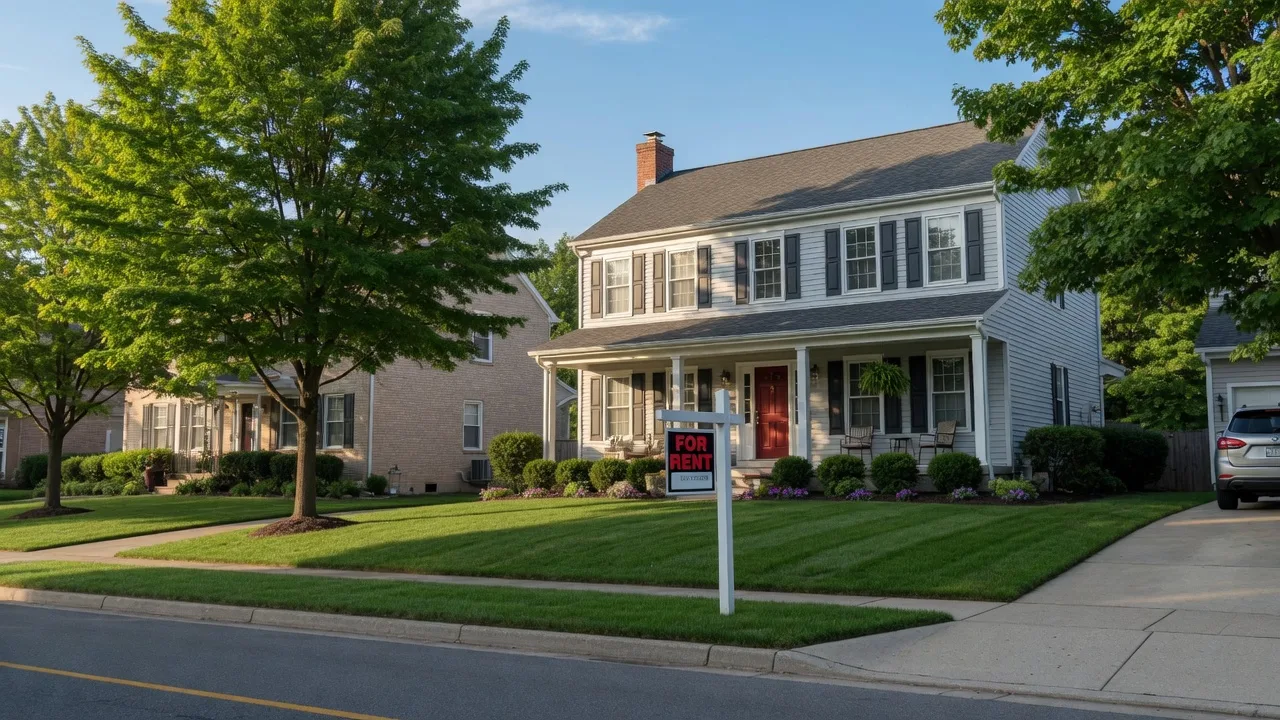
Single-family rental home with FOR RENT sign in a sunny suburban neighborhood

If you already own your home and you are ready to take the next step into buying an investment property, you have four main loan options to choose from. There is the conventional investor loan, the bank statement loan, the DSCR loan, and the HELOC line of credit. Each one serves a different type of borrower, and the right one for you depends on your credit score, your income situation, how much you have saved, and what kind of property you are buying. I am going to walk through all four options with the requirements and the real numbers so you can see exactly where you fit.

Why These Four Loans?

About 20 to 25 percent of existing home sales in the United States are now made to investors, and that number keeps climbing. It is not just big companies buying up homes — it is individual people who understand the wealth-building power of rental real estate. If you own your home and you are ready to start accumulating investment properties, these four loan types are the traditional financing options that can get you there. I have helped buyers use each of them, and I will tell you straight up which one fits which situation.

Loan Type Credit Score Down Payment Income Docs Reserves Rate
Conventional 660+ 15-20% 2 years tax/W2 2-6 months Lowest
Bank Statement 660-680+ 20-25% 12-24 mo statements 2-6 months Higher
DSCR 660-680+ 20-25% None (rent-based) 3+ months Higher
HELOC / Ultimate 680-720+ 0% or 25%/70% LTV 2 years + 43% DTI 6 months Variable

1. Conventional Investor Loan

If you can qualify for a conventional investor loan, this is the one you want to start with. Why? Because it gives you the lowest interest rate of the bunch, and the lowest down payment requirements on the investment side.

What You Need

Credit Score: 660 or better

Higher scores get better pricing, but 660 is the starting point for an investment conventional loan.

Income Documentation: 2 years required

You need to show W2s, pay stubs, or tax returns for the last two years. If you cannot show that, you move to one of the other options.

Down Payment: 15% to 20%

Industry standard is 20% down. Some lenders will go to 85% loan-to-value, meaning 15% down. On a $250,000 property, 20% is $50,000 out of pocket.

Rental Income Credit: 75% of appraised rent

Lenders give you credit for 75% of the appraised rental income. If the appraisal says the home rents for $2,000, you get $1,500 added to your income for qualifying purposes.

Reserves: 2 to 6 months

You need liquid assets left over after closing. If your payment is $2,000 and they require 6 months reserves, you need $12,000 in the bank after the deal closes.

2. Bank Statement Loan

The bank statement loan exists for one specific type of borrower: the self-employed person whose tax returns do not tell the real story. I hear this all the time from small business owners and contractors. They say "My taxes only show $50,000 but I really make about $100,000." The problem is lenders only look at your tax returns on a conventional loan. The bank statement loan solves that.

Credit Score: 660 to 680 or better

Slightly higher thresholds than conventional, but still in the same range.

Income: 12 to 24 months of bank statements

No tax returns needed. You just show your bank deposits to prove what is actually flowing in. The interest rate is higher than conventional because the lender is taking on more risk.

Down Payment: 20% to 25%

You will not find 15% down on a bank statement loan. Plan on 20% at minimum, sometimes 25%.

Reserves: 2 to 6 months

Similar to conventional. The exact number depends on your credit score and other factors the lender considers.

The bank statement loan is a good option if you are self-employed and the numbers on your taxes do not match what you actually earn. But in many cases, the DSCR loan I am about to explain is an even better alternative.

3. DSCR Loan (Debt Service Coverage Ratio)

The DSCR loan is hands down the most popular option for investors who want to stack multiple rental properties. DSCR stands for debt service coverage ratio, and it simply means the lender looks at the rent coming in versus the cost of owning the property. That is it. They do not ask about your job, your income, your tax returns, or your W2s. The whole qualifying process is based on whether the property itself can support its own debt.

How the DSCR Ratio Works

Let us say you buy a $250,000 home that rents for $2,200 per month. Your monthly costs include principal, interest, property taxes, insurance, and any HOA dues. Suppose those costs total $2,000. Your ratio is $2,200 divided by $2,000, which equals 1.1. Most lenders want a ratio of 1.0 or better. Anything above 1.0 means the rent covers the costs and the property is cash-flow positive. If your ratio is below 1.0, the property is losing money on paper and the lender will not approve the loan.

Credit Score: 660 to 680 or better

The same range as the other loan types. Higher scores get you better pricing.

No Income Documentation

The loan application does not even ask for your employment. All that matters is the rent versus the debt service on that specific property.

Stackable for Multiple Properties

Because the lender does not look at your income, you can buy five, ten, or more properties as long as each one cash flows at a 1.0 ratio or better.

Down Payment: 20% to 25%

Some rare programs go down to 15%, but most require 20% or 25% down. On a $250,000 property, that is $50,000 to $62,500.

Reserves: 3 months or more

Plan on at least 3 months of reserves after closing. Depending on your credit, the lender may ask for more.

4. The HELOC: The Ultimate Loan for Investors

Now let me tell you about the loan that changes the game if you can qualify for it. I call it the ultimate loan. It is a home equity line of credit, or HELOC, established on the equity you already have in your primary residence. And here is the thing: only about four institutions across the entire country offer this product for investment property acquisition. They each call it something different in-house, but the concept is the same.

Why It Is the Ultimate Loan

  • No down payment. You are accessing equity you already have in your home. There is no new cash coming out of pocket for the down payment.
  • Speed. Once your HELOC is set up, you can close on an investment property in about a week. That is a massive negotiation advantage over someone using a conventional loan that takes 30 days.
  • Reusability. A line of credit works like a giant credit card. You pay it down, and the credit becomes available again for your next purchase.

The Requirements Are Stricter

This is not a loan for everyone. You need to be an A-plus borrower to qualify.

Credit Score: 680 to 720 or better

Most lenders want at least 700, and 720 is the practical target for the best terms.

Debt-to-Income: 43% maximum

This is tighter than the 50% you see on conventional loans. Only 43% of your gross income can go toward all debts combined.

Income Docs: 2 years required

Like the conventional loan, you need to show two years of income history through W2s or tax returns.

Reserves: 6 months minimum

After closing, you need to have 6 months of mortgage payments left in liquid assets.

Down Payment / LTV: 25% down on purchase, or 70% LTV on refinance

If you are buying, plan on 25% down. If you already own a free and clear investment property worth $300,000, you can pull out $210,000 at 70% loan-to-value.

The Negotiation Advantage

Let me give you a real example. Say you find a $250,000 investment property you want to buy. A conventional loan buyer shows up and says "I will buy it, but I need 30 days to close." You walk in with your HELOC and say "I will buy it for $230,000 and close next week." Sellers love speed and certainty. That HELOC advantage can save you thousands on the purchase price while the other buyer is still waiting for underwriting. This is why I tell investors who can qualify for a HELOC to get it set up before they even start shopping. The speed alone is worth it.

Which Loan Should You Choose?

1

Conventional — if you can qualify

This is your lowest rate and your lowest down payment option. If you have a clean W2 income history and a 660+ credit score, start here.

2

Bank Statement — for self-employed with messy taxes

Use this when your tax returns do not show your real income. Your bank deposits tell the real story. Higher rate than conventional, but it gets the job done.

3

DSCR — for stacking multiple properties

No income docs required. The lender only looks at the rent versus the costs. You can buy property after property as long as each one cash flows. This is the workhorse for serious investors.

4

HELOC — for maximum speed and no down payment

If you have significant equity in your primary home and strong credit, this is your weapon. Close in a week, write a check, negotiate from a position of strength. Toughest to qualify for, but the most powerful when you do.

Frequently Asked Questions

What is the minimum credit score for an investment property loan?
Across all four options, you need at least 660. Conventional loans start at 660. DSCR and bank statement loans want 660 to 680. The HELOC/ultimate loan is stricter at 680 to 720. The higher your score, the better your rate on any of these.
How much down payment do I need for an investment property?
It depends on the loan type. Conventional goes as low as 15%. DSCR and bank statement loans require 20% to 25%. A HELOC from your primary home requires no down payment, but you do need sufficient equity. On a $250,000 property, expect $37,500 to $62,500 out of pocket on a purchase loan, plus closing costs.
What is a DSCR loan and why is it popular with investors?
DSCR stands for debt service coverage ratio. The lender only looks at the rent coming in versus the costs of owning the property. If the ratio is 1.0 or higher, you qualify. No income docs, no tax returns. This is popular because you can keep adding properties as long as each one cash flows, without your personal income getting in the way.
Can I use a HELOC to buy an investment property?
Yes, and it gives you a massive advantage. Once the HELOC is set up on your primary home, you can write a check and close in about a week. Sellers love fast closings. You can often negotiate a lower price because the seller does not have to wait 30 days. Only about four institutions offer this for investment property acquisition, and the requirements are strict, but it is the most powerful option available.
What if I am self-employed and my taxes do not show enough income?
You have two options. A bank statement loan uses 12 to 24 months of your bank deposits to show what you actually earn. A DSCR loan skips income entirely and only looks at the rent versus the costs of the property. In most cases, the DSCR loan is the better route because it avoids all income questions and lets you keep stacking properties.
How many investment properties can I buy using these loans?
With conventional and bank statement loans, your personal debt-to-income ratio eventually limits you. With DSCR loans, there is effectively no limit as long as each property cash flows at a 1.0 ratio or better. Investors regularly buy five, ten, or more properties using DSCR financing because each loan stands on its own.

Not Sure Which Loan Fits Your Investment Strategy?

Every investor's situation is different. I will look at your credit, your equity, your income situation, and your goals, and tell you exactly which loan gives you the best path forward. That is what I do. That is what I have been doing for over 23 years.

Patrick Kevin Fagan portrait

Patrick Kevin Fagan

Loan Officer and Realtor · AXEN Realty LLC · San Antonio and Texas Hill Country

Licensed Sales Agent · 454749 · TX · NMLS 877741

Sincerely, Patrick Kevin Fagan

} })(); >