

A rental that cash flows is an asset. One that does not is a job you pay to have. The entire difference is a single piece of arithmetic, and most investors do not fail at the math, they fail at the honesty of the inputs.
Quick Answer
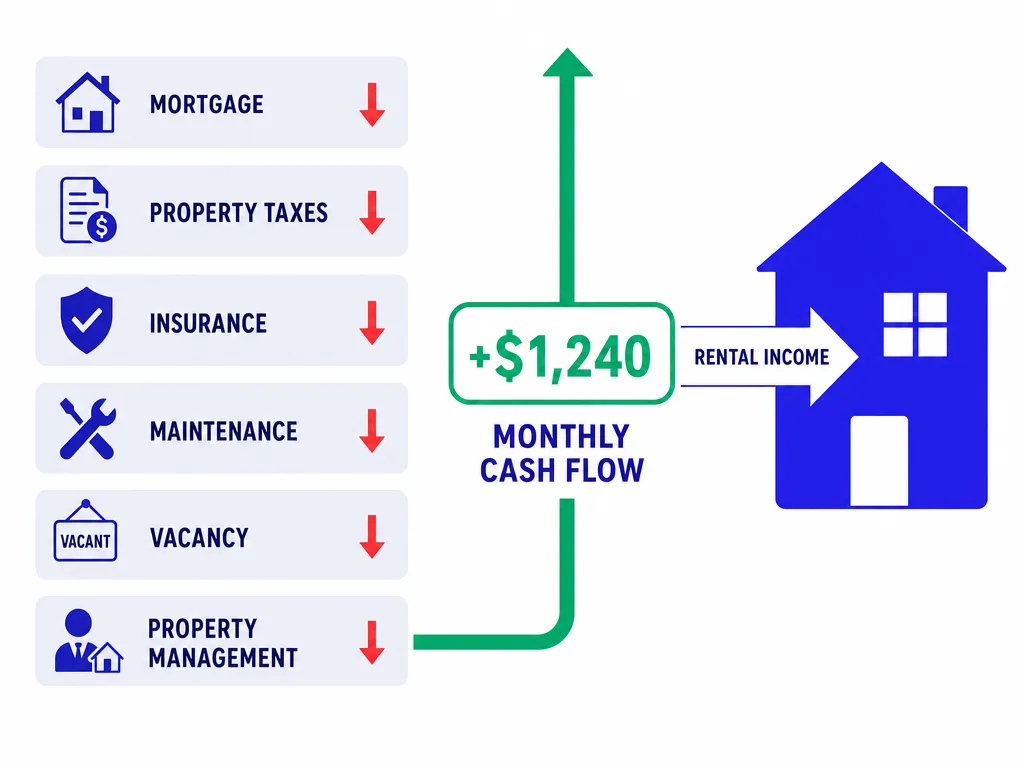
Cash flow is what remains after rent covers the mortgage, taxes, insurance, vacancy, maintenance, and management. Use a conservative rent and an honest vacancy allowance; that is where most optimistic deals die.
Ask Patrick how cash flow on a rental would work for your investment goals.
The Formula That Decides the Deal
Cash flow equals rental income minus the mortgage payment, property taxes, insurance, maintenance, a vacancy allowance, and property management if you are not self-managing. The analysis is simple subtraction, but every line matters.
In Texas, the tax and insurance lines carry extra weight, because Bexar County tax rates and storm-season insurance run higher than the national averages most calculators assume. Underwrite with the actual numbers for the address, and you are already ahead of most of the market.
The Number That Kills Deals: Rent
Sellers and online calculators quote the top of the rent range. I use the rent a property can realistically hold over time, plus a vacancy factor of several percent, because a unit that sits empty between tenants loses months of income a year.
That vacancy loss comes straight out of the cash flow you projected. Underquote the rent, overquote the occupancy, and a deal that looked like $300 a month turns into a property you feed. The rent number is where optimism goes to die, so make it cold.
Break-Even Rent
Before you buy, calculate the break-even rent: the monthly amount that covers every cost including the mortgage. If market rent sits comfortably above break-even, the deal has room. If it is below, the property only works with a bigger down payment or a rent increase you cannot count on yet.
The break-even number is the line I check first on any rental. It tells you instantly whether the deal breathes on its own or survives only on hope, and hope does not pay the tax bill.
The Texas Tax and Insurance Lines
Use the actual property tax bill for the address and a Texas insurance quote, not national averages. Rentals also lose the primary-residence exemptions, so the tax line jumps when a home converts from homestead to investment.
A homestead exemption keeps a primary home's taxes down, and the day that home becomes a rental, that relief is gone. If you are converting a former home into a rental, rebuild the cash flow with the full tax bill, because that one line can flip a break-even property into a money pit.
Common Mistakes
Forgetting vacancy, underestimating maintenance, and skipping capital expenditures for the roof and HVAC are the classic errors. The roof and the air conditioner are not optional someday expenses; they are scheduled costs that arrive on someone else's timeline.
Track every expense monthly and raise the reserve as systems age, because the properties that survive a downturn have accurate books, not optimistic projections. The spreadsheet that tells the truth is the one that keeps you in the game.
Cash Flow vs. Appreciation
Never count appreciation as cash flow. A house that gains value on paper but loses money every month is still a bill, and you cannot pay a water heater with the rumor of future equity. Appreciation is a bonus, not a budget line.
Aim for $200 or more per month after all expenses as your floor on a cash-flow rental, and treat anything below that as a red flag to explain. Cash flow is the income that keeps you in the game long enough to collect the appreciation. Get the monthly number right, and make it a great one.
Ask Patrick about cash flow on a rental
Get a straight answer on cash flow on a rental and how it fits your rental or investment plan.
